PITTSBURGH — It began as an idea, a hopeful notion that might one day become something more.
Marcus Weathers and his brother, Michael, had grown up playing basketball together, but following their freshman season at Miami (Ohio), their coach was fired, and life and basketball took them elsewhere. Michael went to Oklahoma State and later Texas Southern while Marcus landed at Duquesne, where he was the team's leading scorer the past two seasons.
As the 2020-21 season wore on, they talked with each other every so often about reuniting and using their final season of college eligibility to once again play together. Those conversations translated into action. Both opted to transfer from their respective schools and in April. They committed to SMU, where they'll play next season.
"It's been a super long time and a super long journey, but I know me and him prayed on it," Marcus said. "We've got guys showing us the way and showing us the right path to take. This is going to be the best season I've ever had in college basketball and I think it's going to be the funnest season I've ever had in college basketball."
People are also reading…
While their circumstances are unique, the Weathers brothers' decision to transfer is not.
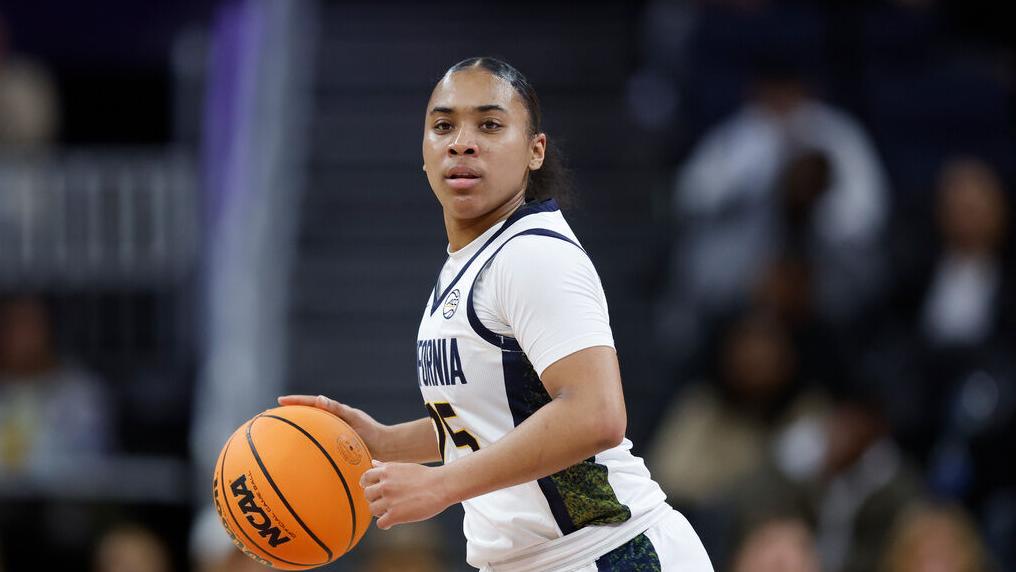
A trying and unconventional college basketball season has been followed by a frenzied offseason, with players changing rosters at a rate previously unseen in the sport. As of Tuesday morning, 1,544 Division I men's college basketball players had entered the transfer portal, according to VerbalCommits.com. With 13 scholarship players each on 357 rosters, that number accounts for 33.3% of the sport. In women's college basketball, more than 1,000 players have entered the portal. That increased movement has come in the same offseason in which the NCAA Division I Council approved legislation allowing athletes to transfer one time without having to sit out one year.
A sport that has long been defined to some extent by transience has suddenly become that much more prone to turnover. To those in and around college basketball, questions have emerged about where the game is and where it may go in the years to come.
"It's like 'Trading Places,'" said ESPN analyst Seth Greenberg, a former head coach at Virginia Tech and South Florida. "It's part of the culture of the sport right now."
A new reality
It's not just the sheer size of the portal that's notable. It's how quickly it got there.
The 1,544 transferring players — a figure that will continue to rise — is up from 1,024 players last season, an increase of 50.8%. That number was at 800 five years ago and 577 in 2012, according to VerbalCommits data. The three Division I schools in the Pittsburgh area have had a combined 20 players leave, led by Robert Morris with eight. Last year, that trio lost 12 players.
A slew of reasons, some more relevant than others, helps explain the spike.
The passage of the one-time transfer exemption has shaped the current landscape, removing the daunting deterrent of having to sit out of competition for a full year. It's a move that some, like Duquesne coach Keith Dambrot, believe was long overdue. This being the first offseason in which such a workaround existed has created a rush that likely wouldn't have happened in a normal year.
Exacerbating that is an NCAA ruling that gave all players an extra season of eligibility, including seniors whose careers would have otherwise been over unless they opted to become a graduate transfer. Of the 1,544 players in the portal, 416 of them are seniors or redshirt seniors, about 27% of all transferring players.
There was the COVID-19 pandemic and all of the uncertainty a once-in-a-generation event created, to say nothing of how it deprived students and athletes of the joy of a traditional college experience.
Beyond that, the rationales for transfers are highly individualized. For some, it's more playing time at a lower level. Of the 226 transfers from a major-conference school who have committed somewhere, 138 (61.1%) ended up at a school outside those six leagues. For others, it's heightened competition and greater opportunities for exposure available at a bigger program. The feeling of being recruited again can be intoxicating, particularly for small-conference players who weren't wooed in the same way coming out of high school.
Sometimes, a coaching change necessitates a move. In other instances, rifts can develop.
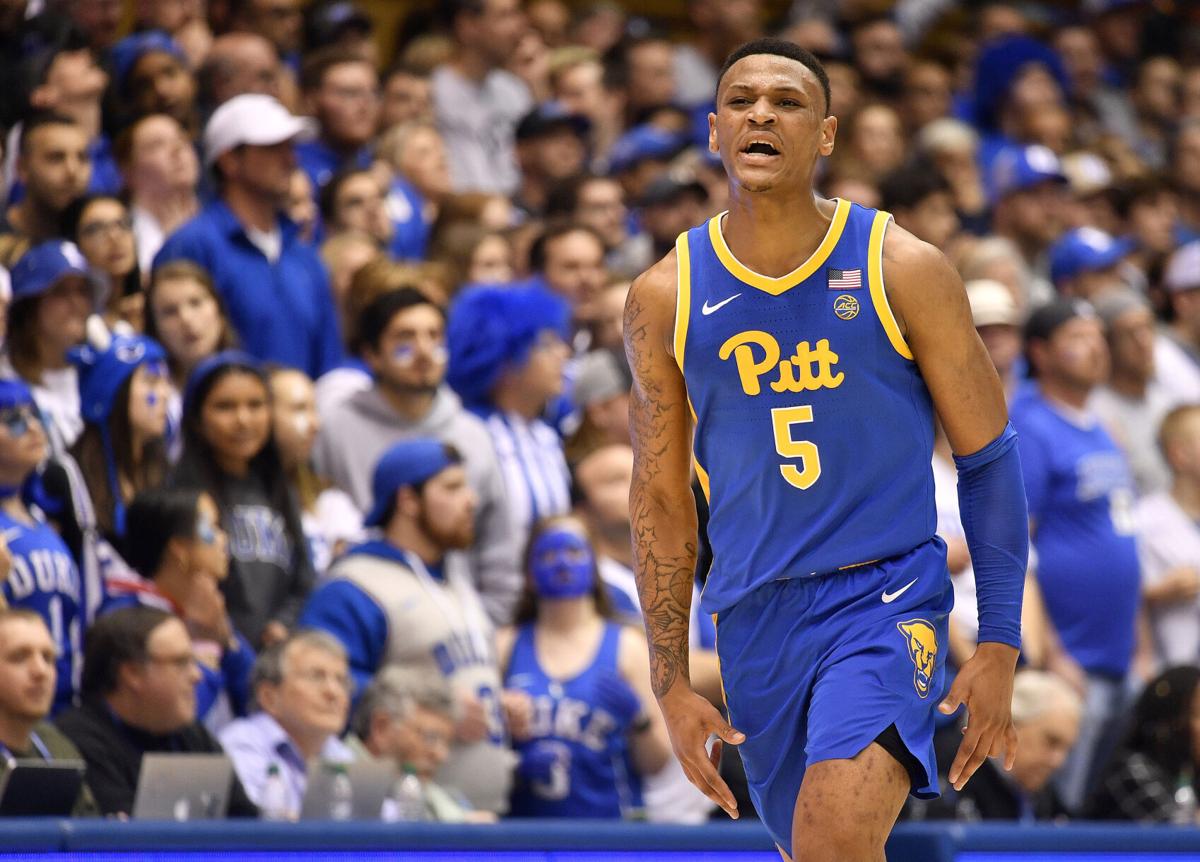
"Here at Oakland, I feel like I wasn't able to show my versatility as a player," said Daniel Oladapo, a transfer from Oakland University who signed with Pitt in April. "I kind of felt like coach was just holding me back. ... I was just telling him to get to where I want to get to, I need to show more of my game. We really didn't see eye to eye."
In that way, the portal can provide a valuable, much-needed reset.
"It gave me an opportunity to reassess what I really needed at this point in my career," said Au'Diese Toney, who transferred from Pitt in February and eventually signed with Arkansas. "I wish I could have taken an official visit, but at this point in my career, the only thing I really care about is winning."
Then there are more unusual cases.
"There are kids that are probably perfectly happy in their situation, but someone is saying they're so-and-so's guy and they're being shopped around," Greenberg said. "A guy will come up and say, 'Hypothetically, if so-and-so left School X, would you be interested?' I got two calls from guys that said they got that exact phone call and the player didn't even know he was being shopped around by someone who said he's his guy. It's going to be unsettling."
It's all reflective of a new reality in the sport.
Robert Morris coach Andy Toole can empathize with exiting players. He, too, transferred, leaving Elon in 1999 for Penn, where he helped lead the Quakers to a pair of NCAA Tournament appearances. At the time, Toole remembered feeling as if there was something wrong with him for making such a move. In the two decades since, it's a mindset that has evolved dramatically.
"You'll see guys that are successful players who play a lot of minutes on their team and they'll say to you, 'I just want to see what's out there,'" Toole said. "You'll hear guys say, 'Well, I didn't really get recruited that hard the first time. I want to get recruited.' Some of the stuff doesn't necessarily add up versus, 'Hey, I'm in a good situation where I'm a big part of a team. There's a plan in place for me. I have an opportunity to continue to grow and develop.' Sometimes, that's not even enough."
Unintended consequences
What the transfer portal and the one-time transfer exemption offer for players on a micro level has larger, potentially lasting ramifications.
Perhaps the most apparent and immediate development comes with high school recruits, who some in grassroots basketball believe are being overlooked as college coaches devote time and resources to pursuing transfers.
"There are kids who are solid scholarship basketball players who don't have offers right now and who would regularly have multiple offers," said Rob Kennedy, the president of the Hoop Group, a New Jersey-based basketball company that runs camps, clinics, tournaments and leagues. "You can see the impact right away through that. There are kids who should be getting recruited who are not."
College coaches have noticed, too, with Toole noting that he and his assistants hear regularly from high school and junior college coaches imploring them to take a look at one of their players. But the portal, a perpetually updating list of available players, is often too enticing.
From their end, it makes sense. Much of the guesswork involved in recruiting a high school player doesn't exist with a transfer, who has already shown what they can do against Division I opponents. That inherent advantage has been compounded by the pandemic, which forbade coaches from being able to scout high school recruits in person, relegating them to game tapes and livestreams of AAU tournaments.
"There's no reason to invest years into trying to develop a high school player if you can take a kid that has proven himself on the college level and averaged 18.3 points per game in the Summit League," said Rob Cassidy, the national recruiting director for Rivals.com. "You may have some questions about whether he can play in a major conference, but at least it has been established that this kid has been acclimated to the speed of the college game and he can stand toe-to-toe with college players."
Building a recruiting strategy around transfers isn't just less presumptive. It's also quite effective.
Of the 20 starters in this year's Final Four, nine began their college careers elsewhere, including three on national champion Baylor. This season, Arkansas made its first Elite Eight in 26 years with five transfers among its top eight scorers and has three more transfers arriving next season. It's a viable path for coaches in pressurized positions that demand rapid results.
"The years of developing four-year guys are gone," Dambrot said. "I think it's now a two-year, junior-college, AAU-type of approach, where you develop them, you play them and then you don't count on having anybody for four years anymore."
There's a belief that more than just high schoolers will be negatively affected. The one-time transfer rule doesn't apply to players who have already transferred in their career, meaning some in the portal will have to hope for a favorable NCAA waiver ruling. Some coaches worry about whether all academic credits will transfer from one school to another and how that may impact graduation rates. With only so many spots available on teams, some players will inevitably have few, if any, Division I options if they don't commit quickly enough, turning their life and career into a game of musical chairs in which they're left with nowhere to go.
While no program is immune to defections, there's some fear that schools from outside the major conferences will serve as a farm system of sorts, even more than they have previously.
In the past four seasons, Duquesne and Robert Morris have lost four players who led the team in scoring in a given season, all of whom transferred to programs in bigger, more prominent leagues. The standout with remaining eligibility at a mid-major who guides his or her program on an NCAA Tournament run now has options previously unavailable, as does the player working their way up the rotation in a program that gets old and stays old, much like Pitt did in its most decorated years.
"It causes people to quit prematurely and not fight through adversity, which is teaching our young people to give up maybe sometimes before they should," Dambrot said. "I think that's one part I don't like. I sound like an old man with that, but we've all hit that point where we all wanted to quit, whether it's your job, whether it's your marriage, whether it's with a friend, anything."
But for as much as coaches complain about the portal, and for all it can do to complicate their jobs, they still scour it.
'Everybody should have a new start'
The question now facing college basketball is whether the exceptionally high volume of transfers this year is an outlier or a sign of what's to come.
The confluence of new rules and a global pandemic has perhaps artificially inflated the number of transfers. Players who were waiting on utilizing their one free transfer have now exhausted it, and seniors will no longer be afforded the extra year of eligibility they were granted. Those left without appealing suitors (or a suitor altogether) could serve as cautionary tales.
Still, transfer figures had been climbing for years, nearly doubling from 2012 to 2020. While this year may be an irregularity, it embodies a larger trend.
"Like with everything, when they initially enact something, the pendulum will swing severely in one direction and it will kind of find its middle point," Toole said. "But I do think this is the new normal."
Within college basketball, views on transferring vary wildly based on one's perspective and standing, making the portal more of a Rorschach Test than an online database of available transfers.
To some coaches, it's antithetical to the messages of commitment and perseverance they preach, with new legislation circumventing old rules they thought were in place for good reasons.
"Is this what we want recruiting to be nowadays? Not actually developing relationships, but continuing to put the portal on your computer screen every day and see who pops up and sign free agents constantly?" said Robert Morris women's basketball coach Charlie Buscaglia, who added that he believes many players transfer for a number of valid reasons. "We're allowed to do that as much as the players are allowed to leave, but is that a culture of what college athletics should be about? Are we teaching about quickly moving on and playing immediately and coaches picking people up quickly? It's a terrible message. I don't feel it's good for the game."
For unpaid amateur athletes, though, it's a small measure of power and freedom they didn't previously possess.
They can now do what their coaches have been able to for decades — leave one school for another and be able to immediately compete. Stars trading one program for another can harm their former home, but it also puts the player in a position in which they believe they're better equipped to excel. The only two active NBA players from the Pittsburgh area, T.J. McConnell of the Indiana Pacers and Cameron Johnson of the Phoenix Suns, both transferred in college, moves that ultimately allowed them to reach the league and fulfill their dreams.
"I'm hoping these kids are starting to get some power," said Cassidy, the Rivals recruiting director. "It's really easy for everybody to complain that this is ruining the sport or whatever, but they're not the ones in those shoes. They're not the ones trying to get to the next level. They're not the ones whose life depends on this, who poured their whole life into playing basketball for a shot at the pros or a shot to play college basketball at a high level."
While new rules and developments are beneficial for players, are they good for the game?
College basketball has long been a bit of a niche sport, something that is generally overlooked, if not outright ignored, for much of the regular season before captivating the nation for a glorious month. The parade of top NBA prospects spending one season in college before heading to the NBA didn't significantly diminish interest in the sport, but that only involves two dozen or so standouts in a sport with about 4,600 scholarship players at the Division I level. While fans ultimately still cheer for laundry, would more than 1,000 transfers a year and annually reshuffled rosters make it more difficult for casual observers to follow?
"When you don't know who's on your team — we talked about it with one-and-dones — you don't get an attachment to players in your program," Greenberg said. "This will make it that much harder."
As far-reaching and existential as some of the questions surrounding transfers are, though, the decisions behind each of the more than 1,500 names in the portal are often deeply personal.
"I believe that everyone should do what's best for them," Toney said. "Coaches, players, sometimes things don't work out the way they're supposed to for whatever reason. I just see it as a new start. Everybody should have a new start."
The 25 worst moments in NCAA Tournament history
Webber calls timeout

One of the most frustrating March Madness moments of all time is also what Bleacher Report dubbed “one of the biggest sports blunders ever.” In the 1993 national championship game between Michigan and North Carolina, the Wolverines were down by two points with 20 seconds left. Michigan star Chris Webber nabbed an offensive rebound then dribbled into a trap in the corner and tried to call a timeout. Except Michigan didn’t have any left. This resulted in a technical foul that gave the Tar Heels free throws and possession, stopping any epic comeback attempt dead in its tracks. UNC ultimately won the game 77–71, and Webber, who went on to play in the NBA, hasn’t discussed the moment with any media outlet since.
The dullest title game

The 2011 tournament was the “worst March Madness” of all time, according to SB Nation, and that had a lot to do with the title game between UConn and Butler. The score was an extremely low 22-19 at halftime, and CBS analyst Greg Anthony declared, "This is the worst half of basketball I've ever seen in a national championship game." Things didn’t get better in the second half. Butler shot only 18.8% from the field, the lowest ever in a championship game. And the final score of 53-41 was the fewest points in a championship game since 1949.
‘The worst call in NCAA tournament history’

In 1989, N.C. State’s Chris Corchiani was whistled for a penalty so egregious, sportscaster Billy Packer commented on-air that it was “the worst call in NCAA Tournament history.” The Wolfpack was facing Georgetown in a Sweet 16 game and were down three points with 1:47 left. Corchiani drove into the lane, scoring and seemingly drawing the foul for a 3-point play that would tie the game. However, referee Rick Hartzell ruled that Corchiani traveled. The Hoyas went on to win 69-61, and Hartzell later admitted he “blew it” with that call.
Runnin’ Rebs reign ends

In 1990’s title game, UNLV utterly demolished Duke 103-73, setting a record for the largest margin of victory ever in the title game. The Runnin’ Rebels’ performance was legendary, with Bleacher Report naming that year’s UNLV team the second-best college basketball squad of all time. Unfortunately for the Rebs, Duke used their humiliation as fuel to dethrone UNLV. The teams met again in 1991, this time in the Final Four. UNLV was on a 45-game winning streak and led at halftime, but the Blue Devils stayed on their tails, ultimately turning the tides and winning 79-77. Duke’s victory led to the school’s first championship, launching a new basketball dynasty under coach Mike Krzyzewski. The Rebs went on a divergent path, with the program suffering NCAA sanctions and coach Jerry Tarkanian resigning.
Butler’s knee injury

Injuries can ruin a team’s trajectory in the tournament and can be absolutely heartbreaking to witness. In the second half of a 2010 Final Four matchup between West Virginia and Duke, the Mountaineers star forward Da'Sean Butler fell to the floor writhing in pain and clutching his knee after a defensive play. Spectators and viewers held their breath as coach Bob Huggins came onto the court and held Butler in his arms until he could be helped off the court. Butler suffered a torn ACL, and Duke ran away with the game, winning 78-57.
Injury derails the Bearcats

Injuries such as Kenyon Martin’s in 2000 will always be among the tournament’s greatest “what if” scenarios. In their last game before the NCAA Tournament, Martin, who many considered the best college player that season, and the Cincinnati Bearcats, then the top-ranked team in the country, were upset by St. Louis in the Conference USA quarterfinal after Martin broke his leg and tore several ligaments while attempting to set a screen. After losing the game and Martin, who never played another college game, Cincinnati only nabbed a No. 2 seed in the tournament and wasn’t able to play at their full potential, falling to Tulsa in the Sweet 16.
Title game turns into a foul fest

Many fans and pundits were disappointed in 2017’s title game between UNC and Gonzaga. The matchup’s major storyline became about the game’s whopping 44 foul calls, 22 on both teams, which ground the game’s pace to a crawl. Both Dwyane Wade and LeBron James chimed in on Twitter, both echoing the sentiment, “Let these kids play.”
Hayward misses half-court shot

Everyone rooting for an underdog groaned in disappointment at the buzzer of the 2010 championship game. The fifth-seeded Butler Bulldogs, who were in their first finals appearance, were within reach of top-seeded Duke. The Bulldogs almost pulled off a comeback, sneaking to within one point of Duke’s lead. With three seconds left, Gordon Hayward launched a half-court shot that bounced off the backboard and rim at the buzzer. Making that shot could have won the title for Butler. According to Sports Illustrated, this is “one of the greatest what-if moments not just in college basketball, but all sports.”
Houston doesn’t box out

In the final seconds of the 1983 title game between Houston and N.C. State, the Wolfpack’s Dereck Whittenburg hurled up a 30-foot desperation shot that fell short as time was expiring with the score tied 52-52. But Lorenzo Charles jumped up and alley-ooped the ball in to put N.C. State ahead right as the clock hit zero. That play was possible because Houston’s famed “Phi Slama Jama” squad were caught flat-footed as the shot went up and Charles dunked it in. This game was the beginning of the end for Phi Slama Jama, and Houston was never able to claim a national title despite reaching three straight Final Fours.
UNC-Asheville loses after botched call

In 2018, UMBC became the first No. 16 seed to ever upset a No. 1 seed in the NCAA men’s DI basketball tournament. However, No. 16 seed UNC-Asheville almost did so first against top-seeded Syracuse in 2012. Unfortunately, a clearly missed call derailed their chance making history. With Syracuse up by three and less than a minute left, an out-of-bounds ball that was last touched by a Syracuse player was mistakenly called out off of the Bulldogs. As the play was not reviewable, the epic upset attempt was stopped dead in its tracks, and Syracuse went on to win 72-65.
Kevin Ware’s gruesome broken leg

Perhaps the most graphic injury in tournament history, if not sports history, happened during a 2013 Elite Eight matchup between Duke and Louisville. The Cardinals’ backup point guard Kevin Ware jumped up to try to block a shot, and when he came down in front of his team’s bench, his right leg splintered, leaving his tibia bone jutting out of his leg. Some of his teammates were almost sick, coach Rick Pitino was in tears, and spectators were left somber and speechless. After Ware was wheeled off court and taken to the hospital, Louisville managed to gain composure and used Ware’s injury to motivate themselves to an 85-63 victory and eventually the 2013 national title.
Louisville’s national title is vacated

Louisville’s impressive 2013 national championship run has since been wiped from the record books. That’s because the team was forced to vacate all its wins during the 2011-12 through 2014-15 seasons, including its 2013 NCAA Tournament title. In 2017, the NCAA Committee on Infractions ruled that Louisville staffers had paid for strippers and sex workers for players and recruits. Along with the vacation of wins, the punishment also included scholarship reductions and recruiting restrictions as well as paying back tournament earnings to the tune of about $600,000, according to Sports Illustrated. Louisville became the first basketball team to lose an NCAA national title to sanctions, and 2013 was officially left champion-less.
Controversial foul stops Seton Hall

The closest New Jersey’s Seton Hall has gotten to winning the Big Dance was in 1989 when it faced Michigan in the title game. Seton Hall successfully climbed back from a deficit to force overtime, and with three seconds left, the Pirates were up by one. The course of basketball history changed, though, when Seton Hall’s Gerald Greene was whistled for a foul off a slight bump by referee John Clougherty. Wolverines guard Rumeal Robinson was awarded two free throws, which he made to give Michigan the win, its first national championship. Clougherty told Sports Illustrated in 2014, "I've had to answer for that call for 25 years."
Questionable charge call decides game

An infamous 2014 Elite 8 matchup between No. 1 Arizona and No. 2 Wisconsin came down to a debated foul call and free throws. The call was an offensive foul on the Wildcats’ Nick Johnson, who drove to the basket with 3.2 seconds left in overtime and the ‘Cats down one point. The whistle blared when Johnson made contact with a Badgers defender, and he ended up getting called for the push-off foul. Many fans and commentators believed that the ref should’ve swallowed the whistle since the contact was too close to call. Wisconsin ended up winning 64-63.
Vols rally falls short

One of the most exciting comebacks in tournament history was also thwarted by a controversial call. Tennessee hit a hot streak and climbed back from 15 points behind Michigan in a 2014 Sweet 16 game, the same year as Arizona’s contentious offensive foul call. Just one point behind with six seconds to play, Vols forward Jarnell Stokes was whistled for a charge after Jordan Morgan flew backward, seemingly emphasizing the contact. Many spectators and Vols fans agreed there should have been no call at all. Michigan held on 73-71 to advance.
Tar Heels steamroll the competition

The NCAA Tournament is so entertaining because of the drama, the sense that anything could happen. Unfortunately, the tournament also sees its fair share of blowouts where predictable favorites easily take out the competition. This was the case with the North Carolina Tar Heels’ entire run in the 2009 tournament. Roy Williams’ squad won every game of March Madness by at least a dozen points, topping Gonzaga in the Sweet 16 by 21 and trouncing Michigan State in the final game by 17 points. Of all their 240 minutes of play throughout the tournament, the Heels led for all but eight and a half minutes.
Tigers choke on free throws

Sputtering on free throws is a sad way to fall short of a national championship, but that’s exactly what happened to Memphis in the 2008 title match against Kansas. Future NBA star Derrick Rose and John Calipari’s Tigers were up nine with two minutes left, but Kansas was able to stage a comeback as Memphis shot 1-for-5 from the free-throw line. Rose missed one of his two free throws in the final 10 seconds, allowing Kansas to send the game to overtime after hitting a 3. In OT, the Jayhawks emerged victorious 75-68, a triumph for the Jayhawks but an embarrassment for the Tigers, who fell short of claiming the school’s first national title.
Northern Iowa falls apart

Not every Cinderella story gets a fairy-tale ending. But the most disappointing of all might have been Northern Iowa’s 2016 implosion against Texas A&M in the second round. The Panthers were up 12 points with 35 seconds left and statistically had a 99.99% chance at winning the game, according to FiveThirtyEight. But in a comedy of errors, UNI managed to screw it up, giving up four turnovers and allowing A&M to stage the biggest last-minute comeback in college basketball history. A&M eventually took the W in double overtime. The nation’s reaction to this failure was brutal, with LeBron James even commenting, "I would quit basketball. If I was on Northern Iowa, I would quit.”
Senseless fouls shake No. 1 seed

On their way to appearing in the 2011 championship game, No. 8 seed Butler barely took down top-seeded Pittsburgh 71-70 in the third round. Pitt managed to tie the game with less than 2 seconds left after Butler committed an unnecessary sideline foul and Gilbert Brown made his first free throw. Poor decision-making was contagious that night, because after Brown missed his potentially game-winning second free throw with 1.4 seconds left, Nasir Robinson fouled Matt Howard on the rebound to give Butler two more shots to win. Announcer Verne Lundquist was appalled by the way things played out, commenting, "I don't know that I've ever seen a game end like this in the NCAA Tournament and I've been doing this for 16 straight years.”
Ray’s phantom travel

In 2005 during a Sweet 16 matchup between Villanova and UNC, after rallying within three of the top-seeded Tar Heels in the final 10 seconds, Villanova’s Allan Ray had a chance to tie the game when he drove into the lane, made the bucket and seemingly drew a foul. Instead, Ray was whistled for traveling despite taking only two steps. The Heels narrowly escaped Nova by one point thanks to the “phantom travel” call and went on to win the whole shebang.
Fife almost fouls it up

Indiana guard Dane Fife sent Hoosier fans into a panic during a 2002 Sweet 16 game against No. 1 seed Duke. The fifth-seeded Hoosiers were on their way to an upset, up four in the final 11 seconds, when Fife fouled Duke's Jason Williams as he ripped off a desperation 3-pointer. The shot was good, giving Williams the chance to tie the game with his remaining foul shot, or for Duke to win if they rebounded his miss and scored. Hoosiers fans and Duke haters alike held their breath as Williams missed and Indiana was able to hold on and narrowly upset Duke. Though it was stressful, the ending did make the win all the more legendary.
Anderson beats the clock?

Before the use of instant replay, the Georgia Tech Yellow Jackets managed to scrape by top-seeded Michigan Spartans in the Sweet 16 in 1990. Michigan State was leading 75-73 with six seconds left until Tech launched a buzzer-beater that sent the contest to overtime. Refs debated whether the shot was a 2- or 3-pointer, but they agreed that Kenny Anderson got the shot off in time. Michigan State coach Jud Heathcote later lamented that the shot shouldn’t have counted, saying, "We won the game in regulation but lost the game in overtime."
Gonzaga gets away with goaltending

It took 77 years for the Northwestern Wildcats to make it to their first NCAA tournament. After winning their first-ever March Madness game in 2017, the ‘Cats’ historic run was ended by a missed goaltending call. After being down by as much as 22 against the Gonzaga Bulldogs, Northwestern clawed back to within five. Dererk Pardon was about to cut that gap to three when Gonzaga’s Zach Collins reached up through the net to swat away the shot. The referees missed this, and when NU coach Chris Collins reacted, he was given a technical. The NCAA later admitted the refs were wrong, prompting a sarcastic shocked reaction from Collins at the postgame conference.
Tar Heels travel

Another infamous missed call took place when No. 1 seed North Carolina and No. 8 seed Arkansas met in the Round of 32 in 2017. In what could’ve been a major upset, UNC was only up by one with possession of the ball and less than a minute to play. Tar Heels point guard Joel Berry drove to the basket with the shot clock about to expire and took more than two steps while plowing into an Arkansas defender. No whistle stopped the action on what was either a charge, foul or travel. Instead, Berry was able to fling the ball away to Kennedy Meeks, who tipped the ball in for two points. Carolina coach Roy Williams admitted afterward, “We were awfully lucky.”
March Madness gets canceled

One of the most disappointing moments in March Madness history for players and fans across the country was the cancellation of the 2020 tournament due to concerns over the spread of the coronavirus. This was the first time in its history that the tournament was canceled since it was first held in 1939. This cost host city Atlanta millions of dollars, making it one of the costliest canceled events due to coronavirus.