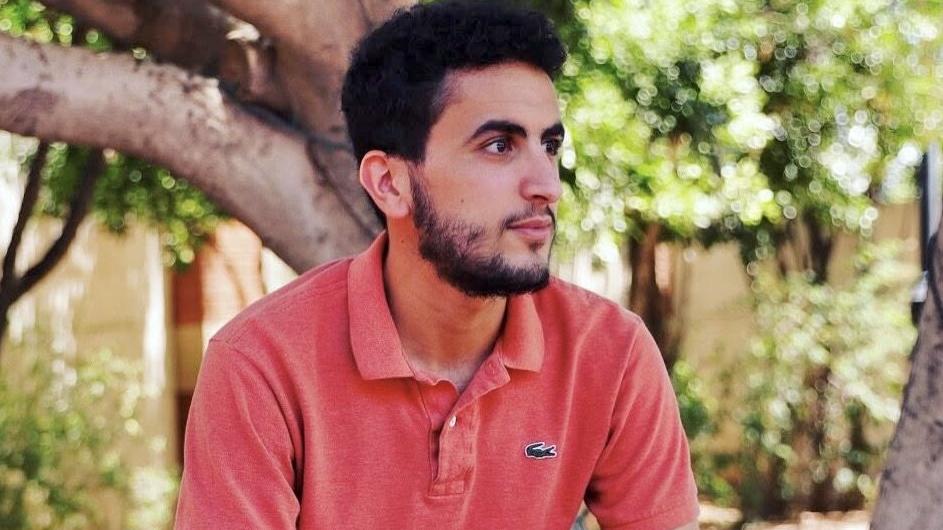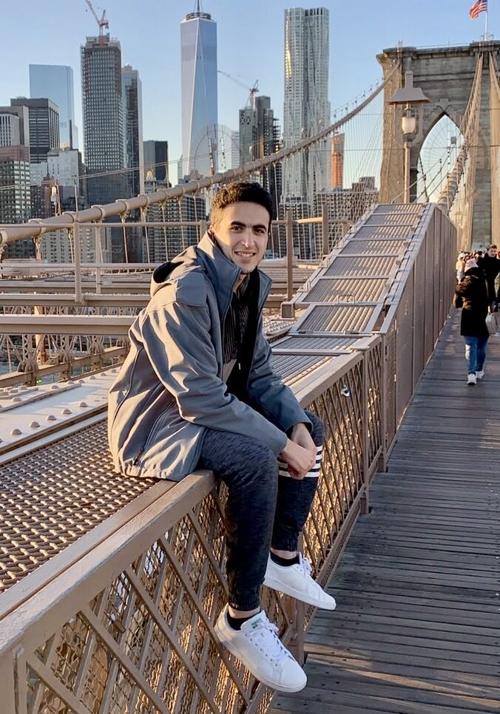
After weeks of being jailed in Equatorial Guinea without charge, an Arizona man has been released from a squalid jail cell there, where he’d been held "incommunicado" without access to legal counsel, attorneys confirmed Friday.
Late Thursday night, Ahmed Soliman, 31, of Phoenix, and another deportee from the U.S. who was arbitrarily jailed last month, were both returned to the decommissioned hotel where they had been previously imprisoned with more than 20 others deported from the U.S. to Equatorial Guinea.
The move comes days after a federal judge in Arizona ordered the U.S. government to facilitate Soliman's return to the U.S., citing the "irreparable" harm Soliman has suffered since his "unlawful" deportation to the Central African nation, to which he has no ties.
People are also reading…
The men, and others held at the hotel, still aren't being allowed any contact with attorneys or journalists, attorney Lucas Olo Fernandes told the Arizona Daily Star Friday. Authorities have seized all detainees' communication devices and are holding the deportees under armed guard at the hotel, despite none of them having been charged with a crime in Equatorial Guinea.
"They just got back to the hotel, which is a better situation than before (in jail), but still in detention, at the end of the day," said Olo Fernandes, who works with a non-governmental organization, based in Spain, that advocates for human-rights activists and others persecuted in Equatorial Guinea. Most recently, that includes U.S. deportees imprisoned there, despite having committed no crime in the country.
An Equatorial Guinea-based colleague of Olo Fernandes was able to visit Hotel Bamy, located in Equatorial Guinea's former capital of Malabo, and confirmed that Soliman and Samson Birhane had been returned there, following their violent arrest and incarceration Sept. 11.
Olo Fernandes said Soliman's release from jail, and return to the hotel, was likely a response to intense public pressure, due to persistent news reports on Soliman’s public allegations about his and others' treatment in Equatorial Guinea. Soliman was hospitalized during his time at jail, likely due to malaria, but attorneys have not been able to confirm his health status.
It's unclear if Soliman's unexpected release was a response to the U.S. judge's order, issued Oct. 6. Olo Fernandes said it's more likely that international media attention to Soliman's case, first reported by the Star in August, is having an impact, as well as pressure from human-rights groups.
"The constant reporting, yours and others that have been reporting about it, is more likely to be the reason behind the government sort of releasing them, so that there’s less information damaging their image. That's my opinion," he said. "All this pressure, I think, has worked. We never know what the reasoning is behind the government's decisions, but that's what we think was making them uncomfortable."
Still, attorneys hope the federal judge's ruling represents a potential legal pathway for all U.S. deportees sent to Equatorial Guinea to finally return to the U.S., after having been deported to a country to which they have no ties without notice or due process. A class-action lawsuit on the issue is now pending before the U.S. Supreme Court.
"I'm hopeful, because it's one of the only hopes that we have," Olo Fernandes said.
DHS has tried to argue that people it deports to third countries aren't required to have an opportunity to express fear of deportation to a particular country, as required by U.S. law, if that country has provided the U.S. State Department with "diplomatic assurances" that deportees will be treated humanely.
Multiple judges have disagreed with the government's claim, and U.S. deportees at the hotel have said any diplomatic assurances are "a lie," citing the verbal abuse, assaults, threats at gunpoint and the lack of food, hygiene products and medical care that they've endured at Hotel Bamy.
"Ahmed's case is the clear example that they haven't respected those (diplomatic) assurances that they set before bringing anyone" to Equatorial Guinea, Olo Fernandes said.
Though it may take time, Olo Fernandes said, "I think at least now that there’s a judge order, my hope is it will be a cascade situation for the others (also imprisoned). But at least, I think, for Ahmed they should take him back home."
In response to the Star's query about the judge's order to return Soliman, an unnamed DHS spokesperson said in a Thursday email, "... The end result will be the same—he will not remain in the U.S. This administration will not ignore the rule of law."
Neither DHS, nor the U.S. State Department, have responded to allegations that it is the U.S. government who is disregarding the law, in deporting people without notice to countries where their lives are at risk.
DHS maintained Equatorial Guinea is a "safe third country," in its email. That's despite widespread reporting on the abuses suffered by deportees the U.S. has sent there, and despite years of U.S. State Department reports criticizing Equatorial Guinea's human-rights practices, corruption, arbitrary detentions, torture and extrajudicial killings.
"When an individual is no longer in ICE custody, ICE is no longer responsible for them," the DHS statement said.
Still in danger
Soliman and Birhane are still in detention, back at the hotel where they were previously held with more than 20 other U.S. deportees in what they called dangerous, deteriorating conditions.
Lawyers have not been able to reach any of the deportees since Sept. 9, when authorities at the hotel seized the communication devices of all the people held at the hotel, she said.
"They’ve been transferred from one incommunicado situation to another. It still is very much a dangerous situation that they’re living in," said Kate O'Donnell, attorney with Tucson law firm Green Evans-Scroeder, the firm representing Soliman in his civil complaint, filed Sept. 15 in U.S. District Court in Arizona.
The lack of information is "terrifying," she said, particularly for lawyers representing hotel detainees with serious medical needs. One of O'Donnell's other clients held at the hotel has a serious chronic condition that requires medication, she said.
"We have been unable to confirm whether he still has medication, how to get him medication or his physical condition at all," she said. "They're being held without any outside observers, no contact with legal counsel, nobody who can check up on them in any way whatsoever."
At least one person at the hotel had a medical emergency serious enough to require hospitalization last month, which is the only reason lawyers became aware of the man's critical condition, lawyers told the Star in September.
Despite the risks they still face, Soliman and Birhane's return to Hotel Bamy is welcome news for the other detainees at the hotel, who had no idea if the men were still alive after witnessing their violent arrest, and hearing armed guards threaten their lives, attorney Dana Camilleri, also of Green Evans-Schroeder, said Friday.
"Everybody being together in the hotel is very important from an emotional standpoint," she said. "I believe Ahmed and Samson are very well-liked, and they've all really banded together over these months. At least (the release from jail) shows everyone that even though they were tortured, there was a way to get them back. They were not killed, as they were threatened to be killed. I think that’s all incredibly important, for everyone’s mental health."
Under District Judge Hinderaker's order, the U.S. government was directed to issue a status report every three days providing an update on the efforts to locate and return Soliman to the U.S. The defendants named in Soliman's civil complaint include the U.S. Department of Homeland Security, the State Department and U.S. Attorney General Todd Blanche.
Government attorneys filed their first status report in the case Friday, promising a more "substantive" update next week. Camilleri said her firm informed the assistant U.S. attorney on the case of Soliman's release from jail Thursday.
U.S. agencies "are working collaboratively with Petitioner’s counsel, who shared valuable information to help Respondents attempt to locate and contact Petitioner," said the filing, submitted by Arizona U.S. Attorney Timothy Courchaine.
Respondents to the complaint "are beginning the process to facilitate Petitioner’s return. Respondents will provide a more substantive update next week along with a declaration regarding specific steps that are being taken and the most recent updates on Respondent’s efforts to facilitate Petitioner’s return."
'Risk of torture'
Amnesty International issued an urgent call to action after Soliman and Birhane's Sept. 11 arrest, which took place at Hotel Bamy, citing the "risk of torture" to the men while arbitrarily jailed in Equatorial Guinea, the Star has reported.
Attorneys say Soliman was targeted for arrest in retaliation for his determination to speak out publicly to news media, including the Star, and to human-rights advocates about inhumane detention conditions for U.S. deportees sent to Equatorial Guinea.
Soliman, who grew up in Phoenix after his family fled Egypt when he was 4, has been imprisoned, either at the hotel or in a jail cell, since he was deported to Equatorial Guinea in April.
His deportation, without notice or the opportunity to express his fear-based opposition to the removal, was an "unlawful" violation of U.S. law, and of Soliman’s Fifth Amendment right to due process under the Constitution, a federal judge in the U.S. District Court of Arizona said in a ruling issued Oct. 6.
Judge Hinderaker said in the order that the U.S. government must facilitate Soliman’s return to the U.S., citing "irreparable harm" Soliman has endured since his sudden deportation.
Soliman was physically carried onto a deportation flight on April 28, after he sat down and asked for his statutorily required "credible-fear screening." ICE officers refused his request and put him on the plane, Soliman and his attorneys previously told the Star.
Soliman, who is gay, said he would face threats to his life in Equatorial Guinea, where homosexuality is de facto criminalized, and said would have raised those concerns if permitted to lodge his fear-based claim with a judge.
Soliman had already been granted protection against return to his home country of Egypt. In October 2025, an immigration judge agreed Soliman he would likely face torture or death there due to his sexual orientation and due to his family’s political activity there when he was a child.
Instead of releasing him, ICE continued to look for a third country to deport him to.
At least 35 countries, including 14 in Africa, have signed third-country removal agreements with the U.S., as the Trump administration focuses on deporting anyone in the U.S. with an order of removal, even if an immigration judge previously granted them protection against return to their home country, as is the case for Soliman and nearly everyone imprisoned at Hotel Bamy.
Contact reporter Emily Bregel at ebregel@tucson.com. On X, formerly Twitter: @EmilyBregel

Emily Bregel
Border reporter


 Arizona man hospitalized in Equatorial Guinea; U.S. officials mum on abuse claims