As public attention has turned to immigration enforcement in the interior of the U.S., human rights advocates want to draw attention back to an ongoing, decades-long crisis: Migrating people are continuing to die in Tucson's backyard.
The number of migrants crossing the U.S.-Mexico border has plummeted since 2024. But thousands are continuing to make their way through the dangerous Southern Arizona desert each month, risking their lives in the process, said Octavio Fuentes, executive director of Humane Borders. The Tucson nonprofit maintains a network of water barrels in the Arizona borderlands aimed at helping anyone in need, including migrants, border agents or lost hikers, avoid an excruciating death due to lack of water.
"Deaths are still happening in the desert," Fuentes said. "It's in the summer that our mission becomes that much more necessary."
People are also reading…
In April alone, eight migrants' deaths were reported to the medical examiner's office in Pima County, including two people who had been dead less than one day when they were found, and another who had been dead less than one week. The remains of the other five were completely skeletonized, a process that happens quickly in the dry desert climate.
Humane Borders works with the Pima County Office of the Medical Examiner to maintain an interactive "Migrant Death Map," showing the location of bodies recovered in the Southern Arizona desert and time-of-death estimates, based on the condition of their remains.
The nonprofit's database has recorded more than 4,400 migrant deaths in the Southern Arizona borderlands. More than 1,600 of the dead are still unidentified.
Among the recent deaths is 24-year-old Silvino Alvarez, who had been dead less than one day when his body was found in March on the Tohono O'odham Nation, south of Sells.
On April 21 outside Douglas, the body of Karla Barrientos Castillo, 20, was recovered one day after her death from environmental heat exposure.
Their deaths are not accidents, but a direct result of the U.S. border-militarization policy that is designed to push migrants into more treacherous terrain, said Fuentes of Humane Borders.
"Every single dot on our death map is the result of U.S. immigration policy. They’re not a bug of the system; it’s a feature of the system," he said. "These are all preventable deaths because you have engineered all of this through policy."
Though the Trump administration claims the border is "closed," critics say the idea of sealing off the entire southern border is impossible.
In April, nearly 9,000 people were apprehended by Border Patrol agents after crossing the U.S.-Mexico border, including about 1,700 in the Border Patrol's Tucson Sector, according to the latest data from U.S. Customs and Border Protection.

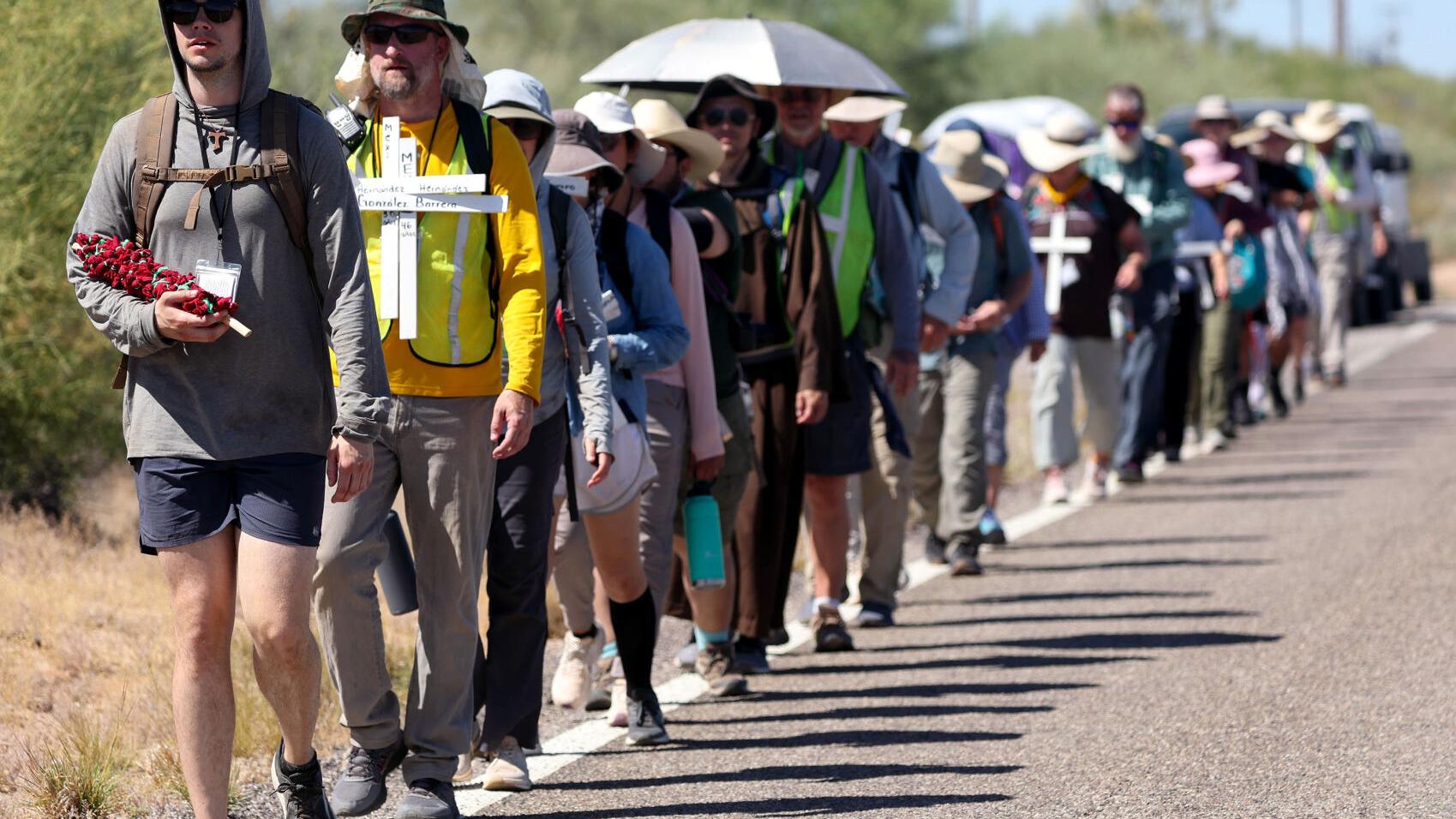
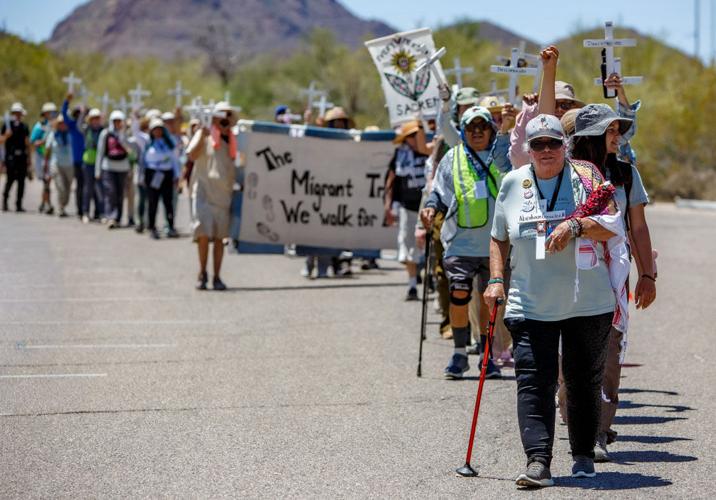
Participants in the 23rd Arizona Migrant Trail Walk spent a week in late May walking the 75 miles between the border town of Sásabe and Tucson. The annual walk honors the thousands of lives lost in the Arizona desert.
Continued efforts to militarize the southern border, and even add a second border wall, are causing massive environmental damage and making migrants' journey even more dangerous, said Bryce Peterson, a Tucson-based volunteer with No More Deaths.
"It's not going to stop people coming into the country, but it is going to make more people die," he said. "There’s some sort of fatigue, where I think people don’t even realize this is still something that is happening."

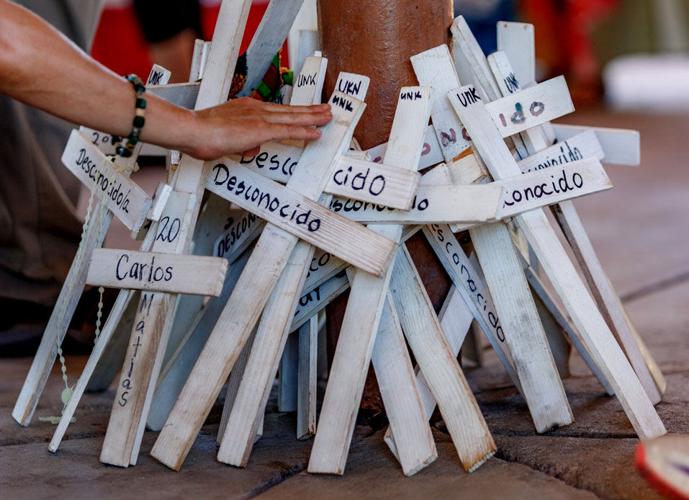
Migrant Trail participants carry white crosses bearing the names of migrants whose remains were recovered from the desert, or labeled "desconocido," Spanish for "unknown." Since last year’s Migrant Trail Walk, 109 sets of human remains have been recovered in the Arizona borderlands.
Each year U.S. Border Patrol makes an announcement warning migrants about the risks of traveling through the borderlands.
"The Arizona desert is incredibly dangerous," then-Tucson Sector Chief Sean McGoffin said in a July 2025 social media video. "It is rugged and offers little to no shade or water. Summer temperatures can reach 120 degrees, and smugglers won’t hesitate to leave anyone behind in this deadly environment. Don’t risk your life or the lives of others."
Migrant Trail Walk
More than 20 years ago, the impact of border militarization was becoming apparent, as more and more migrants were dying in the desert, said Jamie Wilson, an organizer of the Migrant Trail Walk, held annually in honor of those who have died trying to reach safety in the U.S.
"The thinking at the time was, if we just get the word out, if Americans in the interior of the country learn about this, then they will be appalled and will call for it to stop," she said.
But 23 years later, the deaths continue, she said. Last month, dozens participated in the 23rd-annual Migrant Trail Walk, walking the 75 miles between the border town of Sásabe to Tucson over the course of seven days.
Some participate in the Migrant Trail Walk to grieve for loved ones they've lost, to call attention to the ongoing deaths or to fight a sense of powerlessness, Wilson said.
"For each walker the experience is unique," she said. "Each walker brings something different and walks for their own reasons. We’re all committed to calling for a different way of looking at borders and immigration. ... No one deserves to die because they need to migrate to another place."
Since the last Migrant Trail walk in May 2025, more than 100 bodies have been found in the desert, in varying stages of decomposition, said Kat Rodriguez, who helped organize the first Migrant Trail Walk in 2004.
By walking along the Migrant Trail, "we are not trying to say we now know what it's like to cross the border," Rodriguez said. "We’re saying, 'We’re standing in solidarity and we refuse to let the deaths be disappeared from public consciousness.'"
Republican and Democratic presidential administrations, and lawmakers of all political stripes, share the blame for the ongoing deaths, she said. That includes lawmakers' failure to modernize an immigration system that was last updated 30 years ago, despite the U.S. labor market's continued reliance on immigrant labor, she said.
Today's border militarization is a continuation of the U.S. government's efforts that began in the 1990s, starting with the Clinton-era Operation Gatekeeper and its strategy known as "prevention through deterrence." The Customs and Border Protection strategy sought to close off access to urban centers and force migrants into dangerous terrain to cross the border.
In a 1994 planning document, federal officials acknowledged the strategy could place migrants in "mortal danger," but argued that making migrants' journey more dangerous would deter people from crossing the border illegally, the Arizona Daily Star has reported.
Thirty years and thousands of deaths later, human rights advocates say the policy has proven ineffective, and lethal.
"Both political parties have been complicit in border policies that have gotten more and more extreme," Rodriguez said.
Saving lives 'at scale'
For Fuentes, the urgent need for a more humane and realistic approach to border policy couldn't be more clear.
Fuentes grew up on Tucson's south side, after his family moved from California to be closer to relatives in Sonora, Mexico. Fuentes took over as executive director of Humane Borders in April, and hopes to scale up the nonprofit's life-saving mission.
He said he draws from his experience as an immigrant rights activist with groups like Tucson's Coalición de Derechos Humanos and his career that includes defense department contracting work in the Middle East, higher education and working with the global climate and renewable-energy nonprofit Rocky Mountain Institute.

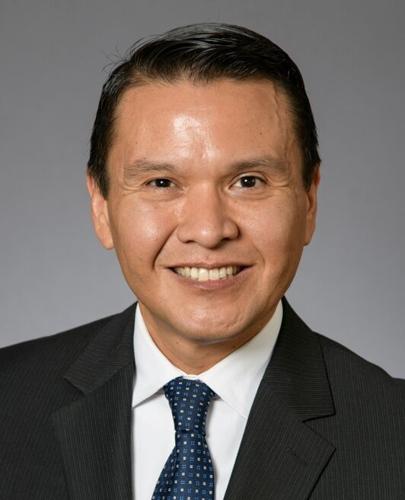
Octavio "Tavo" Fuentes, executive director of Humane Borders.
At the heart of Humane Borders is direct action, through supplying water to people in need in the desert and bearing witness to the deaths that occur there, Fuentes said. But he envisions expanding the mission to include public-policy work that could help address the root causes forcing so many to flee their homes and risk their lives for a chance at safety.
That requires taking a hard look at U.S. policies that have long generated economic and political instability throughout Latin America and the world, and taking responsibility for the consequences of those policies, he said.
Even today, U.S. foreign policy is causing disruption in places like Iran and Venezuela, and "the consequences of those disruptions is people are displaced," he said.
Policy changes in the U.S. should focus not only on the need for legal pathways for people to enter the U.S., but also on creating foreign policy that respects the right of people to stay in their home country, rather than be forced to leave by untenable conditions, like violence or hunger, Fuentes said.
In speaking with immigrants about why they had to leave their home country, Fuentes has heard over and over again that people felt they had no other choice.
"I would ask, 'Why do you risk your life coming here?' The response was, 'I would rather risk dying in the desert than to stay and watch my family die,'" he said.
Fuentes said Humane Borders is, and will remain, a nonpartisan organization.
"This isn’t about (political) parties. Both parties have owned the policy of 'prevention through deterrence' through the last 30 years," he said. "Our mission is solidly founded on whether people live or die. That's our mission, to save lives. ... I'm looking for partnerships with whoever is willing to step up and save lives with us, whether they have a 'D' at the end of their name or an 'R.'"
Contact reporter Emily Bregel at ebregel@tucson.com. On X, formerly Twitter: @EmilyBregel

Emily Bregel
Border reporter


 Second wall planned across Arizona as Trump administration doubles down on border