People at an Arizona ICE facility told advocates that they were held for several days in "overcrowded," "inhumane" and "deplorable" conditions in a place meant to hold people for a maximum of 72 hours, according to a report from the Florence Immigrant and Refugee Rights Project.
The conditions described at the U.S. Immigration and Customs Enforcement's Florence Staging Facility are a "multi-layer issue" with several factors leading to the creation of the "deplorable" conditions, said Liz Casey, the author of the report and an advocacy social worker with the organization.
The Florence Project heard about large groups of people transferred from the Mesa Gateway Airport ICE facility, Casey said.
However, the Trump administration's agenda of mass deportations "is just resulting in a significant increase in the amount of people being picked up internally" and "just waiting for deportation," Casey said.
People are also reading…
"We're hearing a lot of reports of just total disorganization: people being brought to planes and then told the plane is broken, people being put on planes, flown around the country or to different countries and then brought back to the facility" Casey said. "So just a complete lack of organization."
The Florence Immigrant and Refugee Rights Project, also known as the Florence Project, provides legal and social services to detained unaccompanied children and immigrant adults, including adults with severe mental illness "who are deemed incompetent by a judge to represent themselves in their immigration cases," according to its website.
The Florence Staging Facility detains people for less than 72 hours before they are processed and sent to a "longer-term detention center," according to the Florence Project and a 2017 Department of Homeland Security Prison Rape Elimination Act audit report.
The majority of accounts from the Florence Staging Facility "now indicate that people are being detained there for days or weeks and are only waiting to be deported," the report said.
After days or weeks in the Florence Staging Facility, several individuals said they were transferred to a different housing unit within the Florence Detention Center Complex while they wait for their deportation, the report said.
The Florence Project started getting reports of overcrowding at the Florence Staging Facility at the end of 2025, Casey said.
The organization heard about two months ago that individuals were held in other facilities at the Florence Detention Center, Casey said.
The Florence Staging Facility, also known as Fox or Los Conos, is a part of and on the same campus of the better-known Florence Detention Center. The Florence Detention Center is also known as the Florence Service Processing Center.
Some of the individuals detained at the Florence Staging Facility and Florence Detention Center were held for over a month "with no knowledge of when they would be deported or what was delaying the process," the report said.
ICE did not immediately respond to requests for comment on the report's findings.
Overcrowding, lack of communication
Around 200 men to 300 men were held in a "large housing unit" meant to hold a maximum of 120 people at the Florence Staging Facility, the report said.
The unit had about 60 bunk beds, but because of the overcrowding, many men were forced to sleep on the concrete floors without a mattress or blanket, "sometimes for several days," the report said.
Twenty-eight women were held in trailers meant to hold a maximum of 20 people, the report said. The trailers contained 10 bunk beds, but the overcrowding forced some women to sleep on the floors.
It is not clear "why people are being detained indefinitely" while they wait for their deportation, the report said.
The Florence Project believes ICE may now be using other housing units of the Florence Detention Center because of the overcrowding situation at the Florence Staging Facility, the report said.
It is believed that people were housed at the Florence Detention Center for several days or weeks as they await deportation, the report said.
Report: Detainees cut off from sunlight, communication
The report also highlighted the following accounts from what advocates learned from detainees and staff visits to the facility:
Many individuals asked ICE officials when they would be deported, but the ICE officials did not provide any information.
Several individuals were returned to the Florence Staging Facility or a different housing unit after they were taken out of the facility for what they believed were their deportation flights.
The people were told that either no flight was available or that the plane was broken "despite earlier representations that removal would occur quickly."
Several detainees reported not having access to tablets to communicate with ICE, their attorneys and their families. It sometimes took weeks for individuals to get access to a telephone.
Detention staff told the Florence Project "on at least four occasions" that they could not visit a client at the Florence Staging Facility because they were still "'being processed.'"
One Florence Project staff member was denied a visit to her client at least three times over a span of nine days because the detention staff said "he still had not been processed or had medical intake."
Other attorneys were unable to schedule legal calls with their clients within the Florence Staging Facility, "sometimes for days or weeks."
Many of the detainees' family members "did not know where their loved one was located for days or weeks."
Several individuals said they did not have access to recreation time for several weeks, which meant they did not go outside nor see the sun for extended periods of time.
Many individuals within the Florence Staging Facility described the lack of information and indefinite wait for deportation as "psychological torture."
Report: Rashes, lack of medical care
Multiple individuals within the Florence Staging Facility have raised "increasing alarm regarding the deplorable living conditions at Florence Staging Facility and Florence Detention Center," the report continued.
Most of the people who arrived to the Florence Staging Facility received a "short medical intake" but they "did not have access to additional medical services or medication."
When individuals submitted requests for medical care, "those requests went unanswered," the report said.
Many people within the facility "became sick with flu-like symptoms such as coughing and fevers" because of the "immense overcrowding."
The report detailed several cases of diabetic individuals not receiving their necessary medication to regulate their blood sugar, with one seeing his blood sugar raise to dangerous levels of 499. Normal blood sugar levels are around 140, according to the Mayo Clinic.
One individual with HIV did not receive his medication for two days at the Florence Staging Facility.
The individual reported getting "very sick" with a high fever, shortness of breath and chest pain "soon after his arrival," the report said. He put in a request for medical care every day for almost two weeks. The individual was given water and aspirin for his symptoms.
One man with Amyotrophic lateral sclerosis, also known as ALS or Lou Gehrig's disease, was in the Florence Staging Facility for about two-and-a-half weeks.
He had "intermittent access to his medications" but not given disability accommodations such as a shower chair, the report said. The man requested a shower chair, but the Florence Staging Facility Staff told him they would not get a chair because "'it's only a transit facility.'"
Man forced to shower in his wheelchair, the report said.
Grijalva: Conditions 'deeply disturbing'
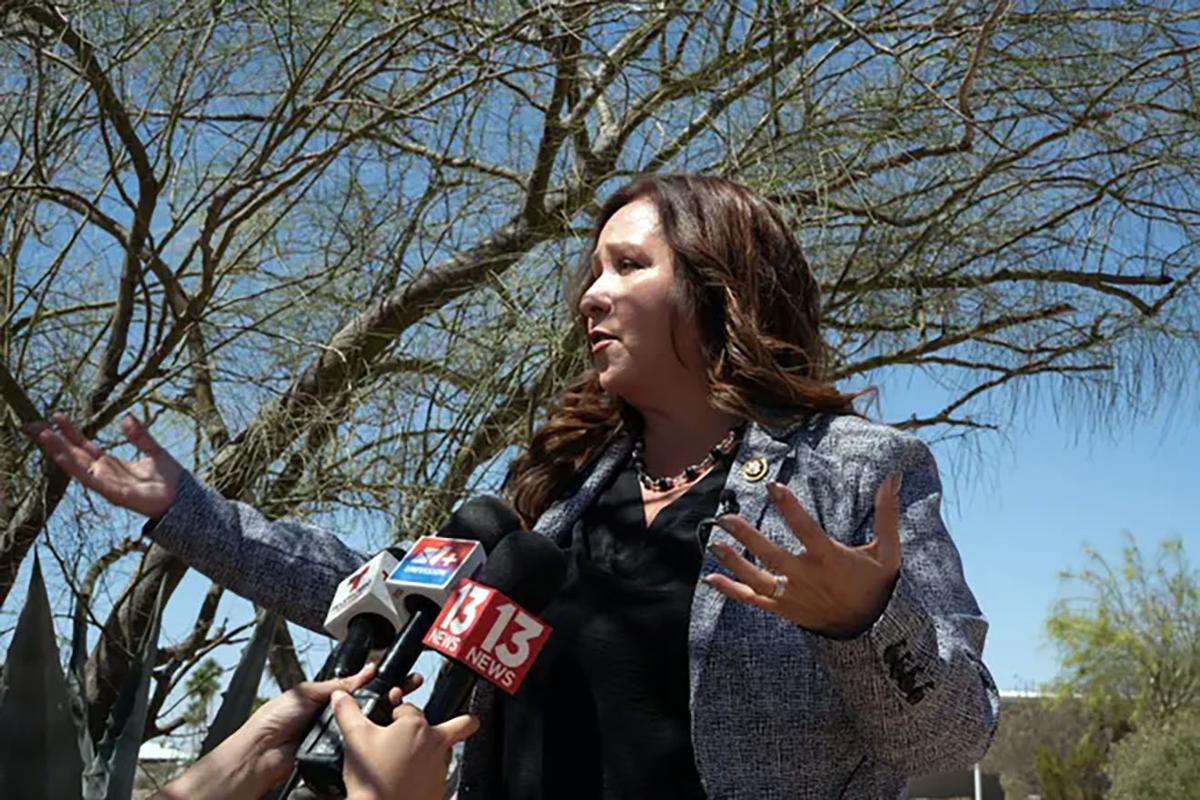
The conditions inside the Florence Staging Facility were deeply disturbing to Rep. Adelita Grijalva, D-Arizona.
“This facility was never meant for long-term detention, yet people are being held here for weeks at a time, resulting in overcrowding and detainees deprived of basic hygiene, proper healthcare, clean laundry, and access to legal representation,” Grijalva said in a June 15 written statement.
She added: “Detainees have compared the conditions there to psychological torture, and based on their accounts, it is hard to call it anything else.”
Grijalva urged the passage of legislation that she introduced with fellow Democratic Reps. Greg Stanton and Yassamin Ansari of Arizona to “establish clear limits on how long someone can be held at a short-term facility.”
“Many of these individuals are simply just waiting to be deported, and it is very concerning that ICE is simply juggling them between overcrowded facilities because they cannot get their act together,” Grijalva said.
Grijalva had made a surprise oversight visit to the Florence Staging Facility on May 7.
When Grijalva visited the facility, it was "it was difficult to assess" the demeanor and physical condition of the inmates because of limited visibility of the "pods" where they were detained, she said during a May 7 news conference.
At the time, Grijalva said she did not see overcrowded conditions. However, she admitted that she was operating on limited knowledge about the facility.
“During my visit, it was unclear which specific areas of the facility I was being shown. Although I repeatedly requested access to the short-term staging facility, I did not receive clear answers about whether the areas I toured were part of that facility or another section of the complex,” Grijalva said in her statement.
Acknowledging the populations of ICE facilities can vary "day to day," Grijalva said it is likely that her surprise visit happened on a day "when there fewer detainees than normal."
Grijalva was told by the facility’s staff that she needed to give advance notice to receive a full tour, but “this undermines the entire purpose of a surprise oversight visit,” she said.
“It gives ICE time to alter conditions, move detainees, or otherwise present a curated version of facility operations,” Grijalva said.