The Tohono O'odham Nation has filed a lawsuit against a Texas-based border wall contractor, seeking to halt pre-construction activities the tribe says constitute trespassing.
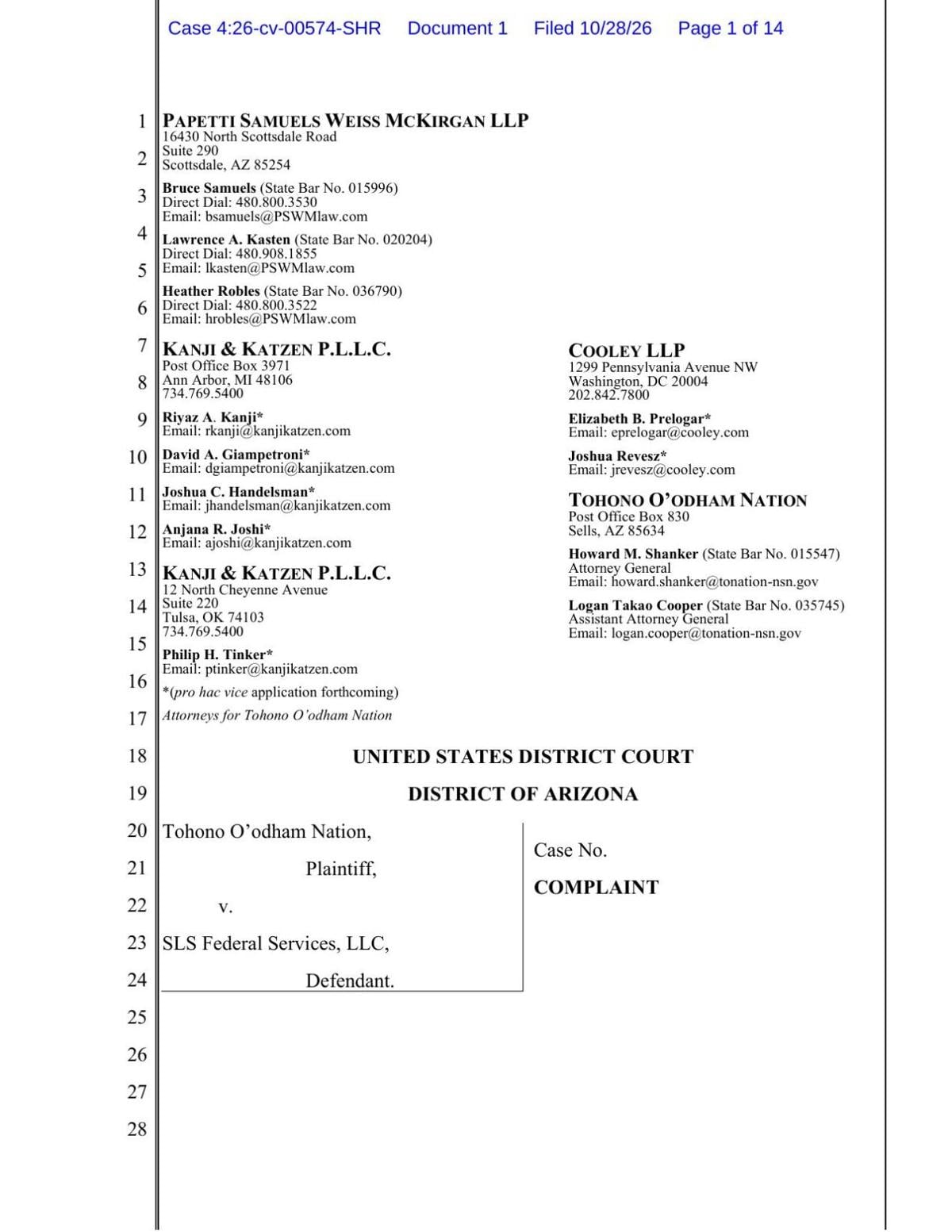
The lawsuit, filed Oct. 28 in U.S. District Court in Arizona, argues U.S. Customs and Border Protection contractor SLS Federal Services has been using private tribal roads without authorization to carry out work staunchly opposed by the tribe.
"The Nation does not grant and has not granted approval for CBP or its contractors to utilize these or other private, interior Reservation roads for border wall construction purposes," the complaint said. "... Contractors have nevertheless repeatedly swarmed the Nation’s Reservation since August, utilizing those interior Reservation roads to reach the border to take geotechnical borings, tag plants for relocation, and conduct other pre-construction activities."
People are also reading…
Without court action to halt those activities, SLS "will continue this course of accelerating trespasses with the end goal of indelibly altering the Nation’s Reservation landscape and traditional homeland," the complaint said.
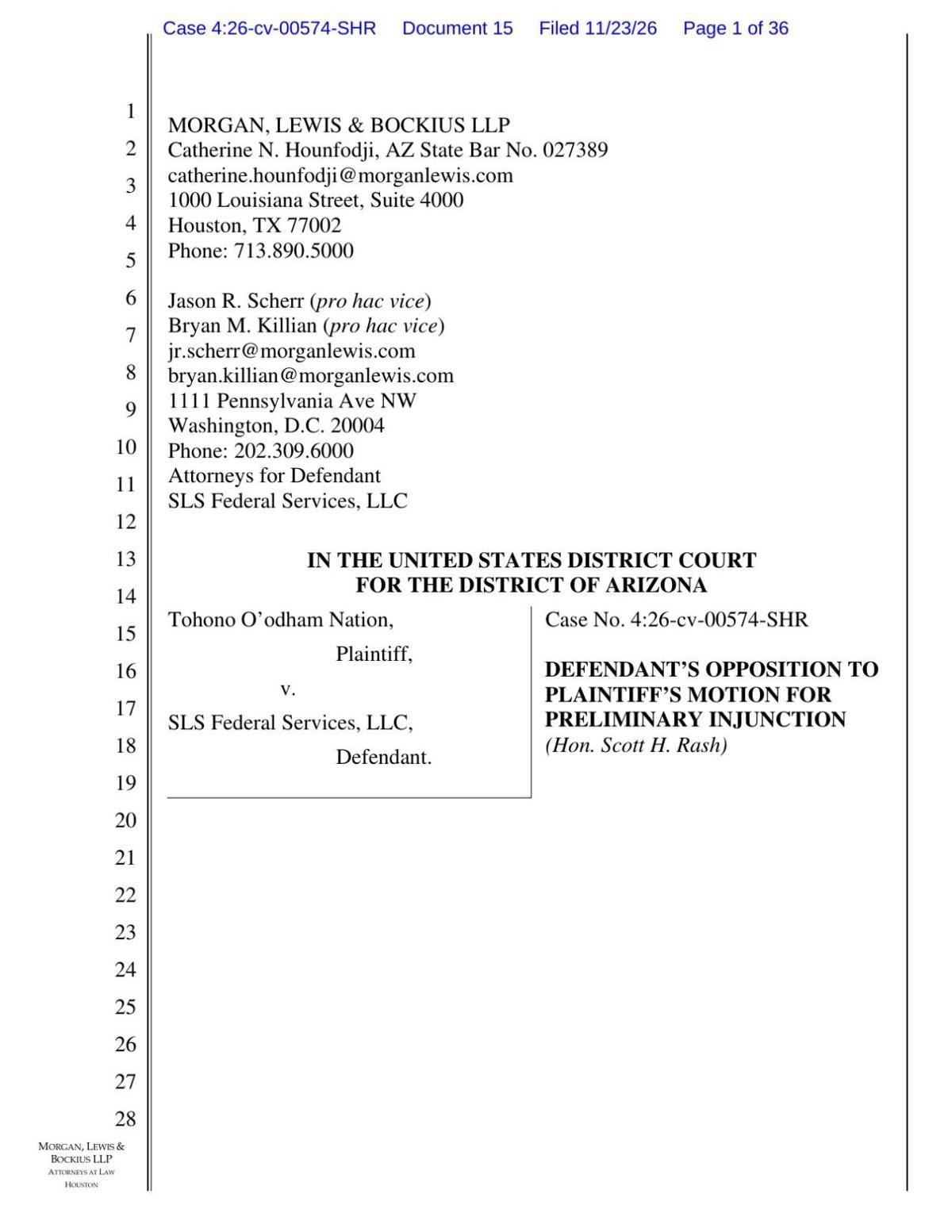
In a Nov. 23 response, SLS Federal Services said the Nation's motion for a preliminary injunction should be denied, citing similarities to the tribe's earlier case against the U.S. Department of Homeland Security, filed in June. The federal judge in that case, which is currently pending in an appeals court in the District of Columbia, has denied the tribe's injunction requests.

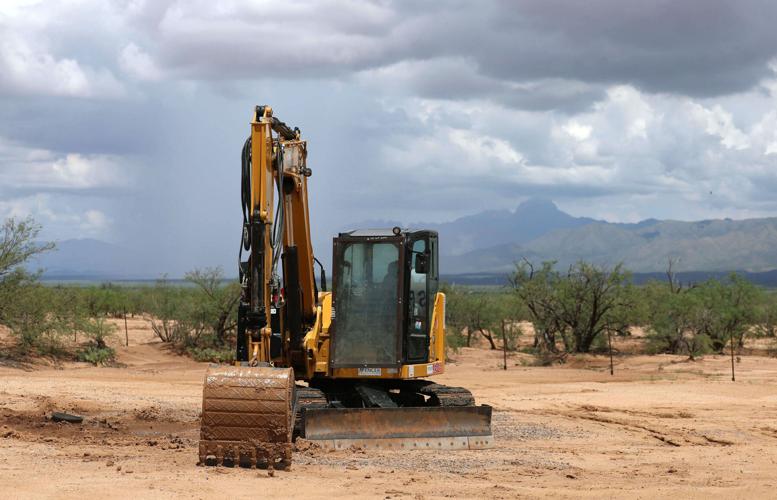
Border wall construction equipment, pictured on the Tohono O’odham Nation near the international border.
"Because the Nation’s action in this forum concerns the same planned construction, directed by the same federal agencies, on the same land, with the same alleged harm, the result in this forum should be the same," SLS's filing said.
SLS Federal Services said the alleged harms caused by border-wall construction — which the tribe expects to require removal of 4,000 cacti and other vegetation — are outweighed by border-security concerns.
"The Nation’s claimed environmental injury is speculative and the Nation’s sovereignty and property rights are not compromised by federal activities," the response said.
Tribal leaders have said the destruction of thousands of saguaros, sacred to the Tohono O'odham, and other vegetation in the borderlands is deeply harmful and an affront to tribal members' religious beliefs and the Nation's sovereignty.
"Such wholesale and irreversible damage to the Reservation environment and natural and cultural resources constitutes quintessential irreparable harm," the Oct. 28 complaint said.
Construction "will uproot, maim, and destroy thousands of culturally significant plants, including saguaro cacti, whom the O’odham regard as relatives and upon whom they have bestowed legal personhood," the complaint said. "They will blast through mountain peaks and ranges sacred to the O’odham to clear a pathway for the wall."

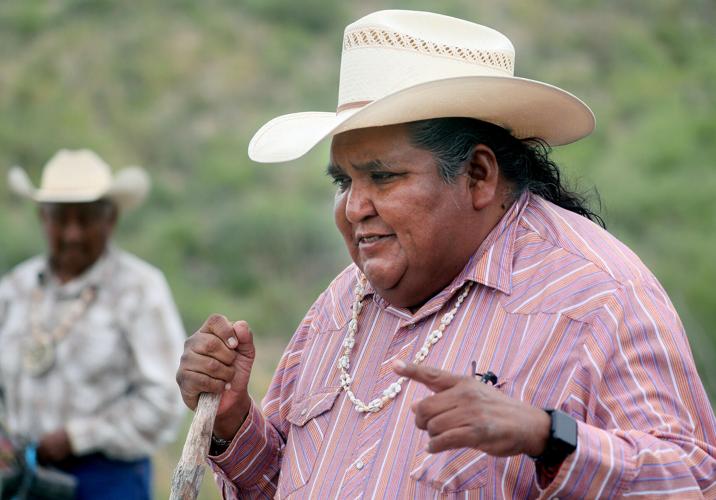
Verlon Jose, Tohono O’odham Nation chairman
In an emailed statement, CBP Commissioner Rodney Scott said the project "will close one of the most dangerous smuggling and trafficking corridors on the Southwest border: remote desert that has facilitated decades of drug loads, migrant deaths, and cartel activity. Congress funded this work, a Federal court has affirmed it, and CBP is carrying it out under the legal authorities that apply. Under President Trump’s leadership, we are securing the border and giving our agents the tools and support they need to protect the American people."
Tribal Chairman Verlon Jose has told the Star the Nation has "bent over backwards" to work with the U.S. Border Patrol on border security, and that modern, technology-based infrastructure is far more effective than a physical barrier.
"The Nation’s southern boundary is presently heavily fortified with a vehicle barrier, two law enforcement operating bases, a CBP checkpoint, roving CBP and Nation patrol units, and ten high-tech surveillance towers, among other technological advances," the complaint said. "These security measures are so effective that unlawful entries through the Reservation are at an all-time low."
On Wednesday, the tribe had a setback in its appellate court case in D.C. In an unsigned order, on behalf of the three appellate judges, the court denied the tribe’s motion for an injunction to immediately halt construction on the border wall, pending the outcome of the appeal case. The order said the tribe "had not satisfied the stringent requirements for an injunction pending appeal."
Contract awarded despite lawsuit
In June, SLS Federal Services was awarded a $1.3 billion contract to build 62 miles of primary border wall along the southern boundary of the Nation's border with Mexico. The contract award, documented on USAspending.gov, also listed a "potential award amount" of up to $2.2 billion.
The contract was awarded 10 days after the Tohono O'odham Nation filed a lawsuit against DHS and its leaders, seeking an injunction that a federal judge has twice declined to grant.
Much of the debate centers on who owns the 60-foot strip of land running along the southern border of the U.S., known as the "Roosevelt Reservation."
Tribal attorneys say that land belongs to the Tohono O'odham Nation and the government's construction amounts to shrinking the size of the reservation, established in 1917, which the tribe argues only Congress can do. They also argue construction of two border walls planned by CBP will require activity and impacts that extend far beyond the 60-foot strip in question.
"Wall construction will require extensive staging areas, material storage, equipment parking, and portable concrete batch plants that extend hundreds to thousands of feet beyond the immediate border,'' attorney for the tribe Riya Kanji told the appellate court in October. That will "result in substantial and long-lasting disturbances to the soils, hydrology, desert pavement, and vegetation communities'' that could take centuries to repair, he said.
DHS has cited a 1907 presidential proclamation declaring public lands within 60 feet of the international boundary are under the exclusive control of the federal government.
Last month, DHS attorney Christopher Anderson also argued, in a filing before the Court of Appeals for the District of Columbia, that the Tohono O'odham Nation doesn't have a legal right to go to court to stop the construction in the first place, the Star reported.
Anderson acknowledged prior lawsuits where courts have allowed tribes to sue those who trespass but argued those cases don't apply to the United States government.
Currently, low-lying vehicle barrier lines much of the border where DHS is seeking to install two border barriers for the so-called "Tucson 5 Project."
Tribal leaders have long opposed plans for a 30-foot border steel barrier there. Chairman Jose previously called CBP's bypassing of tribal consultation a "betrayal," after years of tribal collaboration with CBP on border security.
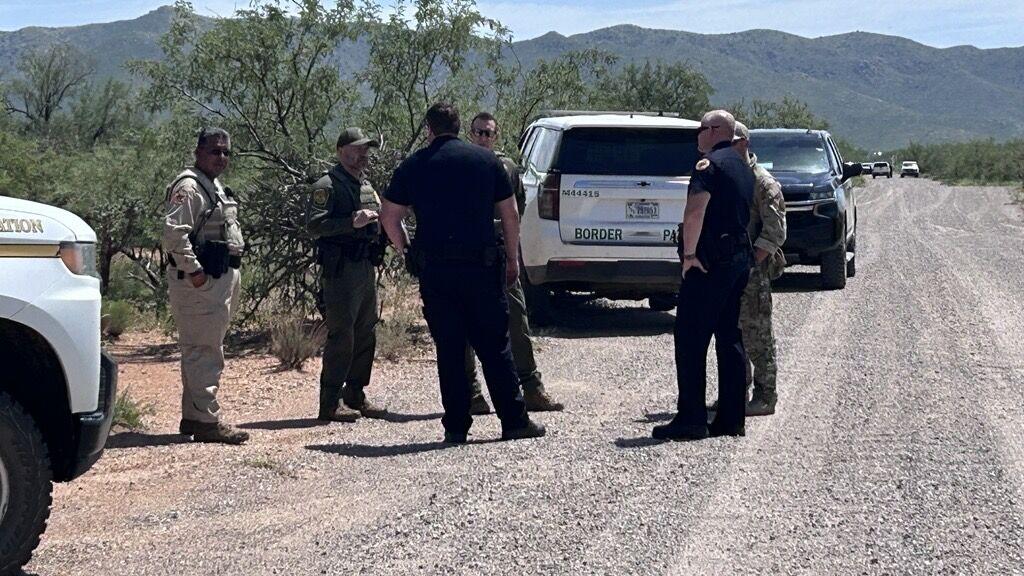
In August, border wall contractors' incursion onto tribal land prompted a tense standoff, as armed CBP agents provided an escort to protect contractors engaged in pre-construction activities on the Tohono O'odham Nation's land.
The escort was a response to tribal police turning away the contractors, enforcing a "no trespassing" order for non-tribal members in the area.
Since August, tribal leaders and advocates have been bracing for potential confrontations with wall contractors, as tribal members have gathered in a prayer circle near the San Miguel Gate, a traditional border crossing on the U.S.-Mexico border, in part to keep tabs on contractors' activity.
On Wednesday, the Nation's attorneys filed a motion opposing SLS's request to transfer the lawsuit to the U.S. District Court for the District of Columbia, rather than the federal court in Arizona.
The tribe said the transfer request is meritless because "the Nation’s Reservation is located entirely within this judicial District."
The Tohono O'odham Nation's ancestral lands stretch south to Hermosillo, Sonora, and west to Mexico's Sea of Cortez.
"The desecration of the Nation’s lands and natural and cultural resources, and the erection of a permanent, looming structure that will forever divide the Nation’s traditional lands and members in the United States and Mexico, will unlawfully deprive the Nation of its sovereignty and full ownership rights over its Reservation," the Oct. 28 complaint said.
Contact reporter Emily Bregel at ebregel@tucson.com. On X, formerly Twitter: @EmilyBregel

Emily Bregel
Border reporter



 Plans for border walls on Tohono O'odham land a 'betrayal,' chairman says