The remains of 19 deceased migrants were recovered from the Southern Arizona borderlands in July, the highest monthly figure in two years, according to data from Humane Borders and the Pima County Office of the Medical Examiner.
Five of the individuals discovered had been dead less than a day, two less than a week and four less than three months at the time they were found, said the nonprofit Humane Borders, which maintains dozens of water stations in the Arizona desert for migrants, hikers or anyone who finds themself in need in the unforgiving, remote desert of Southern Arizona.

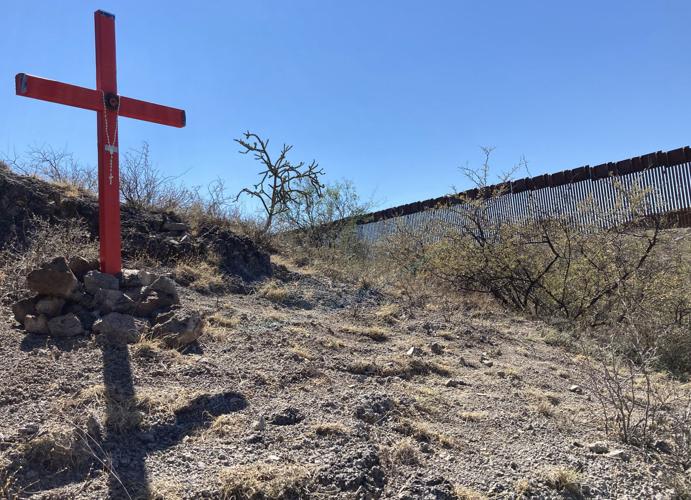
A red cross — installed in 2023 by Tucson artist Álvaro Enciso near the border wall in Arizona — honors the life of Mexican migrant Julian Xochiquiquisqui Tlehuactle, 20, who died at this spot. Julian’s body was discovered in 2013, likely less than one week after his death from hyperthermia, according to the Pima County Office of the Medical Examiner. In July 2026, the remains of 19 migrants were discovered in the Arizona borderlands, said the nonprofit Humane Borders.
Humanitarian volunteers say the idea that migration can be fully stopped is a deadly false premise, as human beings have always sought safety or a better life through movement.
Migrant crossings, and migrant deaths, have continued even as multiple presidential administrations have added hundreds of miles of costly border wall at the U.S.-Mexico border, steel barriers that migrants and smugglers routinely cut through, climb over or tunnel under, said Brad Jones, professor of political science at the UC Davis Global Migration Center and a Humane Borders board member.
People are also reading…
An impermeable southern border is "illusory," said Jones, a former professor at the University of Arizona. "Despite the rhetoric of the second Trump administration, the border isn’t closed. ... History has shown if there’s an existential reason for people to come to the U.S., whether it's economic, whether it's escaping bad conditions or family reunification, people will come. You can build all the walls you want, but people will still come."
U.S. Customs and Border Protection data show that in July, border agents apprehended 1,544 migrants in the agency's Tucson Sector, which stretches from the New Mexico border to the Yuma County line. Agents arrested nearly 9,300 migrants border-wide last month.
Over the last quarter century, more than 4,500 migrant remains have been discovered in the Southern Arizona borderlands. On Humane Borders' "migrant-death map," thousands of red icons mark locations where remains were discovered and list the known information on each migrant death the county medical examiner has recorded since 2000.
The migrant-death total is certainly an undercount, Jones said. Human remains disintegrate quickly and are easily dispersed by weather and wildlife in the desert environment.
Though July's figure was a two-year monthly high, it was by no means an unusual figure for the time of year. In July 2005, the total was 69 sets of migrant remains discovered, and three summers ago, 42 migrants' remains were found in July alone, according to a data analysis by Jones.
"This is a persistent and perennial problem, it's not just a July 2026 problem," he said. "It does ebb and flow, but it never goes away. We’ve never had a period of zero recovered remains" since Humane Borders was founded in 2000.
Under Customs and Border Protection's "prevention through deterrence" policy, implemented in 1994 under President Bill Clinton, border militarization around populated areas forced more migrants into the Arizona desert. That's led to a migrant-death crisis that has continued to this day, Jones said.
"The whole paradigm behind the prevention through deterrence is to make crossing so unrealistically difficult that no one will come," Jones said. "The fact is, people come. So it doesn’t fully prevent entry, but it significantly increases the probability of death."
As early as 1998, the Border Patrol was aware of the deadly results of the deterrence policy, according to a 2010 report from the Congressional Research Service. In 1998, the Border Patrol launched a safety initiative aimed at addressing the rising deaths in Southern Arizona, the report said.
"The 'Prevention Through Deterrence' strategy has pushed unauthorized migration away from population centers and funneled it into more remote and hazardous border regions," the congressional report said. "This policy has had the unintended consequence of increasing the number of fatalities along the border, as unauthorized migrants attempt to cross over the inhospitable Arizona desert without adequate supplies of water."
But today, more than 30 years after the deterrence policy was launched, advocates say those deaths can no longer be dismissed as "unintended."

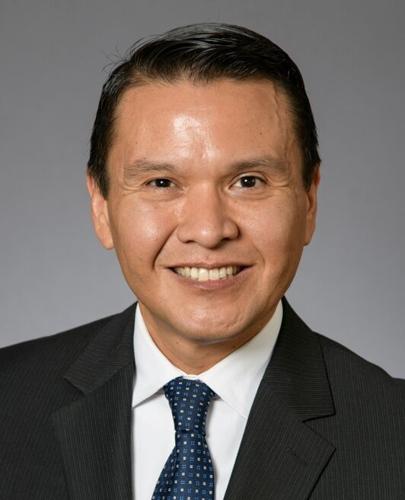
Octavio "Tavo" Fuentes, executive director of Humane Borders.
Humane Borders executive director Octavio Fuentes told the Star in June that both Republican and Democratic administrations have perpetuated the border policy, despite decades of evidence that it's failed to stop migration and has resulted in thousands of deaths.
"They’re not a bug of the system; it’s a feature of the system," he said. "These are all preventable deaths because you have engineered all of this through policy."
The Border Patrol makes an announcement each summer warning migrants about the risks of traveling through the borderlands.
"The Arizona desert is incredibly dangerous," then-Tucson Sector Chief Sean McGoffin said in a July 2025 video. "Summer temperatures can reach 120 degrees, and smugglers won’t hesitate to leave anyone behind in this deadly environment. Don’t risk your life or the lives of others."
U.S. employers continue to rely on the labor of undocumented immigrants, and U.S. law allows for individuals to request asylum once on U.S. soil, Jones said.
But the U.S., especially under President Donald Trump, has dramatically reduced the regular immigration pathways through official ports of entry that would allow people to get here safely, he said.
The second Trump administration has resurrected a policy of blocking asylum seekers from accessing U.S. ports of entry, where they could request asylum protection, once on U.S. soil. The turn-back policy, known as "metering," was ruled unlawful in 2022 and 2024.
But in June, the U.S. Supreme Court overturned the 2024 appeals court ruling on the policy, which advocates say ensures more will cross into the U.S. between ports of entry, in dangerous areas, out of desperation.
The U.S. could change the incentives for migrants by bolstering legal avenues for people to reach the U.S., Fuentes said in a statement. That would cost a fraction of the billions spent on walls and deterrence, and would be more effective and humane, he said. U.S. policy also must stop ignoring the root causes of why people leave homes, including political and economic instability often driven by U.S. foreign policy, he said.
"People will continue to migrate as they have throughout human existence. What’s needed is immigration reform — directing resources into 'coming the right way,'" Fuentes said. "So instead of spending billions of dollars on double walls, we envision a well-resourced immigration system to process applications for work and asylum in months, not years."
Contact reporter Emily Bregel at ebregel@tucson.com. On X, formerly Twitter: @EmilyBregel

Emily Bregel
Border reporter




 Flush with cash, CBP plans more Border Patrol stations, expanded checkpoints in AZ