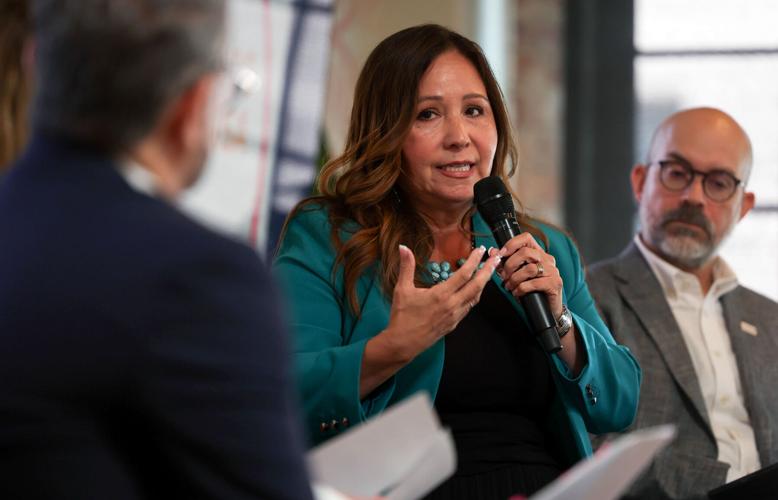
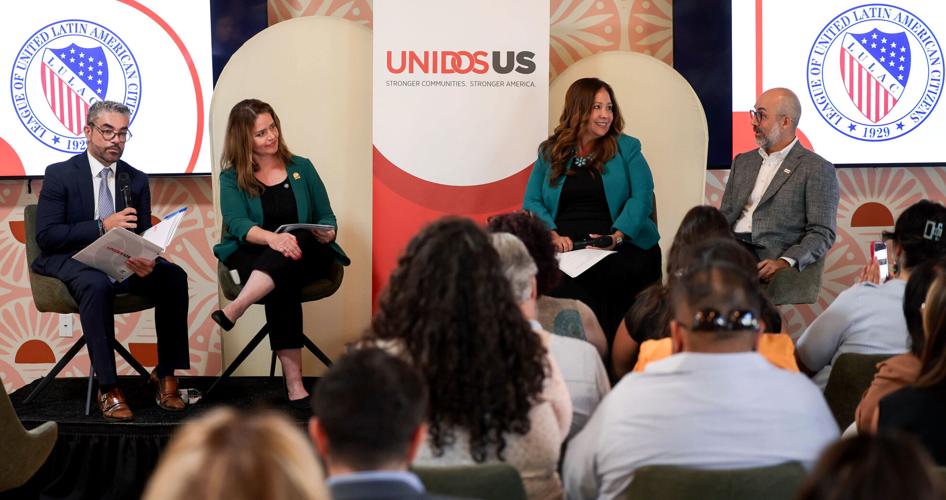
Congresswoman Adelita Grijalva joined Tucson leaders Tuesday at a panel discussion focused on affordability and issues impacting Latino voters in Arizona.
Grijalva told the crowd she is most concerned about the Trump Administration’s cuts to welfare programs combined with the rising cost of living.
“When you look at the kind of programs that actually help people and keep them in homes, a lot of that is based in federal funding,” she said.
The cost of a year of basic necessities in Arizona increased $4,000 more than the national average between 2019 and 2025, according to the Common Sense Institute, a conservative-leaning think tank.
The Trump Administration has proposed cutting $3.4 billion from the US. Department of Housing and Urban Development budget in the next fiscal year, which Grijalva said would significantly impact affordable housing programs at local levels.
People are also reading…
“I do believe that there is a shift that has to happen in this country where we think the basics are rights. You have a right to quality healthcare. You have a right to quality public education. You have a right to housing,” she said.
Affordability issues now look like multiple expenses rising at the same time, said Claudia Jasso, president of the local Unidos affiliate nonprofit Amistades.

Rep. Adelita Grijalva speaks Tuesday at an economic prosperity roundtable event in Tucson hosted by Unidos US, a civil rights organization.
“It used to be that a family would have one acute pressure point. The rent went up, someone lost a shift at work, a medical bill hit. Today, families are walking in with all of that at one time,” she said.
Grijalva is currently running for her first full term representing Arizona’s 7th Congressional District, against Republican Daniel Butierez. She won a special election last summer, also against Butierez, with nearly 69% of the vote in the heavily Democratic district.
Hispanic civil rights nonprofit Unidos US hosted the event, where City of Tucson leaders also endorsed the organization’s new economic agenda focused on housing and poverty reduction.
Mayor Regina Romero said many of the goals of the city’s Prosperity Initiative are similar to the nonprofit’s.
The joint effort with Pima County designed to reduce generational poverty was created as a response to the COVID-19 pandemic’s disproportionate impact on Tucson’s most vulnerable families, Vice Mayor Lane Santa Cruz said.
“We wanted a framework where poverty reduction and economic mobility are the economic development goals, and not an afterthought,” Santa Cruz said.

LEFT TO RIGHT: Enrique Davis-Mazlum, Arizona state director for Unidos US, Tucson Mayor Regina Romero, U.S. Rep. Adelita Grijalva, and Mauricio Garcia, senior vice president of programs for Unidos US, participate in an economic prosperity roundtable Tuesday near downtown.
Grijalva said the federal government’s role should be funding programs that work at a local level, and said she felt frustrated with other members of Congress for their “disregard of people in general,” she said.
“That's where my frustration lies, and it is what we have done locally that informs my voice there … So when I go back, I'm not talking about some arbitrary state somewhere, I'm talking about the fact that a family in Southern Arizona has to spend $15,000 a year on childcare,” she said.
With two months until the November midterm elections, Latino voters in Arizona are most concerned about high prices, followed by wages and healthcare, according to polling by Unidos US.