When Chaplain Ken Plattner sent out a pleasant message announcing his retirement from a local hospice in 2017, he got back a cutting, sarcastic email blasted to the whole staff.
It came from "Gabriel of Urantia," founder of the Global Community Communications Alliance, a religious community based near Tumacacori that runs the hospice, and that some former members label a "cult."
"I'm so glad that Soulistic Hospice — through Divine Administration and our 17 community member volunteers that we have working there full time, who receive no pay for their service to the Lord — has helped you realize the Great American Dream," the email went. "A new house, pool, being able to sell your old home for extra income, vacations, etc."
"When the Lord comes back, which we believe will be soon, maybe you might want to invite him to a barbecue party, where you can share the wonderful things you've done in His service and all the sacrifices you've made for humanity and the kingdom of God on Earth."
People are also reading…

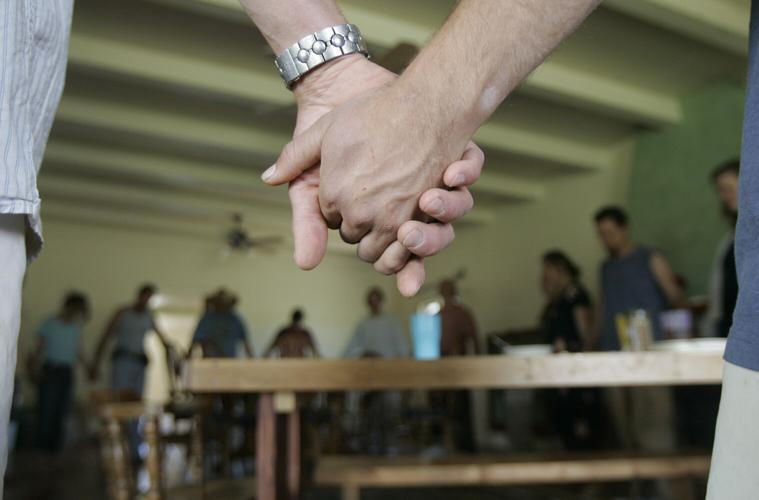
Members of Global Community Communications Alliance pray following a lunch a their Tumacacori ranch.
To Gabriel of Urantia, who died in August having legally changed his name to Van of Urantia, getting paid for working at the hospice meant you weren't fully committed to God's work. Paid workers also cost the religious community he led, which derives millions of dollars a year from the hospice.
"I'm glad that hospice is able to pay the salaries of those who are not of the cloth and are not ready for full-time spiritual commitment to the kingdom of God on Earth," the email said.
This division of labor, under which GCCA community members work without pay alongside outsiders who are paid, has benefited the religious community and its leaders, former members and employees say. However, in interviews and two recent lawsuits, some former members say the organization's financial success depends on the "forced labor" of its members.
The lawsuits by women raised in the community allege that they were forced to work from early childhood without pay and were left with little but emotional scars after fleeing, their childhoods marred by sexual abuse that the community's leaders did not report.

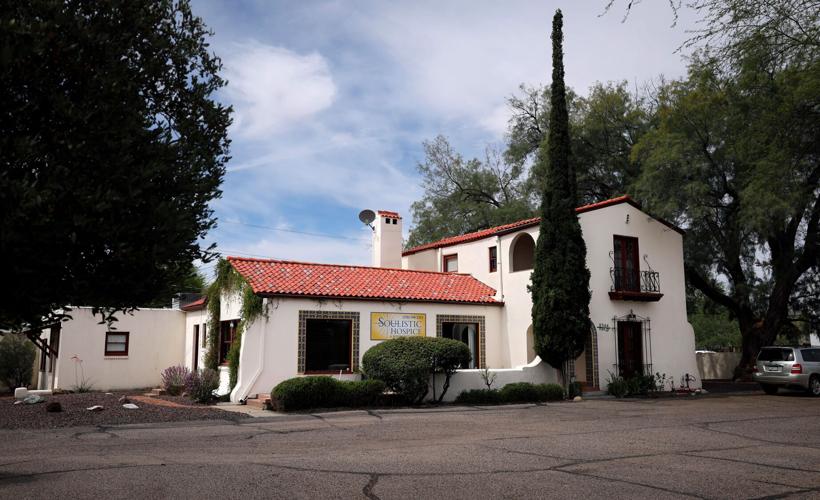
Soulistic Hospice, which has offices on East Speedway in Tucson and in Tubac, belongs to the Global Community Communications Alliance, a religious community based near Tumacacori. The hospice supports the community with millions of dollars per year in grants.
A lawsuit filed in Santa Cruz County last year by a woman going by "Jane M. Doe," who fled the community in 2015, alleges, "The purpose of the GCCA Enterprise was to maintain a closed, coercive community in which children and adults could be controlled, isolated, and exploited for labor; to extract uncompensated and forced labor from members; and to generate financial, operational, and organizational benefits for GCCA and its leadership through a network of businesses dependent on that coerced labor."
Soulistic Hospice, a nonprofit organization, has paid out of its revenue as much as $5.3 million in a single year to the GCCA, the religious community that founded it, tax filings show. The hospice, which makes almost all its revenue from Medicare, gave almost $35 million in grants to the GCCA community between 2010-24.
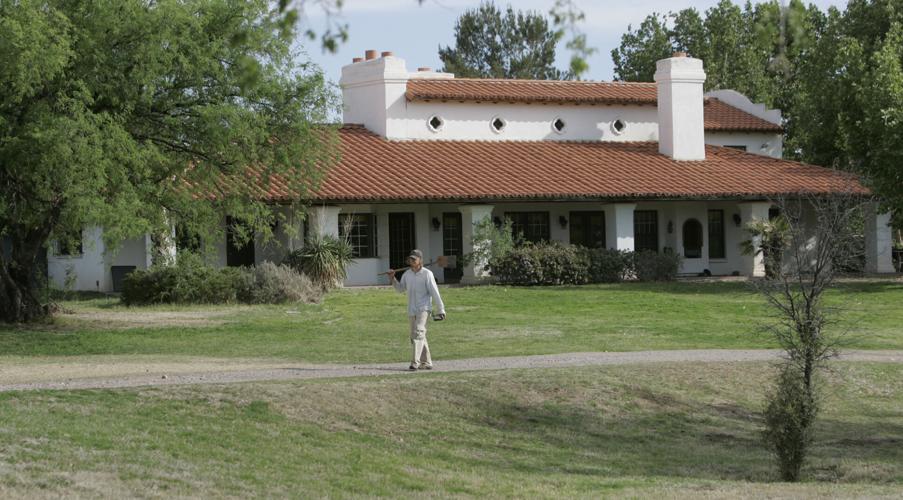
The community operates from an approximately 200-acre, closed property called Avalon Organic Gardens and EcoVillage along the Santa Cruz River, about 50 miles south of Tucson. The hospice revenue and money made from other community-run businesses have helped the GCCA persevere financially, even as members occasionally escape the compound where they live by jumping its fences in the cover of night, the court filings and former members say.
In an email, Selendra Calverio, a representative of the GCCA community, disputed this interpretation of its practices and noted that people join the group of their own free will.
"Religious communities have embraced vows of poverty and communal living since the dawn of organized faith. Benedictine monks, Franciscan friars, Catholic sisters, and countless other religious communities require members to surrender personal assets and devote their labor to the community as an expression of their calling. Such a surrender is described in those traditions as an honor, a vocation, and a profound act of faith."
The group also rejects the lawsuits' claims. “Global Community Communications Alliance categorically denies all allegations of abuse, misconduct, and unlawful labor practices. GCCA is a voluntary spiritual community whose members freely choose a committed, communal life in accordance with their beliefs. The organization and its affiliates operate in full compliance with state and federal law and remain committed to their spiritual, charitable, and community service missions."
'You donated everything'
When Dan Lilly arrived in Sedona with his wife Catherine and two of their children in 1993, they didn't find much. The leader of the group, then known as Gabriel of Sedona, had started a community with his wife Nancy "Niann" Emerson Chase, based on the teachings of the Urantia Book, a thick volume first published in 1955, alleged to have been transmitted by celestial beings.
Lilly, now 81, had read that book and much more as he went on a spiritual quest in the 1970s and 1980s. His quest was driven in part by the flesh falling from his fingers due to Agent Orange exposure in Vietnam and PTSD, he said.

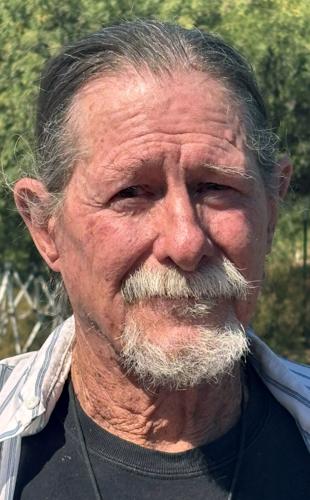
Dan Lilly, known as Kamon in the Global Community Communications Alliance, joined the community with his wife and children in 1993 and left in 2017.
"I read every book in the metaphysical bookstores," Lilly said, interviewed last month in his home near Sedona. “I traveled the world with my fingers rotting off, struggling and suffering. I searched so I could heal.”
What was advertised as a new center of advanced consciousness was not so impressive when Lilly's family arrived, he said.
“This was supposedly the third Garden of Eden, and all they had was this one scraggly squash plant," he recalled. “They made me an elder as soon as I got here because I had knowledge of the Urantia Book and the Bible, and because I walked the talk. My job was to get the gardens going.”
That was his first job of many in 24 years with the group, said Lilly, who was given the name "Kamon" when he joined. He raised animals, taught school, made art for the group to sell, acted as a security guard and enforcer, and at the end, became a chaplain at the hospice.
About two years after they arrived, the policies of the group became stricter, he said. To become a full member of the group, people had to liquidate their assets and hand everything over to the community. The Lillys sold a property in Wyoming they owned and contributed the $150,000 in proceeds along with vehicles and tools, he said.
“To become a full member, you donated everything," he said — even his monthly Social Security payment. “Any monies I ever made went straight into the community. I had cut myself loose from any concern about remuneration.”
Mandatory work with no pay
Adults who are considering joining the GCCA have six months to decide whether to commit.
For those who do, the tradeoff has been this: They make no money, have few belongings and are largely cut off from communication with outside friends and family, but they get food, much of it home-grown, and housing, and become part of a mission-driven religious community that views itself as the earthly hub of a Divine Administration overseeing the planet.
It starts with a signed commitment.
"Those vows are then taken freely, deliberately, and with full knowledge of what they entail," Calviero said in an email, speaking for the GCCA. "Characterizing that process as coercion or control is not journalism. It is the imposition of a secular framework onto a religious practice that has been honored across virtually every faith tradition in human history, applied selectively and pejoratively to this community alone."
Even former members who later fled say there was a special quality to living with a group so committed to a higher purpose.

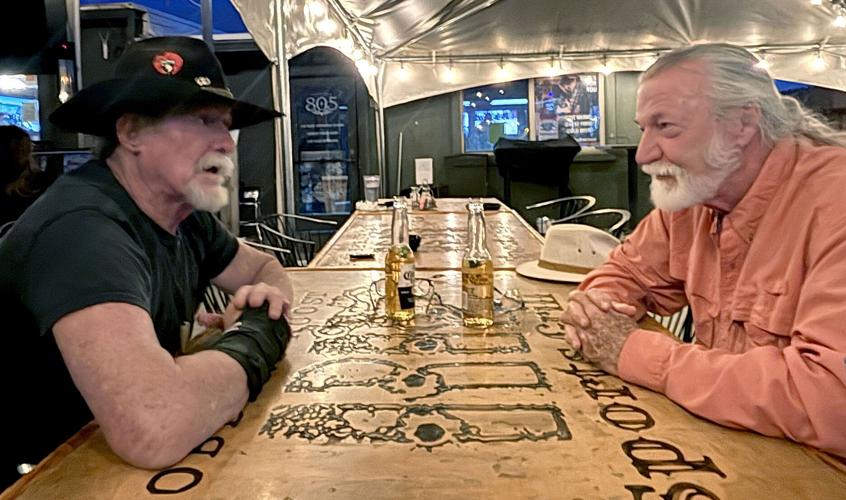
Dan Lilly, left, talks with Ken Plattner, right, at a restaurant in Cornville, Arizona. Lilly, 81, was one of the early members of the Global Community Communications Alliance, when it formed in Sedona. Plattner worked as a chaplain at the group's hospice in Tucson and trained Lilly.
"A small group of dedicated people who are all-in ... on something is by itself an intoxicating experience," said Eric Anderson, who lived in the community from 2014 to 2022. "You add the tones of religion to that, the concepts of eternal survival, serving the planet in a spiritual way."
"People want to be special. They want to achieve recognition, not only in front of other humans, but in front of God."
He gradually came to view the place he lived as a controlling cult — not the type to have "satanic rituals" or that sort of thing, but a cult nonetheless.
"One thing that we have to do is demystify cults and realize that in some cases there's a satanic ritual in the basement, but in other cases it's these micro infractions of free will and ethical decisions."
The day-to-day living? It was mostly work.
"All adult GCCA members are required to work twelve or more hours per day completing the tasks that GCCA Leadership assigns them," alleges a lawsuit filed April 30 by a woman going by Jane S. Doe, a daughter of group founder Van of Urantia. The lawsuit filed last year is by Jane M. Doe, a different person.
In early years, much of the work was physical labor in the gardens, raising animals, and building the group's homes and facilities. But over time, and especially after the group moved from Sedona to the property near Tumacacori in 2007, the group's businesses and types of labor diversified.
GCCA or its members formed a real estate company, turned Sedona properties into short-term rentals, started a radio station and music venue just off Tucson's North Fourth Avenue, established a small media company and publishing company, opened a restaurant in Tucson and a spa in Tubac, and started Soulistic Hospice, with offices in both those locations. Much of this has been overseen by Catherine "Centria" Lilly, Dan Lilly's former wife, who is listed as the GCCA's treasurer on state filings and chief financial officer of the hospice. She declined to be interviewed for this story, citing the recent lawsuits.

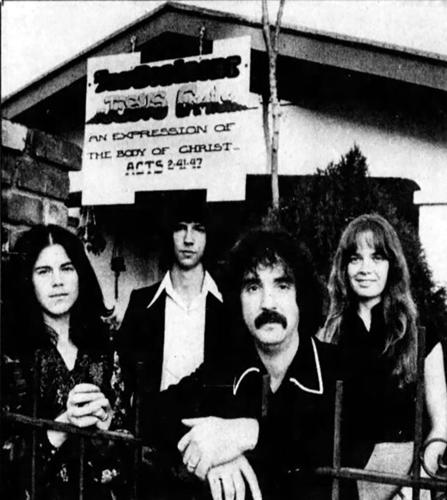
A decade before he formed a group called Aquarian Concepts Community and began calling himself Gabriel of Sedona, Tony Delevin was a street preacher in Tucson. The Arizona Daily Star published a story about him in 1979. This image taken from an issue of the Arizona Daily Star in November 1979, shows Van of Urantia, then Tony Delevin, in front of Son Light Ministries which he started on North Fourth Avenue.
Among the businesses, only the hospice's finances are clearly revealed in public documents. It took in $100.7 million in revenue in the 15 years between 2010 and 2024, the business increasing steadily to the point it made about $12 million in revenue per year between 2021 and 2024. About 34% of that was transferred to the GCCA as grants.
That far exceeds the typical profit margin in the hospice industry, especially among nonprofits, according to data reported in March by the Medicare Payment Advisory Commission. In 2023, the latest year for which the commission has data, the average margin for Medicare-funded hospices nationwide was 8%. It was higher, 13.7%, for for-profit hospices than for nonprofits, which had a negative average margin of -1.3%.
How much money the group takes in as a whole is unknown to outsiders. But those who've left the group or its employ say it allowed Van of Urantia and his family to live in luxury and other high-ranking members of the group to live comfortably, while the common members lived communally in groupings that regularly shifted based on edicts from the leaders.
Registered nurse Ellen Silverman worked for the hospice up until the infamous 2017 email sent by Gabriel of Urantia to Ken Plattner and the whole hospice staff. Her objections led to her firing and even caused the group to go after her license, unsuccessfully, she said.
"I thought that (the email) was ridiculous, considering that Gabriel lived like a king," Silverman said. "Anything he wanted, he snapped his fingers, and he got it. He had nice, expensive clothes. The rest of the community, from what I could see, bought their clothes at thrift shops. I was even told that by a couple of the women."
New lines of business
As the GCCA expanded into new lines of business, outsiders became involved.
Rani Olson had studied urban planning and permaculture when, in the early 2010s, she came to the idea she wanted to pursue: Establishing an "educational restaurant that employs and works with youth that are teetering with lack of resources in our community."
She would show up at food-related events in Southern Arizona that members of GCCA, with its Avalon Organic Gardens, also would attend. Eventually, in about 2011, they approached her with an idea, Olson said in an interview.
"They were like, 'We've got a building, we've got money. And we know that these are the two things you're looking for,' " Olson recalled. "That was the hook for me — the two things I don't have and are hard to get."
Together, she and representatives of the community dreamed up a plan, negotiated a contract and moved toward opening Food for Ascension, at 330 E. Seventh St., just off North Fourth Avenue. It was a "vegetable-forward" cafe focused on serving locally grown ingredients. Olson was general manager and chef.
One of her conditions: The group could not evangelize in the restaurant. While she felt she had a shared vision with the GCCA's overseers, even before the restaurant opened in 2012, drawbacks of working with the religious group started to become evident. Gabriel came in a few times, Olson said, often asking for food that was not on the menu or was out of season.
"He yelled at me, kind of out of nowhere, before the actual restaurant opened, about how I had never attended any of their church services," Olson recalled.
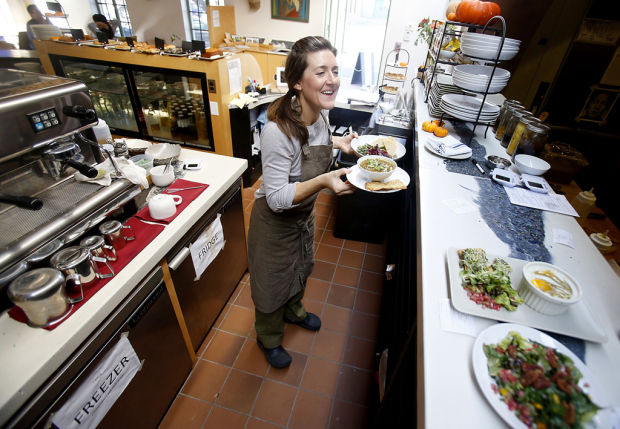
Rani Olson was chef and manager for the Food for Ascension Cafe, located at 330 E. Seventh St. The Global Community Communications Alliance owned and funded the restaurant, which Olson left in late 2014, in part over the stresses of working for them.
At the beginning, all the restaurant's employees were hired staff, but gradually the owners sent more and more community members to Tucson to staff the restaurant, she said.
"I would say by the time I left, two-thirds of the people on the schedule were people from Avalon Gardens," Olson said.
One of the breaking points for her, Olson said, was when her repeated requests for adding management help went unanswered, she said. She was told by the community representatives who oversaw the restaurant that they were checking with the board, Olson recalled.
"Finally, I was told that the board was a group of extraterrestrial beings," she said. "It was like, 'They're not getting back to Gabriel.'"
This may have been a reference to "Celestial Overcontrol," whom group co-founder Niann Chase describes as "celestial beings who help administer world affairs through a spiritual hierarchy in other dimensions." When he was alive, Van of Urantia would transmit messages from two of these beings, called Paladin and the Bright and Morning Star.
Olson finally walked out near the end of 2014, she said, and the restaurant permanently closed about six months later, though the GCCA still owns the property as the Sea of Glass arts venue.
Members 'really good' workers
Even people who've left the GCCA or stopped working at Soulistic say their hospice does a good job caring for people who are dying and for their families.
Lori Clifford, who worked as a registered nurse for the hospice for almost two years, leaving in November 2025, said, "They’re incredibly dedicated to their patients."
The GCCA community members there work long hours for no paycheck, she said. That sometimes contrasted with the culture of paid employees from outside the community who might treat the work as a job with more set hours.
"They would call me to go do an admission that would take three hours, and it was already six o’clock at night. I’d be thinking, 'I don’t want to be out in the middle of nowhere as a woman at night,' " she said. "The workers that are associated with GCCA are incredibly dedicated to their job. They work 24-7."

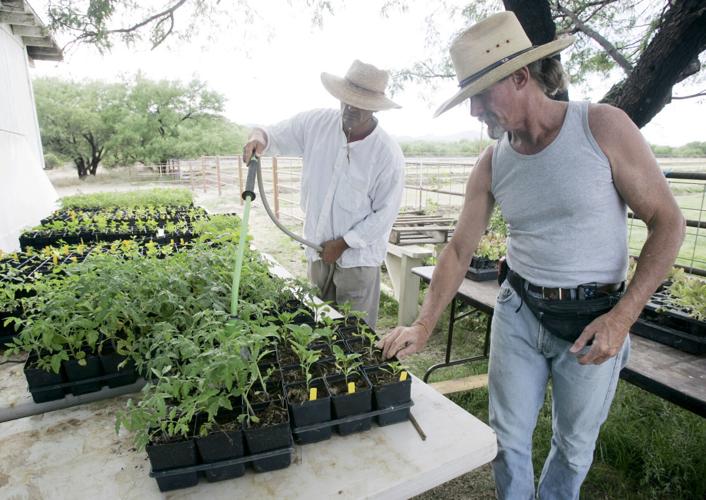
Members of the Global Community Communications Alliance Tarenta Baldeschi, left waters tomatoes, basil, and lettuce plants as Dan "Kamon" Lilly, right, looks on in this 2007 photo. That was the year the community moved from Sedona to a large property near Tumacacori that they call Avalon Organic Gardens and EcoVillage.
Plattner, the chaplain who received the cutting email from Gabriel in 2017, worked there for about three years in various jobs, including overseeing social services, he said in an interview.
The whole time he worked there, he said, he felt he was being groomed to join the group, but he was also being watched by high-ranking members who ran the hospice.
Over time, one of Plattner's key roles, he said, became training community members as chaplains, or "spiritual care coordinators." It was a role many of them could become qualified to fill.
"If we could train a community person to do a job, any job, we would always take a community person," Plattner said. "A big part of my job was training community people to do hospice work. And the truth is, you know, given the way they were and their beliefs and all of that, they were really good."
At present, from the online roster of employees at the hospice, former members estimate 14 of 39 listed employees belong to the GCCA community and therefore don't make a salary.
Asked whether putting group members in positions is a business decision to save money, spokeswoman Calviero said in an email: "Members of this community contribute their skills and labor to enterprises that sustain the community they have freely chosen. That is not a business practice. It is a religious one, with a tradition stretching across centuries of communal life."
Importance of hospice funds clear
The importance of the hospice to the GCCA became clear to Eric Anderson even though he was assigned to work in the group's multi-media business, called Global Change Media, he said.
At times he was pulled off to help the hospice, and eventually Plattner trained him to work there as a chaplain, he said.
"When the census, which is the daily number of patients, started to dip, there would be an emergency feeling in the group," he said.
"If the hospice goes down, we can't pay for anything," he recalled higher-ups in the group saying.
"So they would get like, probably eight trustworthy, younger, good-looking people to go out into Tucson and softly promote (the hospice). They warned us we couldn't like promote, promote because of the nonprofit standing and maybe even hospice rules, I'm not sure. But we were supposed to get the word out and get that census up."
The GCCA, in an email, said Anderson, as a spiritual care volunteer, was not in a position to know such financial details about the hospice.
"His characterization of Soulistic's financial structure and operational priorities is not based on any knowledge he had access to in that role."
'I was a really bad double agent'
Plattner got a lot of attention from the high-ranking members of the GCCA community, he said. He visited the property in Santa Cruz County many times, and they wanted him to join. He was tempted.
"The truth is that I drank way too much of their Kool-Aid, because I liked that feeling of belonging, and so that's how they kind of reeled me in."
When they eventually asked him to join, Plattner said, he reminded them he was married.

The Global Community Communications Alliance purchased the Potreros Ranch, along the Santa Cruz River near Tumacacori, for $4.8 million in 2007. The group's 100-plus members gradually moved there from their previous home in Sedona.
"They said, 'We're not asking for your wife, we're asking for you,' " he recalled in a recent interview. "They weren't interested at all in having my wife come. And I just thought, 'Wow, what kind of an operation is this?' "
"But the more I got to know them, it really made perfect sense. You know, my wife would have told them to go (screw) themselves a long time ago."
At the same time Plattner was training community members, and even considering joining the group, he also helped others leave the community.
"I was a really bad double agent," Plattner said.
Five of the approximately 20 people who contacted him about leaving actually took the leap, Plattner said. Others found the challenges of re-entering the outside world — what members often refer to as the "third dimension" — too daunting. They had no money, felt loyalty to the group and feared leaving the enclosed world they'd known, he said.
The GCCA, in an email, said, "Of course members are free to leave. They always have been. Membership in this community is a choice, made freely, and renewed by the ongoing decision to remain. No one is held here against their will and no one has ever been required to stay."

A sign outside the Global Community Communications Alliance's Camp Avalon in Sedona features a slogan by the group's founder.
One who left was Dan Lilly, whom Plattner had trained as a chaplain. Lilly appreciated the learning he absorbed while living in the community, he said, but tired of what he viewed as Van of Urantia's abusiveness.
"I don’t mind being humbled," Lilly said. "Being humbled is a big part of spiritual growth. Humiliation is a different thing. He humiliated people.”
Lilly called Plattner on a Sunday and said he had left, and that his shifts would have to be covered, Plattner recalled. Lilly prepared to depart by removing art supplies and tools from the compound and throwing them over a wall, before he finally jumped it himself, got picked up by a friend from Canelo and left the place where he'd spent 24 years.
The departure shocked and hurt the group's leaders, Plattner said. He was let go by the hospice then but treated generously.
"I was paid handsomely, and so when I left, Gabriel said, 'we will never, ever hire another minister. We have all the ministers we need.'"
Contact columnist Tim Steller at tsteller@tucson.com or 520-807-7789. On Bluesky: @timsteller.bsky.social

Tim Steller
Columnist


 Court filings: Southern AZ religious group failed to report sexual abuse