Back on April 27, a Tucson attorney went to a federal judge here and asked for an emergency order to keep her client in the United States.
At that point, her client Ahmed Soliman had been moved out of immigration detention in Arizona. The attorney worried, in writing, that he was being positioned for deportation to a third country to which he had no connection.

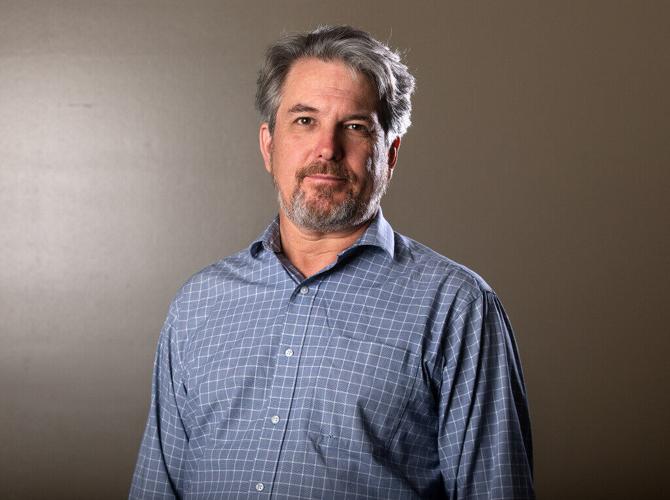
Arizona Daily Star columnist Tim Steller
Soliman’s “repeated transfers — combined with the absence of any procedural safeguards regarding potential third-country removal — create a real risk that Petitioner (Soliman) could be moved further, or removed, before this Court can rule,” attorney Jesse Evans-Schroeder wrote.
U.S. District Judge John Hinderaker wasn’t convinced of the need and denied the motion. He expected he could accelerate the man’s existing case and move forward fast without issuing the emergency order.
People are also reading…
In that, Hinderaker underestimated the current federal government’s capacity for trickery. Sometime in the hours after Hinderaker's ruling against the emergency motion, ICE deported Soliman to Equatorial Guinea, a small country on the west coast of central Africa.
Now Hinderaker faces a new test from the federal government’s entrenched immigration-detention bureaucracy. Soliman’s attorneys filed a new case on his behalf in September, arguing he should be returned to the United States because he was never allowed to argue he had credible fear of being deported to Equatorial Guinea.
On Oct. 3, Hinderaker ordered the U.S. government to “facilitate” Soliman’s return from Equatorial Guinea to detention in the United States. For two weeks afterward, ICE-contracted planes that criss-cross Africa and regularly stopped in Equatorial Guinea before suddenly discontinued their stops there. They passed overhead.
Then, on Oct. 23, an ICE plane stopped in the same city where Soliman is being held, Malabo. But they did not pick him up for a return to the United States.
Why didn’t they carry out Hinderaker’s order?
“The Petitioner (Soliman) could not return on this flight because ICE had not yet adjudicated the parole request, and the return transportation letter had not been issued,” ICE official Fernando Valenzuela wrote in a sworn declaration.
In other words, they’re dragging their feet. They shouldn’t be allowed to.

Soliman
Stalling tactics not new
Soliman would be another unknown among the 25,000-plus immigration detainees sent to third countries they’re not from, if not for the reporting of my colleague Emily Bregel. Her first story on Soliman’s plight in Equatorial Guinea came out Aug. 2.
It led to Soliman and other detainees there being covered by news outlets around the country. That coverage, in turn, led to the authorities in Equatorial Guinea jailing and abusing him and fellow detainees who spoke out.
Soliman ended up in this situation because, though he was raised in Arizona from age 4, he was born in Egypt. He obtained permanent residency but became deportable after he was convicted of aggravated assault.
In 2025, an immigration judge ruled he could not be returned to Egypt because he is gay and would likely face torture and death there. So that left a Trump administration wanting to carry out mass deportations in a quandary, one they faced in many other cases.
Their solution: If they couldn’t deport these people to their home countries, they would pay third countries to take them — at least $7.5 million in Equatorial Guinea’s case.
Once these detainees are in other countries, the federal government washes its hands of them and pretends it cannot get them back.
You may remember this happened in the case of Kilmar Garcia Abrego, who was arrested in March 2025 and accidentally sent, against a court order, back to his home country, El Salvador. His deportation became a national controversy, and the Supreme Court ruled in April 2025 that the government must facilitate his return.
But the federal government resisted, and even the president of El Salvador mocked the idea that he could “smuggle a terrorist” (Garcia Abrego, who has never been accused of terrorism) into the United States.
They resisted, they delayed, but eventually, in June 2025, they did it.
Crackdown needed
Federal government attorneys argued in Soliman’s case, as they did in the Garcia Abrego case, that the U.S. government no longer has control of the detainee.
“Petitioner is in the custody of the government of Equatorial Guinea,” Assistant U.S. Attorney Derek Faraldo wrote.
That is, functionally, bunk. We pay the third countries to accept detainees. We can get them back if we want to.
“The government has not demonstrated any urgency in complying with the court order and bringing Ahmed home to the United States,” said attorney Dana Camilleri, who is also representing Soliman, in an email. “Instead, Defendants are splitting hairs in their status reports.”
“The government hides behind a bureaucratic process of producing ‘travel documents.’ But it argued in a prior filing that adding Ahmed to the manifest of the removal flight to Equatorial Guinea acted as a travel document.
“This suggests the government could have picked him up last week, if not on the flight that landed in Equatorial Guinea, then on one of the other nearly ten planes that passed over Equatorial Guinean airspace. If the government had any interest in complying with the court order, it would.”
Now they have also appealed Hinderaker’s order, though an initial request for a stay of the order was denied.
Unfortunately, holding federal officials in contempt of court is not simple in cases like this. I spoke with former U.S. Attorney John Leonardo about this, and he told me responsibility is too dispersed along a chain of functionaries to easily hold someone responsible.
“This administration is never just going to say ‘We don’t want to do it,’ ” Leonardo said. They’ll say ‘We tried, but we have this problem and that problem.’ ”
Hinderaker needs to crack down on them somehow, though. As the saying might go in this case, “Fool the judge once, shame on you. Fool the judge twice, shame on the judge.”
Contact columnist Tim Steller at tsteller@tucson.com or 520-807-7789. On Bluesky: @timsteller.bsky.social

Tim Steller
Columnist


 Tim Steller’s column: On state propositions, you can always say no