Every two years the shock returns.
You open your green envelope, ready to pick your favorite candidates for high-profile offices like president, senator — maybe you’re ready for state Legislature and county supervisor, too.
Then you see the long list of wordy ballot issues. How are you supposed to vote on those?
The good news this year is that there are only eight statewide propositions to consider. That compares to 13 in 2024 and 10 in 2022. Those are in addition to local ballot issues like the Tucson Electric Power franchise agreement in Tucson and your local school district budget override.
People are also reading…
The obvious question that strikes many people, like the relative who texted me urgently Thursday afternoon on the way to the polls, is how to vote on these propositions. My usual answer: You can generally feel safe voting no.
But there’s a second question that often strikes me: Why so many, so often?
In the past, many were citizen initiatives put on the ballot by interest groups who collected enough signatures to qualify. But the Legislature has made the process arduous, and opponents sometimes succeed at knocking initiatives off the ballot in court, as happened with two of them this year. For the first time in 12 years, there are no citizen initiatives on the ballot.
What we’re left with are legislative referrals. The Republican majority in the Legislature referred all eight measures we’re considering this year.
The process “happens over a two-year period,” former Senate President Ken Bennett, a Republican, told me. “Probably 20 or 30 of them get introduced in the first year.”
After a handful make it through that first year, another 20 or 30 are introduced the second year, and a handful make it then, too.
“The ones combined in that two-year interval go on the ballot,” Bennett said.
Usually, they’re passed in the last days of the legislative session, as GOP leaders decide which will make the cut.
The two key reasons for the Republican-run Legislature to refer an issue to the ballot, lately at least, are to avoid a veto by Democratic Gov. Katie Hobbs, or to motivate Republicans to vote.
Bennett said sometimes the referrals are reacting to a previous veto, and other times to preempt a future veto. Sen. Priya Sundareshan, who is a Tucson Democrat and minority leader in the senate, argued that going straight to the voters allows GOP legislators to avoid negotiating with legislative Democrats and Hobbs.
The latter idea, Bennett said, is to “pick controversial or emotional issues and put something on the ballot that’s going to drive a certain population to the ballot.”
That’s a possible explanation, for example, of Prop. 317, which would declare drug cartels “terrorist organizations” but directs the Arizona Department of Homeland Security, which has no police force, to deal with them.
She sees Prop. 318, another proposal dealing with transgender students, as intended to drive Republicans to the polls.
“The ballot proposition around girls sports is in my view wholly unnecessary,” she said. “The state Legislature has passed laws and is spending lots and lots of money in court, defending a law that has already banned boys in girls sports.”
Here’s my rundown of the eight ballot issues:
Prop. 141: Bans mileage-based vehicle taxes and state monitoring of miles
Type of proposition: Constitutional amendment
Introduced by: Sen. Jake Hoffman
Date passed: June 12, 2025
Summary: Bans both taxes based on the number of miles driven by a vehicle and laws monitoring or limiting the distance driven by vehicles.
Tim’s take: The idea of miles-based taxes is to ensure that electric vehicle owners also pay for the upkeep of roads, not just those who pay gasoline taxes. But, perhaps unintentionally, Hoffman, a former Turning Point USA spokesman, is indirectly supporting electric vehicles by trying to ban one of the key ways of taxing them.
Prop. 142: Bans preferential treatment based on race
Type of proposition: Constitutional amendment
Introduced by: House Speaker Steve Montenegro
Date passed: June 12, 2026
Summary: Extends bans on preferential treatment or classroom discussions based on race or ethnicity
Tim’s take: This is a Goldwater Institute-inspired extension of the ban on race-based hiring, which Arizona voters passed in 2010. It intends to stamp out so-called “DEI” policies but in the process would likely squelch free acknowledgement and discussion of race and ethnicity at public schools and universities.
Prop. 144: Election changes including requiring proof of identity for mail-in voting
Type of proposition: Constitutional amendment
Introduced by: Rep. Alexander Kolodin (currently the GOP candidate for secretary of state)
Date passed: June 12, 2026
Summary: Changes voting laws and makes it harder to challenge election laws in court
Tim’s take: This set of changes in election laws is highlighted by a requirement to show proof of identity when voting by mail. How would that work? Nobody knows. It could potentially end Arizona’s decades-long practice of mail-in voting because it’s impossible to comply with this amendment.
Prop. 316: Limits local taxes on groceries
Type of proposition: Amends state law
Introduced by: Rep. Leo Biasucci
Date passed: June 20, 2025
Summary: Prohibits new grocery taxes and limits future ones
Tim’s take: Grocery taxes are most common in smaller cities and towns, such as Bisbee, which has a 3.5% tax. This state law would cap such taxes at 2% and restrict new or increased grocery taxes. It seems logical in a time of inflation, but can’t the residents of Bisbee and other towns decide this for themselves?
Prop. 317: Declares drug cartels ‘terrorist organizations’
Type of proposition: Amends state law
Introduced by: Montenegro
Date passed: June 27, 2025
Summary: Defines “drug cartels” broadly, declares them terrorist organizations
Tim’s take: Probably the most absurd of this year’s batch of propositions, Prop. 317 would categorize any illegal-drug transaction or human-smuggling effort as “terrorism.” It also directs the Arizona Department of Homeland Security, which can’t do that much, to do everything it can to address drug cartels.
Prop. 318: Extends restrictions on transgender females in schools
Type of proposition: Amends state law
Introduced by: Rep. Matt Gress
Date passed: June 12, 2026
Summary: Extends tra
nsgender athlete restrictions to private schools, bathrooms
Tim’s take: It is already illegal for transgender females to compete in girls’ athletics involving public schools under a contested 2022 law. A much better system was to allow the Arizona Interscholastic Associaton to handle the handful of these cases that exist statewide on an individual basis, not build laws that also legislate transgender people out of existence by declaring their gender to be their sex at birth.
Prop. 319: Bans photo traffic enforcement and requires voter reapproval
Type of proposition: Amends state law
Introduced by: Sen. Wendy Rogers
Date passed: June 12, 2026
Summary: Bans new photo radar, red light camera systems after 2026; requires voters to reapprove existing systems every 10 years
Tim’s take: Tucson voters showed they can handle this issue by banning red-light cameras in 2015. There’s no need for the Legislature to tell cities whether to use these systems, though the required reapproval is a good idea as technology changes.
Prop. 320: Requires many school districts to spend at least 60% of funds in classroom
Type of proposition: Amends state law
Introduced by: Hoffman
Date passed: June 13, 2026
Summary: Forces larger school districts to spend at least 60% of funds in classrooms
Tim’s take: This is one of those simple ideas that makes less sense the longer you consider it. While the aim appears to be cutting down on administrative bloat, much of the money school districts spend outside the classroom goes to key and sometimes required services such as transportation, air conditioning, services for the disabled, counseling and libraries. It also exempts charter schools unfairly.
Contact columnist Tim Steller at tsteller@tucson.com or 520-807-7789. On Bluesky: @timsteller.bsky.social

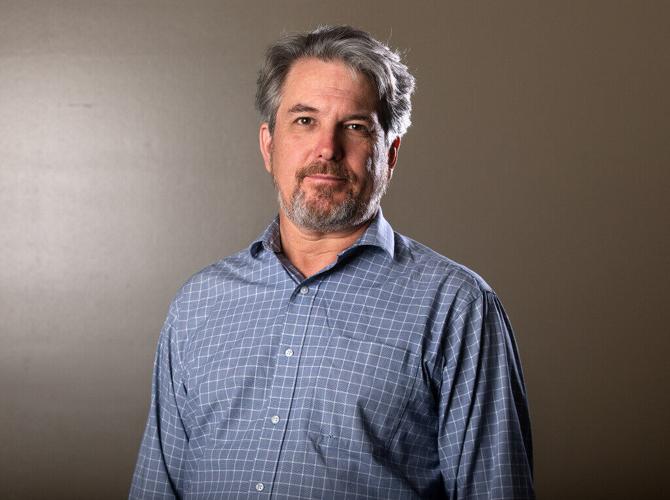
Tim Steller
Columnist

 Tim Steller’s column: Pima County’s surplus spending a window into Prop. 425