It was no surprise that Santa Cruz County Sheriff’s Department deputies weren’t there when Border Patrol agents raided a protest site next to the Mexican border Monday.

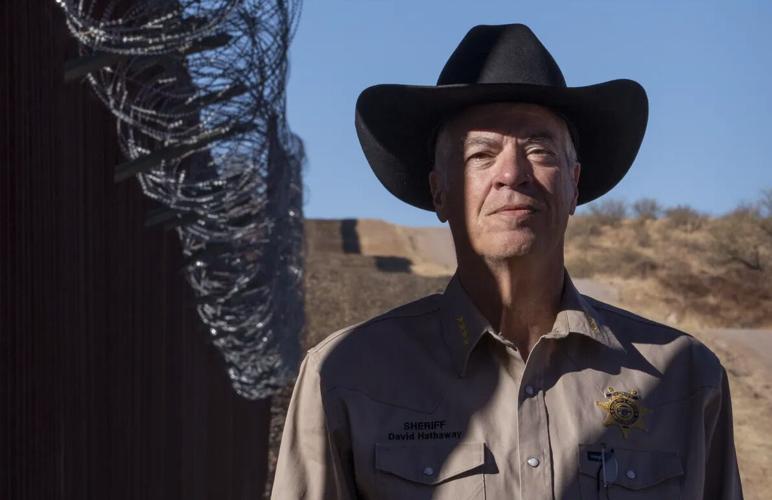
Santa Cruz County Sheriff David Hathaway, a former DEA agent turned sheriff who stars in campaign ads for Arizona Attorney General Kris Mayes, a fellow Democrat, shares views on border enforcement and the war on drugs that can be described as left-libertarian.
Sheriff David Hathaway had long since told his deputies to stay away from the site, where protesters were attempting to protect old cottonwood trees from border-wall builders’ bulldozers, unless there was violence. Hathaway made the order, he said, due to the many “disingenuous” calls received from contractors and even Border Patrol agents about the protesters.
They were “saying things like ‘We’ve been kidnapped,’ ‘Our vehicles have been stolen,’ ‘We feel we’re not free to leave,’ ” Hathaway said of the contractors in an interview Tuesday.
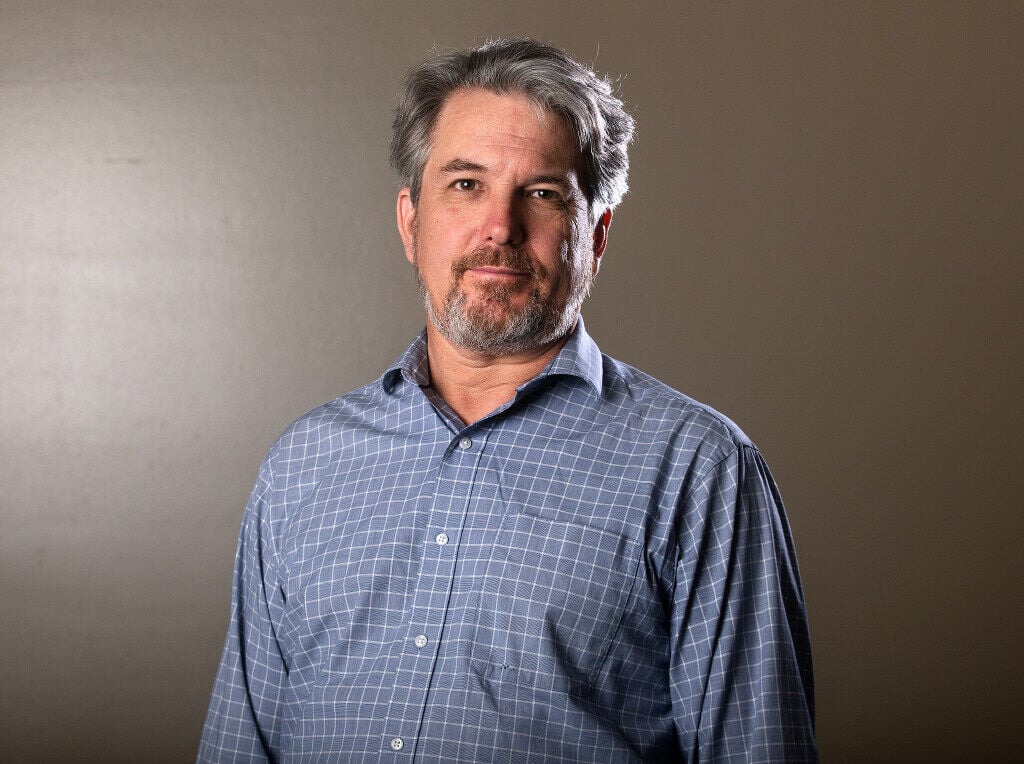
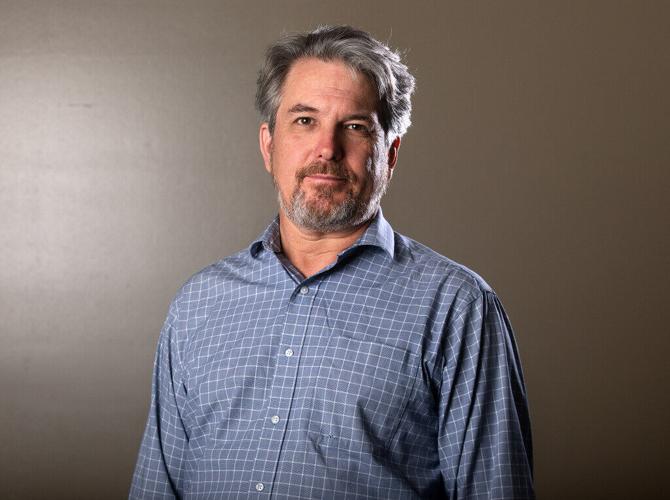
Arizona Daily Star columnist Tim Steller
“When we went out there, it was just peaceful people sitting there,” he said of the protesters.
People are also reading…
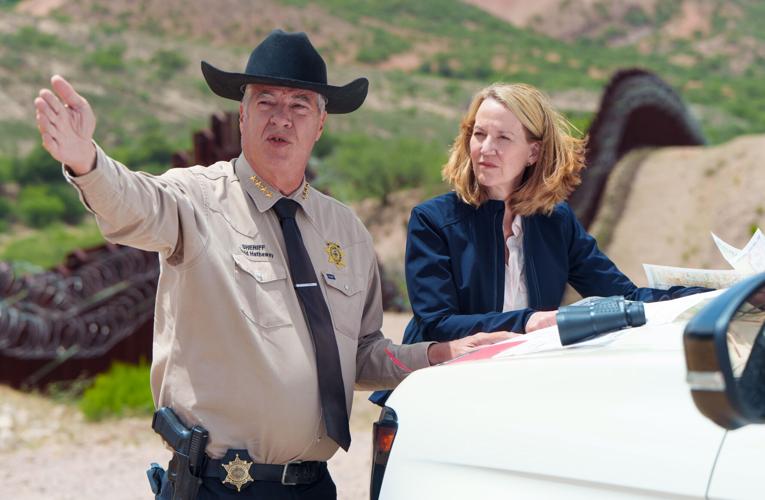
While Hathaway’s deputies were absent when federal agents swarmed the protest camp, allowing for a towering cottonwood to be felled, the sheriff himself has been omnipresent on TV and internet ads in recent weeks. He’s the star of commercials for Democratic Attorney General Kris Mayes’ reelection, in which he says “she’s taken on the cartel, seizing 27 million fentanyl pills.”
The border backdrop, the sheriff’s uniform, the acclaim for toughness on crime — it’s all standard fare in Arizona politics. Hathaway, also a Democrat, even grew up on ranches near the border, so the cowboy hat fits. What isn’t so standard is the deeper views of the sheriff delivering the lines.
Before he became sheriff, Hathaway was a longtime Drug Enforcement Administration agent who gradually stopped believing in the traditional drug war he had waged here in Arizona and in South America.
“I didn't know about … the failure of the drug war until I was part of it,” he said.
‘Show us your papers’
Hathaway, who is in his second term as sheriff, grew up on ranches in Santa Cruz and adjacent Cochise counties. There is a little family cemetery in Lochiel, he said. He doesn’t believe a border wall belongs there.
“I grew up having a traditional American spirit of freedom.,” Hathaway recalled. “When I went to elementary school in Nogales, when I was a kid, they told us, ‘There's these foreign countries where they have checkpoints, and they say, ‘Show us your papers,’ and we don't have that in the U.S.’
“But now we do.”
Hathaway, 67, went on to a career in the DEA, serving in Bolivia and Paraguay, as well as the United States.
Hathaway said he is “philosophically opposed” to all interior checkpoints, including the existing one along Interstate 19 near Tubac, and the proposed expansion of that checkpoint. He also opposes the federal legal standard allowing federal agents to check the immigration status of people aboard vehicles within 100 miles of any border.
“I always say that the police state is going to come to the U.S. through immigration enforcement,” he told me.
These are among Hathaway’s positions I would describe as left-libertarian. I first learned of the breadth of his beliefs by listening to four podcast interviews he’s done with Andrew Napolitano, a retired New Jersey judge and former Fox News analyst who has taken an anti-Trump turn.
Their relationship began, Napolitano said in a November 2025 episode, when Hathaway sent him a handwritten letter. It was about the Trump administration’s targeted killings of suspected drug traffickers in the Caribbean and the Pacific.
“Theoretically, 10 years from now, Pete Hegseth could be prosecuted in the International Criminal Court, whether the United States has signed that treaty or not, if he was unfortunate enough to get arrested,” Hathaway told Napolitano. “That’s how blatantly criminal this behavior is.”
Drug-war critic

Santa Cruz County Sheriff David Hathaway, left, appears in a campaign ad with attorney general Kris Mayes.
In Mayes’ ads, Hathaway sounds like a typical drug warrior. But his actual views on the drug war are pretty skeptical, despite — or more likely because of — his career in the DEA.
“When I started with DEA, I just thought the normal things that people believe,” he told me Tuesday, when I asked him about the drug-war approach to America’s drug problem. “I believe that drugs are bad, but it (the drug-war approach) results in the more concentrated drugs, more overdose deaths, more violence.”
He brought up Prohibition, arguing that before it, the primary alcohol consumed by Americans was beer and wine. But as a result of Prohibition, smugglers focused on bringing in higher-alcohol liquors, in part to make it easier to avoid detection at the borders. After Prohibition, Americans’ tastes had shifted toward hard liquor.
Hathaway sees a parallel in the Drug War of the last 50-plus years.
“Before the Controlled Substances Act was passed in 1970, the preferred drug of choice for Americans was marijuana, low-THC marijuana, and for some of the Asian community, smoking raw opium.
“Now, after the Controlled Substances Act was passed, once again, smugglers are smart, and now they started bringing in sensimilla and hash oil, with very concentrated amounts of THC. And instead of raw opium, now they started importing heroin, and now that's gone from heroin to fentanyl — stronger and stronger opiates.”
“Drug use and drug overdoses got worse after the Controlled Substances Act of 1970, and the violence associated with the drug trade. Same thing with alcohol.”
‘Own his positions’
I asked Sheriff Hathaway if he wants to stop smugglers.
“I'm sure, Tim, there's laws you don't agree with,” he said. “But there are certain laws, and you know, I'm sworn to uphold the laws of the state of Arizona. There's federal laws that I do not have to uphold.”
In fact, experience has made Hathaway quite skeptical of the federal government. In Latin America, he said, he repeatedly became aware of CIA agents or informants being involved in smuggling drugs to the United States.
“On two occasions, actually with my team in South America, my team of foreign police officers and military captured CIA agents smuggling drugs, getting the cocaine from the the cocaine producers in South America, and shipping it to the U.S.,” he said.
The accusation of CIA agents or foreign informants smuggling drugs has been debated repeatedly after the publication of a 1996 expose in the San Jose Mercury News. The CIA denies it, but Hathaway insists he saw it.
All of which is perhaps an awkward fit when pushing an attorney general candidate’s re-election on a platform of stopping drug trafficking. When I asked Mayes’ campaign about this, they sent me a statement saying this in part:
“Attorney General Mayes is proud to work with border law enforcement leaders like Sheriff Hathaway and believes in tough enforcement against the cartels. She has called for more DEA agents in Arizona because our communities need every tool to fight fentanyl.”
Her opponent, Republican Warren Petersen, said this in part via email: “Mayes is putting Sheriff Hathaway front and center in her ads to sell herself as tough on crime and tough on the border. If she wants to borrow his badge, she should own his positions.”
For me, the tough-on-the-border position, along with the campaign ads with the man in the cowboy hat along the border fence, has become an Arizona political cliché. So it’s bewildering to see Hathaway play into the cliché while opposing some of the broader policies that produced it.
I have long argued we should shift our drug-policy emphasis and spending toward reducing demand rather than stopping supply — a more fruitful focus in the long run. So I’d rather see the border-ad cliché go away altogether, whoever is wearing the hat.
Contact columnist Tim Steller at tsteller@tucson.com or 520-807-7789. On Bluesky: @timsteller.bsky.social

Tim Steller
Columnist


 Tim Steller’s column: Woes on Tucson's North Fourth Avenue go beyond parking