The Trump administration is making another legal bid to get the records of Arizona's more than 4.3 million registered voters.
Harmeet Dhillon, who heads the civil rights division at the U.S. Department of Justice, filed paperwork saying she will ask the 9th Circuit Court of Appeals to overturn a federal judge's ruling that the administration is not entitled to the records.
Dhillon, in Wednesday's filing, did not say what she thinks U.S. District Court Judge Susan Brnovich got wrong. The basis for the DOJ's arguments might not be known until the actual appeal is filed.
But the administration could have an uphill fight.
Not only did Brnovich toss out the case, she did it "with prejudice,'' meaning she said there is nothing more that the Department of Justice could say that would change her mind. In fact, the judge said any further arguments "would be legally futile.''
People are also reading…
Arizona Secretary of State Adrian Fontes — the person the DOJ sued to try to get access to the records — pointed to that language when he vowed late Wednesday to continue the fight at the appellate court.
"The DOJ's announcement that it plans to appeal a federal judge's ruling that barred them from accessing Arizona's voter registration database today is nothing more than ongoing political theater and further damage to Arizona taxpayers,'' he said in a written statement.
Fontes said the administration can have access to the public portions of the voter registration records, just like everyone else. Those include names, addresses and party affiliation.
But Fontes said much of the information demanded by the Department of Justice is protected by federal and state privacy laws. That includes any part of a voter's Social Security number, driver's license number, mother's maiden name, the state or county of birth, an email address, and signature.
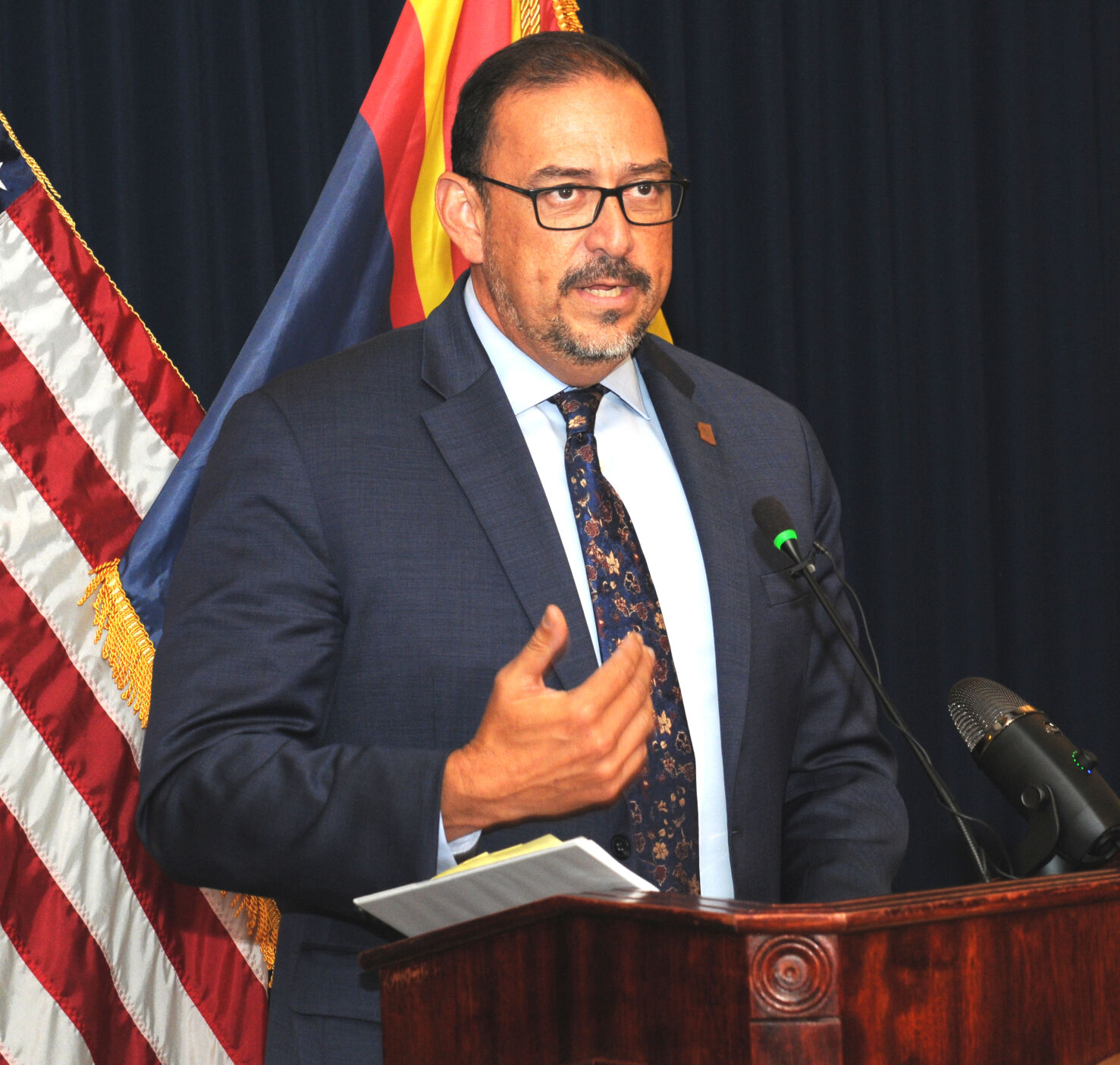
Arizona Secretary of State Adrian Fontes
In filing suit in January, Dhillon said her agency needs all that to determine if state officials were complying with laws that require they do "list maintenance to keep voter registration rolls current and accurate.
In a 13-page order in April, Brnovich acknowledged that federal law does require states to preserve certain documents related to federal elections. The law also empowers the Department of Justice to demand that they be produced.
But Brnovich said, "Arizona's state voter registration list is not a document subject to request by the attorney general."
Brnovich was no more impressed by a backup argument by the Trump administration.
Attorneys for the Department of Justice said that even if voter registration records aren't specifically subject to disclosure, the department is entitled to the information based on a broad definition in the Civil Rights Act which grants access to "all records and papers.'' The judge, however, said that is a misreading of the law.
Arizona is one of more than two dozen states sued by the DOJ in its quest to obtain voter registration records. In every case that has been decided to date, a judge ruled in favor of state officials and against the administration.
Fontes has questioned the motives behind the lawsuit.
In his own legal filings, the Democratic secretary of state said it appears the real goal is that the federal government wants to amass a national centralized database on millions of Americans in what appears to be part of a plan to check the immigration status of those on the voter rolls.
There also is the fact that Trump himself publicly pressured Pam Bondi, who was the attorney general until she was ousted in April, to investigate his loss in the 2020 election, arguing there was cheating and fraud. Bondi has now been replaced on an interim basis by Todd Blanche, who had been her deputy attorney general.
Howard Fischer is a veteran journalist who has been reporting since 1970 and covering state politics and the Legislature since 1982. Follow him on X, formerly known as Twitter, Bluesky, and Threads at @azcapmedia or email azcapmedia@gmail.com.