Arizona’s regular season tipped off less than a week ago, but the suspense has already been underway for three months now.
That’s because the Wildcats ventured into the uniquely chaotic “five-for-five” season by picking up RJ Godfrey in early August.
The Clemson transfer, brought in to plug a much-needed hole created when power forwards Tobe Awaka and Koa Peat departed, first received a legal clearance to play three days after his UA commitment became public … but the NCAA was granted a stay on that order a month later.
Godfrey then jumped to a Texas five-for-five case against the NCAA but was denied injunctive relief there. Now, his attorneys have filed a five-for-five lawsuit in Pima County Superior Court, with Arizona Regents and UA — not the NCAA — as the defendants.
Georgia. Texas. Pima County.
People are also reading…
The NCAA. ABOR. UA.
It can be a challenge to keep up with it all.
But with an initial hearing in Pima County Superior Court not set until Tuesday, there’s just enough breathing room here to sort through all this dizzyness and get up to date with a FAQ of sorts.
Here’s our attempt at one:
Who is RJ Godfrey and why does he matter so much to the Wildcats?
A 6-8, 230-pound fifth-year college basketball player, Godfrey is known for inside scoring and a physicality around the basket. While he isn’t known to be as exceptional a rebounder as Awaka, or quite as agile as Peat, Godfrey’s game combines high-level elements of both players — and UA coaches and players consistently describe him as a likable, high-character person.

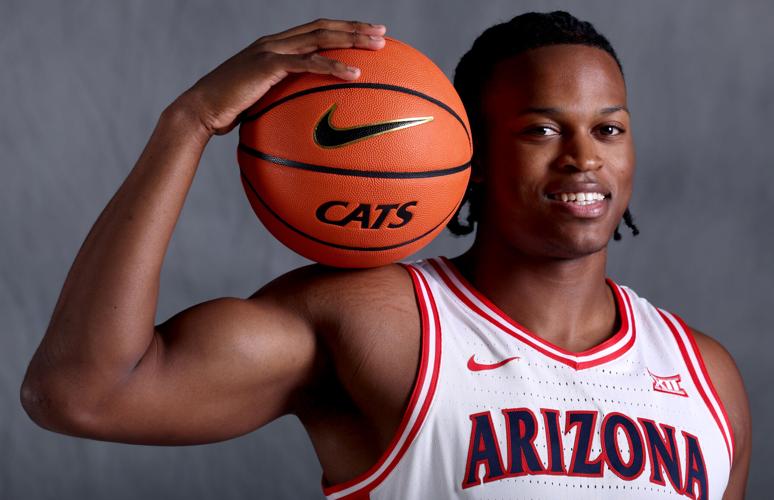
University of Arizona’s RJ Godfrey poses for a photo during the team’s picture/video day on Sept. 9, 2026.
“RJ adds so much joy and spirit to the locker room,” UA freshman forward Cameron Holmes said. “He's a guy that you want on your roster if you're a coach. He's a guy that's gonna do the dirty work. RJ is such a high-level individual, I feel like being around him has brought us up to being better human beings.”
In what is critically important for the Wildcats, Godfrey is also the only true power forward on the roster. The Wildcats have five other players listed taller than 6-7 forward Ivan Kharchenkov, but all of them are either centers and/or developmental players — except for 6-10 freshman Maksim Brnovic, who is actually a wing.
Without Godfrey, the Wildcats have played Kharchenkov at power forward along with Brnovic, though that funnels Kharchenkov’s considerable overall skills somewhat out of position, since he’s a natural small forward.
“I don't love it long term maybe as much as I would short term,” Lloyd said. “But Ivan played some at the four last year… and we found a way to go to Houston and Baylor and win a couple tough games. Obviously we had Tobe as well. So that’s something.”
Why are they called “five-for-five” lawsuits?
The NCAA changed its eligibility rule from allowing four seasons within a five-year window — allowing players to take a redshirt season for medical, developmental or other reasons — to a five-year window in which athletes can play an unlimited amount from when they first enroll in college or turn 19, whichever comes first.
But the NCAA announced that players who graduated high school in 2022 and played four seasons already are excluded from the new rule. The NCAA says those players are subject to the rule in effect when they finished their fourth season during the last academic year, and are thus ineligible — though the organization did not specifically mention the class of 2022 exclusion in its updated 2026-27 Manual.

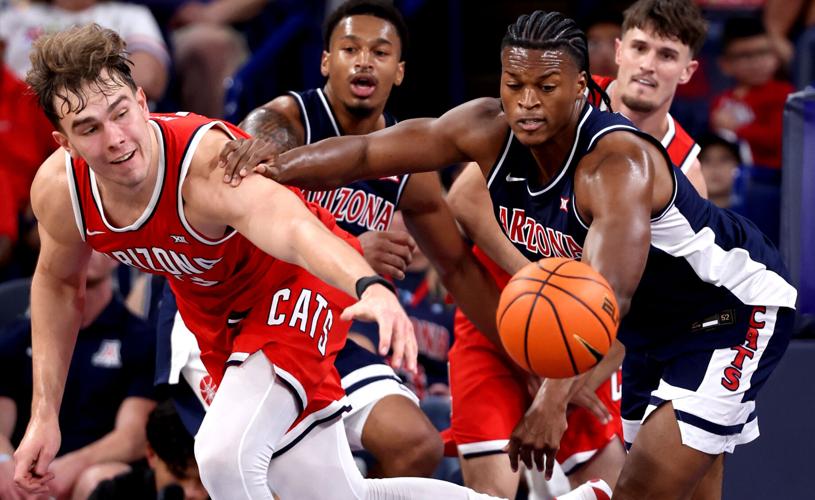
Arizona Blue’s RJ Godfrey (0) shoves his way to the ball through Red’s Motiejus Krivas (13) in pursuit of a rebound at the Red/Blue Showcase, Tucson, Ariz., Sept. 26, 2026.
The many five-for-five lawsuits that have sprung up around the country in response are arguing that 2022 players should be eligible because their high school graduations were less than five years ago. Some, including Godfrey’s latest attempt, are taking issue with the NCAA’s omission of a 2022 exclusion in its manual.
In addition, some lawsuits also note that 2022 high school players already entered college on teams with bloated rosters from the “COVID” rule that gave an extra year of eligibility to those who competed in the COVID-restricted 2020-21 season — so they shouldn't be denied because they might be bloating the rosters this time.
Why is Godfrey bouncing around so much?
A 2022 graduate of Georgia’s North Gwinnett High School, Godfrey started as a plaintiff in his home state's five-for-five case and was at first victorious. Godfrey and other plaintiffs received a temporary restraining order that could have made them eligible.
But the Georgia Court of Appeals granted the NCAA a stay on that order in September, and after successive oral arguments weren’t scheduled until January, Godfrey jumped into a Texas five-for-five case last month instead.
But Texas District Court Judge Ryan Luna last week formally denied a temporary restraining order to Godfrey and others who had jumped into the Texas case from elsewhere, saying their cases were “dismissed for lack of personal jurisdiction.”
Without injunctive relief in Georgia or Texas, Godfrey sat out UA’s first two games of the season and then filed a lawsuit in Pima County Superior Court on Thursday with a different strategy: His attorneys named the Arizona Board of Regents and UA as the defendants, not the NCAA.
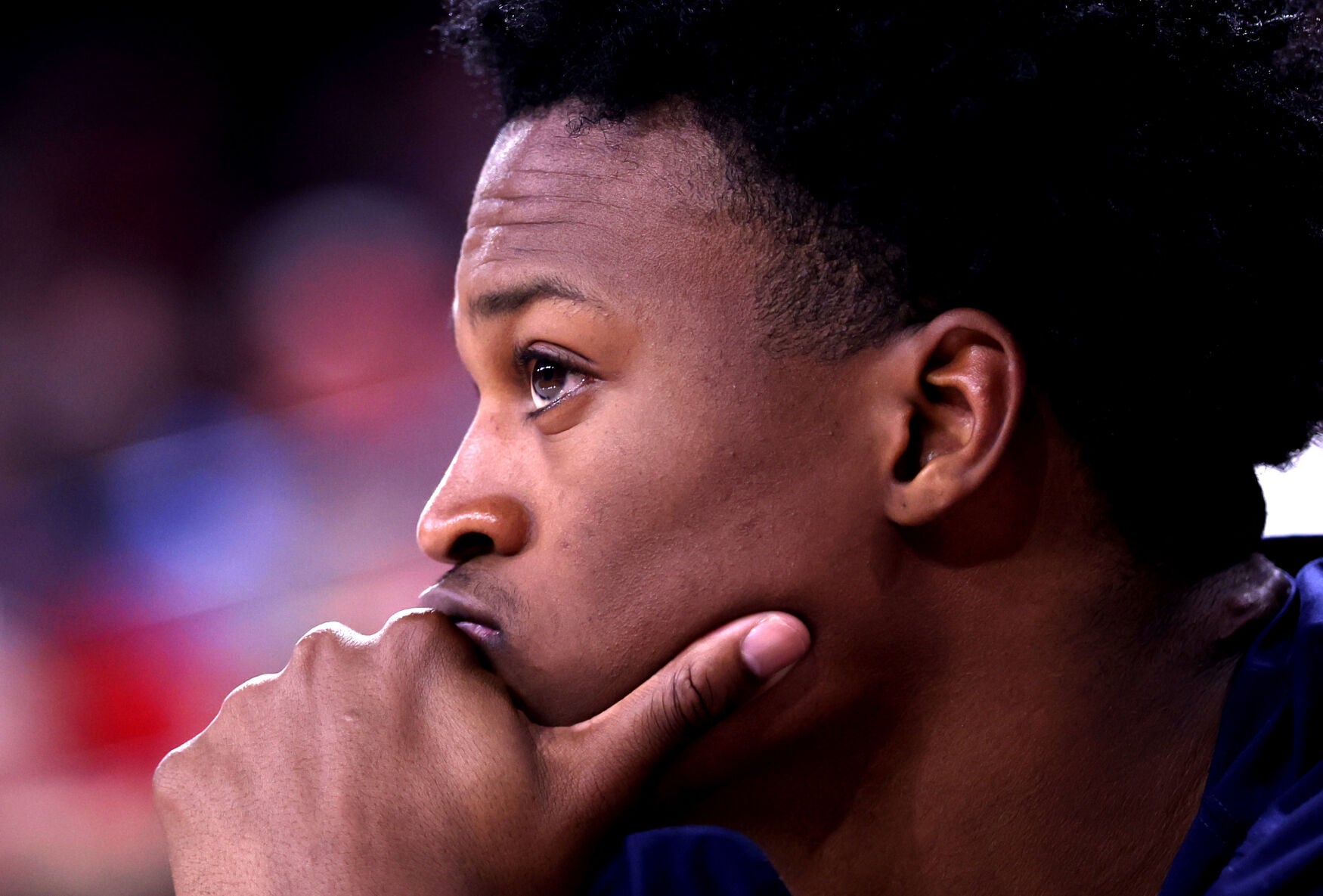
Arizona forward RJ Godfrey watches the action from the bench in the second half against Cal Poly on Nov. 5, 2026.
“It's a fascinating new twist in these lawsuits,” said Boise State law professor Sam Erhlich, who has closely followed the five-for-five legal activity. “I'm interested to see it play out.”
Why weren’t players successful jumping cases?
Luna’s ruling appeared to be based on comity, a legal practice in which courts can voluntarily recognize and enforce laws or decisions made in other jurisdictions. The lawsuit Godfrey jumped into in Texas was essentially the same as the Georgia case.
But the case that Pima County Superior Court Judge Jeffrey Bergin is scheduled to consider arguably could be viewed as a different sort of case, since the NCAA is not the defendant.
In the Pima County case, Godfrey’s attorneys are arguing that UA failed its obligation as an NCAA member institution to roster Godfrey because the Manual rules state he is eligible.
“It's all up to his read of the situation and how much he's willing to tolerate,” Ehrlich said of Bergin. “I think the way the lawsuit is positioned gives the judge plenty of room to rule that it's a new form of litigation, even if many of the material facts are the same. But there's also a chance he sees through it.”
Why did Godfrey sue his own school?
While Ehrlich said some five-for-five plaintiffs have added their schools as a defendant along with the NCAA, he said Godfrey’s appears to be the only one that only names the school as a defendant.
It’s a unique angle that actually could bring relief to both Godfrey and UA if successful, because it could force UA to clear Godfrey to play — and would give the school a defense to any retroactive penalties from the NCAA if he plays and the order is later overturned, since UA could argue it had to follow the order.

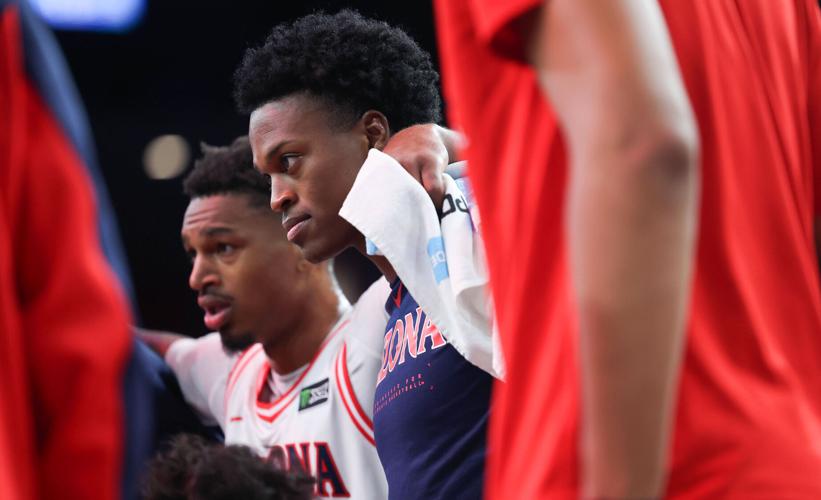
Arizona forward RJ Godfrey listens to head coach Tommy Lloyd during a media timeout against San Diego State, McKale Center at Alkeme Arena, Oct. 16, 2026.
There is precedent that UA is cautious of retroactive penalties from the NCAA: Even though Godfrey could have played in Lithuania before the NCAA received a stay in the Georgia case, the school did not clear him in part because there was not clear wording in the order that would have prevented the NCAA from imposing retroactive penalties if the order was overturned.
Meanwhile, all this begs an interesting question: What sort of defense would UA actually make, if it really wants Godfrey eligible anyway?
“I would be a little surprised if they fight it with all that much vigor, but there may be some division about whether this is acceptable,” Erhlich said. “And if UA doesn't fight it, it also makes for a stronger argument that the NCAA needs to be part of the lawsuit.”
UA athletic director Desiree Reed-Francois declined to comment about her position on Godfrey’s situation when asked through a spokesman.
And, after the Wildcats beat Cal Poly on Thursday, UA coach Tommy Lloyd declined to comment on the new lawsuit and said he’s “not pushing any buttons” on the litigation efforts.
What chance does this argument have?
Godfrey’s formal complaint in Pima County Superior Court attacks the wording of the NCAA’s official 2026-27 manual, saying UA should clear him based on how the rule is written and not on any other communication.
Updated in August with the new five-year rule (Bylaw 12.6), the NCAA Manual says players have a five-year window to play NCAA sports starting when they enroll in a regular college academic term or turn 19, whichever comes first.
But the manual does not mention, as did the NCAA's June 23 news release, that players who completed four years of eligibility last season are excluded from the five-year window. The NCAA's press release noted that athletes who just finished four seasons last year had completed their eligibility under the rules in place during the last academic year.
Erhlich said “it's hard to give odds here, since so much of this depends on the judge's discretion and his read of the situation,” but there is some precedent the argument could have a chance.
In a San Diego five-for-five case, soccer player Owen Walz was granted a temporary restraining order after arguing that the NCAA Manual stated he should be eligible, though he later failed to get an injunction because of other eligibility issues.
In the Walz case, the NCAA argued that the rule does not live in the Manual, which it argued is only published “as a courtesy” to member schools, according to a posting from Florida-based attorney Darren Heitner, who helped file Godfrey's Georgia five-for-five lawsuit.
Phoenix-based attorney Gregg Clifton, who filed the San Diego lawsuit, declined comment other than to say “there is a clear inconsistency in the language of that particular bylaw.”
So what now?
The Pima County Superior Court has scheduled a 15-minute preliminary hearing Tuesday on Godfrey's case that, in a best-case scenario for the Wildcats, could result in a temporary restraining order against UA that might make him eligible Tuesday against NAU. Or it could simply result in scheduling for a longer hearing.
“Every game Godfrey misses is a game he can never get back,” Godfrey’s complaint read. “He therefore seeks a temporary restraining order, a preliminary injunction and ultimately a permanent injunction and specific performance requiring the University to certify him as eligible.”
So, blocked twice before, Godfrey is driving to the basket again.
It’s not clear if he’ll get a bucket, a trip to the foul line or nothing at all.
Contact sports reporter Bruce Pascoe at bpascoe@tucson.com. On X(Twitter): @brucepascoe

Bruce Pascoe
Reporter