This is what the student-athlete experience is supposed to be about.
It’s the stuff that doesn’t generate headlines or social-media graphics with all-caps proclamations — but sticks with you forever.

Michael Lev is a senior writer/columnist for the Arizona Daily Star, Tucson.com and The Wildcaster.
It isn’t about money, NIL or the transfer portal — although, in a fortuitous twist, part of it turned out to be about those things.
The Big 12 Beyond Borders program, launched in 2024, is designed to give student-athletes an immersive historical and cultural experience. It’s meant to take them out of their comfort zone — out of their bubble — to deepen their knowledge of the world, broaden their perspective and pique their curiosity.
Arizona’s representatives in the current cohort are a pair of sophomores: women’s basketball player Molly Ladwig and track sprinter Bryce Melton.
People are also reading…
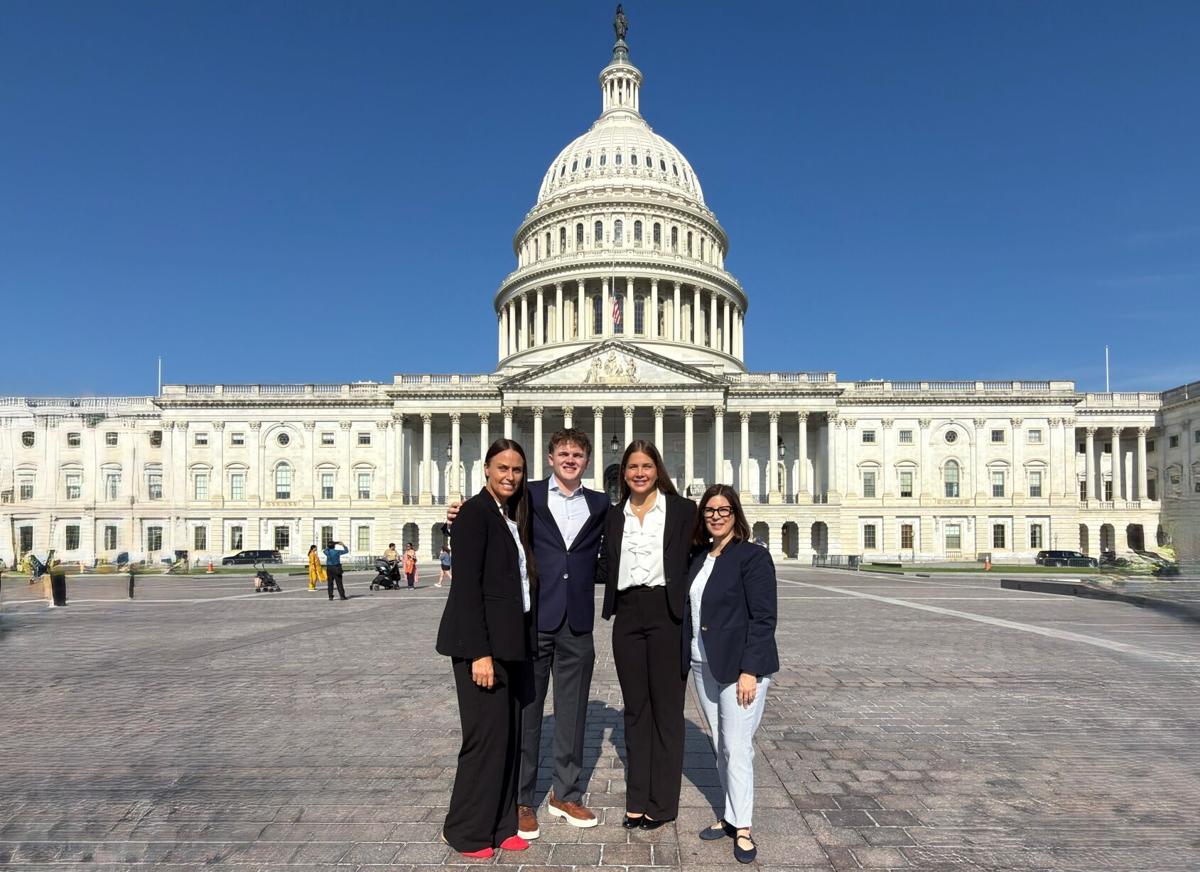
Along with swimming assistant coach Amanda Beard and C.A.T.S. Academics advisor Mary Hartman, they were part of a 60-plus-person contingent that visited Washington, D.C., in July. Each Big 12 school had two student-athlete reps, plus two coaches/administrators.
They visited museums, did community work at a school, met with senatorial aides and bonded over their shared and new experiences.
“It was so much more than I ever thought it would have been,” said Melton, a second-year Wildcat from Santa Fe, New Mexico.
“You're going to D.C. for five days with people you've never met,” added Ladwig, a guard from Omaha, Nebraska. “Meeting new people, learning new things is a crazy-cool opportunity.”

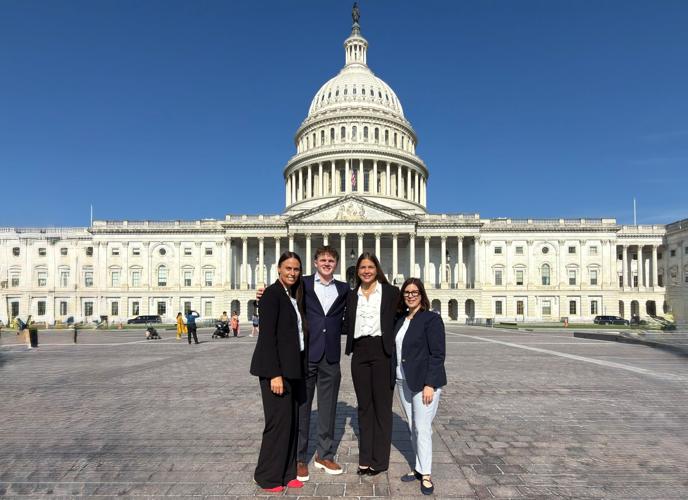
Arizona swimming assistant coach Amanda Beard, track sprinter Bryce Melton, women’s basketball player Molly Ladwig and C.A.T.S. Academics advisor Mary Hartman pose for a picture in front of the United States Capitol while participating in the Big 12 Beyond Borders program in July 2026 in Washington, D.C.
The program is exactly what Jenn Hunter hoped it would be, if not more.
Hunter is the Big 12’s Chief Impact Officer. She previously served as the senior director of diversity, equity & inclusion for the NBA’s Portland Trail Blazers.
One of her projects in Portland was to take area youth to Atlanta to learn about Martin Luther King Jr. and the civil rights movement. She wanted to create a similar program for Big 12 student-athletes — and to take it international. Big 12 Beyond Borders is a two-year commitment. Next year’s trip is to Mexico City.
“I wanted a program that ... taught students how to become global citizens and global leaders,” Hunter said.
“Year One, we really focus on the United States — our history, our culture, the good, the bad, the ugly — and learn that our differences are not as different as we think.
“Year Two is then focused on ... (taking) them somewhere to undo some of the stereotypes they have about other countries.
“It just morphed into something a lot bigger than I would have expected.”
Learning from the past
Each school is tasked with selecting student-athletes who stand out in the areas of leadership and character. The first UA representatives in 2024 were soccer player Maia Brown and sprinter James Onanubosi. Ladwig and Melton were tapped for Big 12 Beyond Borders 2.0.
Ladwig finished her freshman year with a 4.0 GPA. She’s majoring in business and eyeing a career in finance.
Melton took a 3.6 GPA into his sophomore year. He’s majoring in biology and plans to become a dentist.

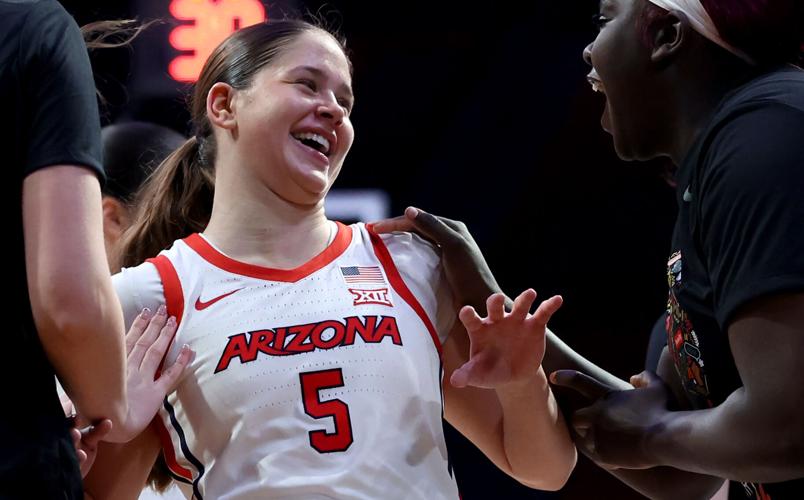
Arizona guard Molly Ladwig (5) gets some love from the bench after she helped the Wildcats grab the lead late in the third quarter of their Big 12 game against Colorado, Feb. 17, 2026, in Tucson.
Both figured that participating in the Big 12 Beyond Borders program would look good on their résumés. But as Melton said, it’s been so much more.
The group visited the United States Holocaust Memorial Museum, the National Museum of African American History and Culture, the National Museum of the American Indian and the Center for Native American Youth.
As Ladwig noted, those aren’t “happy museums.” The group heard stories that were difficult to hear, tales of hardships confronted and overcome.
“These people had to go through a hardship, and they had to all unite and come up with a way to ... persevere and make it out,” Melton said. “A lot of it was actually hard to witness.”
“It was definitely emotional,” added Ladwig.
But also educational.
“The more people who are educated on those events that happened in history,” she said, “I think we can learn ... how to not do things like that in the future.”
One of the missions of the Big 12 Beyond Borders program is to teach student-athletes “history that they really didn’t know,” Hunter said. Unfortunately, that well runs deep.
“What we're teaching in our high schools, there's so much that's lacking,” Hunter said. “Most of our students, this was actually their first time in Washington, D.C.
“We teach very surface level. These museums are so well curated that they're showing you something different. When people go to the Holocaust Museum, the smell when you get to the area where the shoes are, you can't miss it.”
Every morning during the trip, the student-athletes would have a period of self-reflection that at times would be uncomfortable, Hunter said. Every night, they’d talk about what they had learned over a meal.

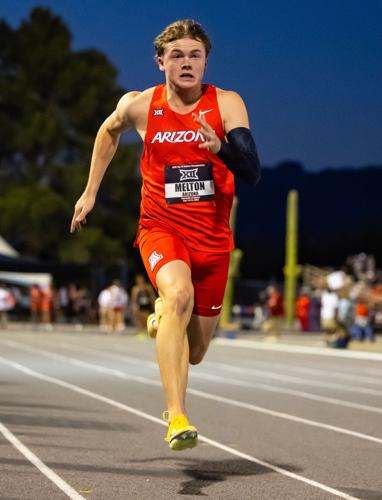
Arizona sprinter Bryce Melton participates in a prelim during the Big 12 Outdoor Track & Field Championships on May 15, 2026, in Tucson.
“Because many communities, and particularly communities of color, that is the place where people bond,” Hunter said. “That's where tradition is held. That's where stories are passed down from generation to generation is at the meal. So we're really intentional about what we call ‘issues at the table.’
“We took that concept (and) put it around their meals each day to discuss and break down what they learned — what was hard, what hurt, what hit them, how they needed to grow.”
Climbing The Hill
The finale — difficult in a different way — involved a trip to Capitol Hill.
The Big 12 Beyond Borders participants were broken into groups and tasked with making pitches to senatorial offices about bills that are being worked on and debated.
Ladwig and Melton just so happened to be part of cohorts that made presentations to Senator Maria Cantwell (D-Washington), co-sponsor of the Protect College Sports Act of 2026.
That bill has a lot of ideas that are popular among college administrators, fans and pundits. But it lacks something essential — the perspective of the student-athletes who’d be most affected by it.
Via the Big 12 Beyond Borders program, some of those student-athletes’ voices were at least heard. Ladwig’s group addressed concerns about transfer-portal tampering. Melton’s group focused on mental health, which he described as an issue the bill “doesn’t address ... to the extent I think it should. I proposed some ideas that they could maybe implement.”

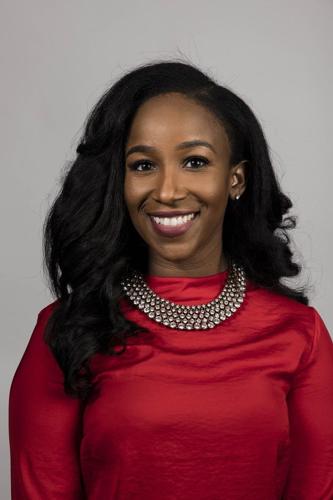
Hunter
Whether the powers-that-be will truly listen is to be determined. The important thing is that these young people got a chance to participate in policy-making — to possibly make a difference in a government that’s supposed to be of the people, by the people and for the people.
“It was cool,” Ladwig said. “It was nerve-wracking.”
But as they know from being Division I athletes, preparation is everything. The night before meeting the senatorial staff, they researched, winnowed their topics and practiced what they were going to say. That was the part that made Hunter most proud.
“We are in an age where, particularly for younger people, everything is so quick and accessible,” she said. “This particular thing forces them to sit down to research, to know who they're speaking to, to really dive into where these bills may have hit a wall. It forces them to really think through how to push something forward.”
It isn’t easy to turn a bill into a law. Or to understand what someone else is going through. Or to change how an entire race of people is viewed and treated. It takes persistence to push through the resistance.
“But that is the reality of the world, right?” Hunter said. “Civil rights didn't happen with one meeting.
“You're sitting where you are today because other people pushed for you and they pushed harder. Beautiful lesson.”
Hunter deeply appreciates that the Big 12’s athletic directors are giving her the opportunity to teach lessons like that — that the conference’s leaders recognize the thousands of student-athletes who don’t make a ton of money (if any) or have lucrative NIL deals.
One of the participants in the first Big 12 Beyond Borders program was Utah offensive tackle Spencer Fano, a first-round pick in this year’s NFL Draft. Most of the participants won’t play professional sports.
But to experience something like this? To make new friends (the group chat is still active) and see the world in a new light? You can’t put a price on that.
“The majority of (our) athletes are like this: brilliant, thoughtful, kind ... inquisitive,” Hunter said. “(We) have over 7,000 student-athletes in the Big 12. Most of them will never see the type of money that gets the headlines. Most of them don't get money. Most of them won't have an NIL deal, and that's OK.
“But man, the stories that they tell, the nonprofits that some of these kids have, the way that they want to move things forward. Those are the stories that get lost, and that is the true story of (our) Big 12 athletes.”
Contact sports reporter/columnist Michael Lev at mlev@tucson.com. On X (Twitter): @michaeljlev. On Bluesky: @michaeljlev.bsky.social
Michael Lev
Sports Reporter/Columnist


 On Arizona’s massive opportunity at BYU and other Week 2 thoughts | Michael Lev