With Tommy Lloyd having set an NCAA record for most wins by a head coach over his first five seasons, we figured it was time to assemble an all-Lloyd-era team.
And, while we’re at it, an all-Sean Miller team. Also, of course, an all-Lute Olson team and another one dating back to the program’s growth spurt under Fred Snowden.
All have five “starters” and five reserves. First up: The Snowden-era (1972-73 to 1981-82), when the Wildcats won 60.7% of their games and reached the 1976 Elite Eight.
Starters
G Eric Money (1972-73 to 1973-74)
The high-energy leader of Snowden’s first recruiting class — dubbed the “Kiddie Korps” in the first year freshmen were eligible to play NCAA varsity sports — Money collected 53 points in the 1972-73 Red Blue Game and didn’t stop there.
People are also reading…
He dropped 37 on Cal State-Bakersfield in his first regular-season game for what is still the fourth-highest single-game total by a UA freshman ever — but also had 10 turnovers.
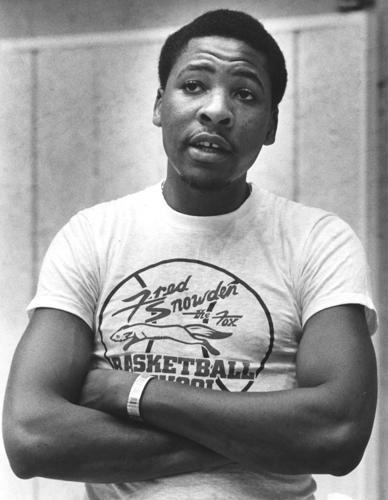
“Eric was great but he had to be restrained,” Snowden said, according to Star archives.

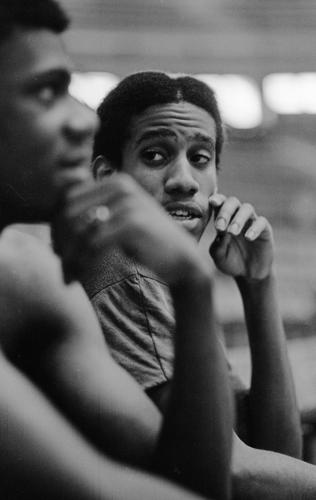
University of Arizona guard Eric Money, right, talking with Coniel Norman at McKale Center in 1973.
Money went on to average 18.9 points as a freshman, which still ranks fourth behind 1972-73 teammate Coniel Norman (24.0), Deandre Ayton (20.1 in 2017-18) and Jerryd Bayless (19.7 in 2007-08). Money averaged 18.1 points while shooting 50% from the field as a sophomore in 1973-74, then left to become the 33rd overall pick in the 1974 NBA Draft and played six seasons in the NBA.
G Herman Harris (1973-74 to 1976-77)
Arriving with star big man Bob Elliott in Snowden’s second recruiting class, Harris put up one of the most significant individual performances in UA basketball history: He scored 17 of the Wildcats’ last 25 points in their overtime defeat of UNLV in the 1976 Sweet 16, giving them their first-ever appearance in the Elite Eight.
Harris’ impact improved during each of his four seasons, becoming an all-WAC pick as a senior in 1976-77 when he averaged 20.1 points, getting only two points for many shots that would have counted for three today.
F Coniel Norman (1972-73 to 1973-74)
Known as “Popcorn” for his shooting ability all over the court, Norman remains Arizona’s career leader in scoring average at 23.9 — even though he also didn't benefit from a 3-point line.
Norman also still holds the UA freshman points-per-game scoring record at 24.0 (Ayton is UA’s top overall freshman points-getter because UA played nine more games in 2017-18) and was a first-team all-WAC pick for both of his two seasons at UA.
As did Money, Norman entered the 1974 NBA Draft by declaring hardship — a requirement for underclassmen to enter the draft in those days — and became a third-round pick of the Philadelphia 76ers. He played parts of three seasons in the NBA before joining the Army and later becoming homeless. He built back his life in Los Angeles starting in 2010. He died in 2022.
F Al Fleming (1972-73 to 1975-76)
Another standout member of the Kiddie Korps, Fleming averaged 12.8 points and 9.9 rebounds as a freshman in 1972-73 — and a double-double each of the three seasons after that.

Al Fleming
Fleming, an Indiana product whose mother happened to be named Arizona, broke out with 21 points and 13 rebounds against 17th-ranked USC and finished his freshman year averaging 9.9 rebounds, still third among all UA freshmen (Ayton averaged 11.6 and Bob Elliott averaged 10.7 their first seasons at UA).
A second-round pick of the Phoenix Suns in 1976, Fleming played 20 games for Seattle in 1977-78 before playing in Europe. He died of kidney cancer at 49 in 2003 and was inducted into the UA Ring of Honor in 2021.
C Bob Elliott (1973-74 to 1976-77)
A member of the Star’s Mount Rushmore for UA men’s basketball, Elliott was, simply put, the most significant player in the Snowden era.
Elliott remains the program’s No. 2 career scorer (2,131) and rebounder (1,083), behind only Sean Elliott (2,555 points) and Fleming (1,190 rebounds). He averaged double-doubles as a freshman and as a junior, while also averaging 23.5 points as a sophomore in 1974-75, when the Wildcats reached the NCAA Tournament.
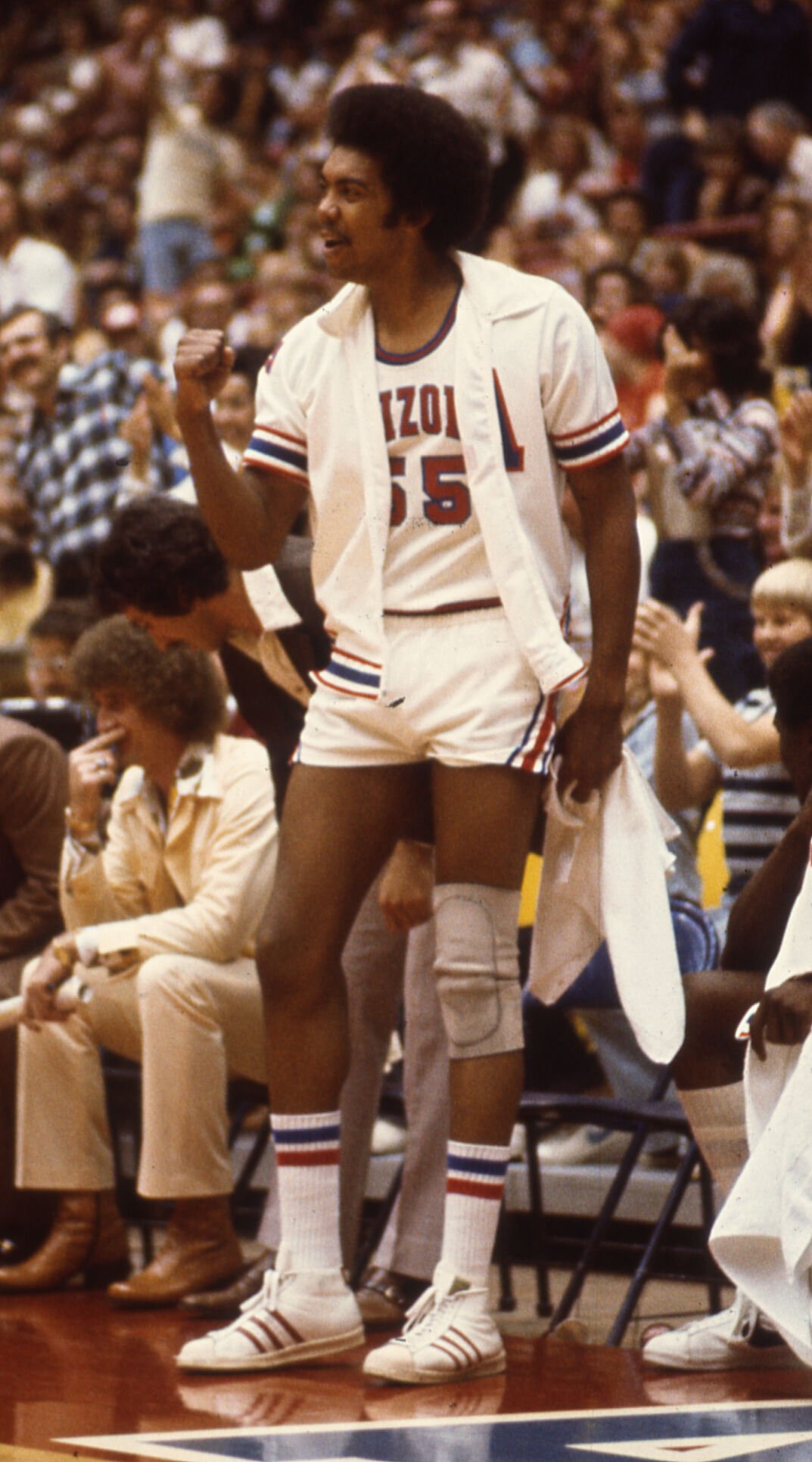
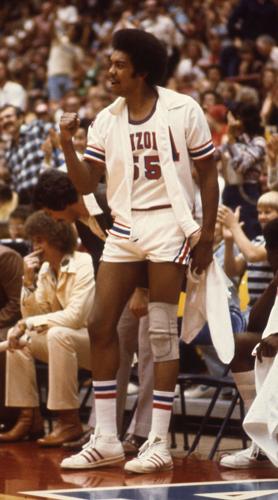
Arizona’s Bob Elliott pumps his fist during a game against Wyoming in 1977 at McKale Center.
Elliott also managed to average 29.6 minutes and 16.5 points per game as a senior despite playing with an undisclosed knee injury. After that season, he became a second-round NBA pick in 1997 and went on to an injury-shortened six-year pro career.
A three-time all-WAC pick — and two-time all-WAC academic pick — Elliott returned to Tucson to work as an accountant. He started his own firm in February 1983 while also becoming a regular UA basketball television analyst.
Reserves
G Russell Brown (1977-78 to 1980-81)
Brown remains Arizona’s all-time leader in assists with 810, a number that is more impressive if you consider the tighter definition of an assist during his career: Players could generally only receive assists if a teammate received his pass and shot it right away.
“For Russell Brown to get the assists he had was crazy," Elliott said. "Russ had four sets of eyes all around his head. He could see you and you didn’t think he could see you. He always saw everything.”

Russell Brown
While Brown played during UA's downward trend toward the end of the Snowden era, his impact was immense. His single-season assist record of 247 in 1978-79 still stands, even though he had 11 fewer games to play in that season than second-place T.J. McConnell (238) did in 2014-15.
G Jim Rappis (1972-73 to 1975-76)
Another of the Kiddie Korps who grew up quickly, Rappis wasn’t known for eye-popping numbers as much as the glue he provided for some of Snowden’s best teams and the way he played through pain.
“Steve Kerr and Jim Rappis were damn near identical in the way they played,” Elliott said, referring first to the legendary Lute Olson-era guard. "He was that steady influence on all of us. High basketball IQ. Knew how to play the game. Not the most athletic person but was very, very effective.”
Rappis averaged 12.0 points as a junior in 1974-75 and 13.4 as a senior in 1975-76, when he was named a second-team All-WAC pick. He had 24 points and 12 assists in the Wildcats’ 1976 Sweet 16 win over UNLV, despite injuring his left heel in the first half.
In 2015, All Sports Tucson ranked Rappis No. 10 on its list of “Arizona Wildcats hoops badasses.”
G Joe Nehls (1976-77 to 1979-80)

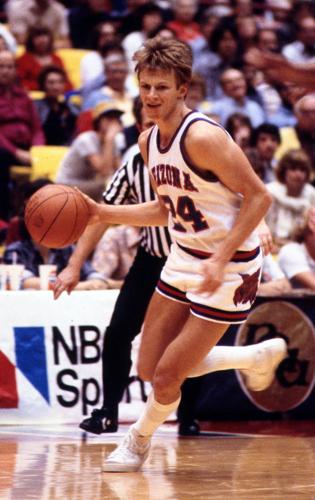
Arizona guard Joe Nehls against Oregon at McKale Center in Jan. 1980.
One of the best shooters in UA basketball history — even though, again, there was no 3-point line — Nehls started 72 of 84 games over his four-year career and was particularly lethal during his last two seasons after UA joined the Pac-10.
Nehls averaged 19.1 points in 1976-77 and 19.3 points in 1979-80. That last season, he averaged 20.2 points in Pac-10 games and was named a first-team all-conference pick. Nehls was also drafted by Houston in the seventh round of the 1980 NBA Draft, though he did not play in the league.
A two-time Pac-12 all-academic pick, Nehls went on to a real estate career in Tucson.
F Larry Demic (1975-76 to 1978-79)
In today’s transfer portal era, Demic probably would have never stuck around to make himself an all-Snowden pick. Buried behind skilled post players such as Elliott, Fleming and Phil Taylor early in his UA career, Demic played in only seven games as a freshman and 16 as a sophomore, meaning he would probably skip town today.
In fact, he said he nearly thought about doing so, even back then.
“The thought of transferring crossed my mind,” Demic told the Star in 1979. “But I never really considered doing it. I am glad I did not.”

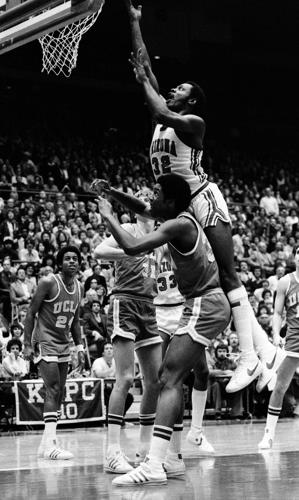
Arizona's Larry Demic flies over other players for a layup during University of Arizona vs. UCLA basketball at McKale Center on Jan. 18, 1979.
Demic’s patience paid off. He became a part-time starter in 1997-78 and broke out as a senior in 1978-79, averaging 19.3 points and 10.3 rebounds — before becoming the first UA player ever selected in the first round of the NBA Draft.
The Knicks selected Demic ninth overall in 1979 and kept him for three seasons before Demic began playing internationally.
C Phil Taylor (1974-75 to 1977-78)
A steady and consistent performer throughout his UA career, Taylor shot 52.1% over his four-year career, while his rebounding average of 10.8 as a junior in 1976-77 still stands as the ninth-highest in school history.
Taylor played a limited role on UA’s Elite Eight team as a sophomore before averaging a double-double of 16.0 points and 10.8 rebounds as a junior in 1976-77. As a senior in 1977-78, he averaged 16.6 points and 8.1 rebounds and was named a second-team All-WAC pick during the Wildcats’ final season in that league.
Contact sports reporter Bruce Pascoe at bpascoe@tucson.com. On X(Twitter): @brucepascoe

Bruce Pascoe
Reporter