A 23-year-old Russian asylum seeker who lived in Tucson has been returned to his home country, despite his fear of being conscripted into the Russian military or imprisoned for his political beliefs.
Vlad, who fled Russia in 2022, was put on a flight to Moscow, with a layover in Morocco, on July 20, said his partner Andrea Landavazo, a Tucson native who started dating Vlad last year.
Landavazo, 25, asked that the Arizona Daily Star not publish Vlad’s last name, since he faces danger in Russia due to his political activity and his opposition to the Russia-Ukraine war.
“I can’t even believe it,” Landavazo said Friday. “This was something I was trying to avoid ever since he got detained, and it happened. I just felt really defeated.”
In December 2022, Vlad presented himself at the port of entry in San Ysidro, California, and requested asylum protection. He was detained by ICE in Tucson in June after missing a May court hearing in his asylum case, which had been rescheduled several times, Landavazo previously told the Star.
People are also reading…

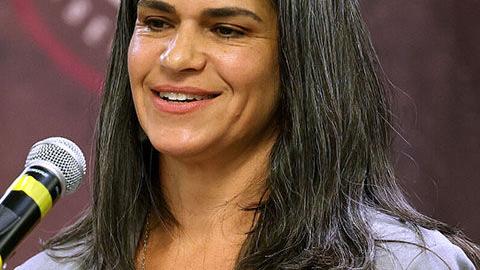
Tucson native Andrea Landavazo is pictured with her partner, Vlad, a 23-year-old Russian asylum seeker, on Tumamoc Hill in 2025. Vlad, who had been in detention at an ICE facility in Florence, was deported to Moscow July 20, after missing a May court hearing in his asylum case, Landavazo said.
Vlad was issued an order of deportation in absentia at the hearing, and was then detained at the ICE field office in Tucson when he tried to deliver a motion asking to reopen the asylum case, she said.
Vlad spent time at ICE’s Florence Service Processing Center this month, during a lockdown due to an outbreak of measles.
While ICE paid for the return flight to Russia, Vlad did not receive any additional funds, despite ICE’s repeated promises of up to $2,600 for people who “self deport,” Landavazo said.
An ICE spokesman said that’s because Vlad did not leave voluntarily.
Vlad “did not choose voluntary departure; ICE removed him,” said ICE spokesman Fernando Burgos in a Friday statement. “Due to operational security considerations, ICE does not release information about removal operations, schedules, or tactics. Because ICE deported him, he did not receive the $2,600.”
Landavazo said she believes that Vlad did “self-deport,” although he was pressured to do so.
His deportation was previously scheduled for July 30, she said. “Why was he deported early, if it wasn’t a self-deport?” she said.
The money would have been a big help for Vlad, Landavazo said. She described getting a desperate call from him July 21, after he landed in the Moscow airport, hungry and scared, with no money or means of traveling to his hometown.
Vlad’s brother was able to transfer him some funds to travel to his home city, which the Star is not identifying, where he is staying with his brother, Landavazo said.
Vlad worries some of his family members could turn him in to Russian authorities, as some of his relatives saw him as a “traitor to his country” for fleeing to the U.S., his partner said.
Their main fear is that Vlad could be drafted into the war or imprisoned for his political beliefs.
In Russia, Vlad participated in anti-government protests in the years leading up to Russia’s invasion of Ukraine, according to his asylum petition, which Landavazo shared with the Star. In 2021, he was detained by Russian police and "subjected to severe psychological torment, including death threats,” the petition said.
Vlad fled to the U.S. after Russia invaded Ukraine, amid an "unprecedented crackdown on forms of dissent, transforming the specific threats he had already received into a near certainty of imprisonment," the petition said.
Earlier this month U.S. Rep. Adelita Grijalva, a Tucson Democrat, called for a halt to deportations for ICE detainees impacted by the measles lockdown at the Florence Service Processing Center and Florence Staging Facility, part of ICE’s Florence Detention Center campus.
"ICE must delay his deportation proceedings — and those of all other impacted individuals — so that they are able to pursue all legal avenues, which will inevitably be delayed by this outbreak," Grijalva said.
While Vlad now faces a 10-year ban on returning to the U.S., Landavazo said they’re hopeful they could be officially married in the future and find a legal path to reunite sooner. She briefly looked up flights to Russia, but the cost is far out of her budget, she said.
“I’ve been trying to just stay positive and think about what to do next,” she said.
Contact reporter Emily Bregel at ebregel@tucson.com. On X, formerly Twitter: @EmilyBregel

Emily Bregel
Border reporter