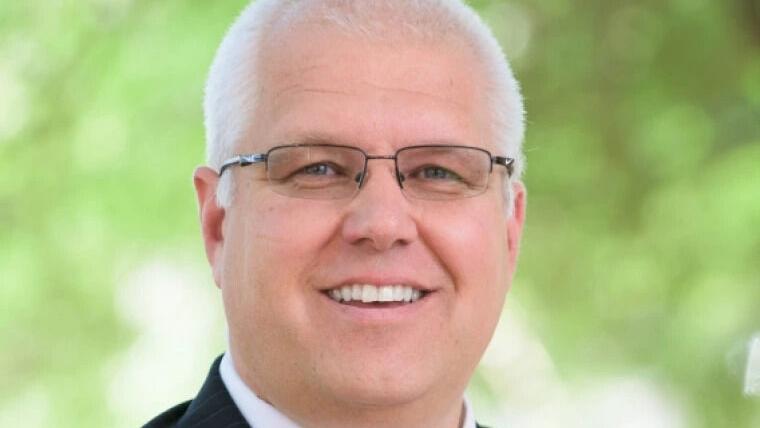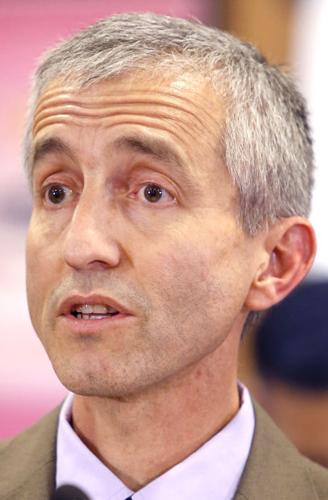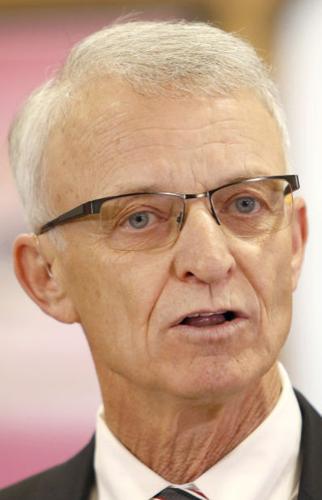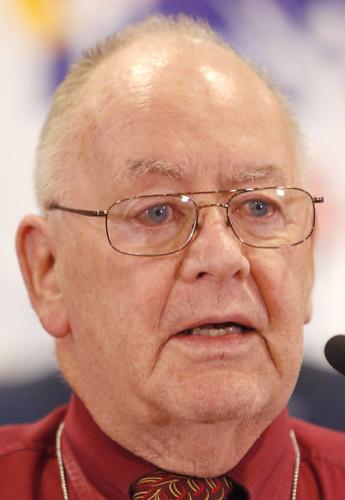
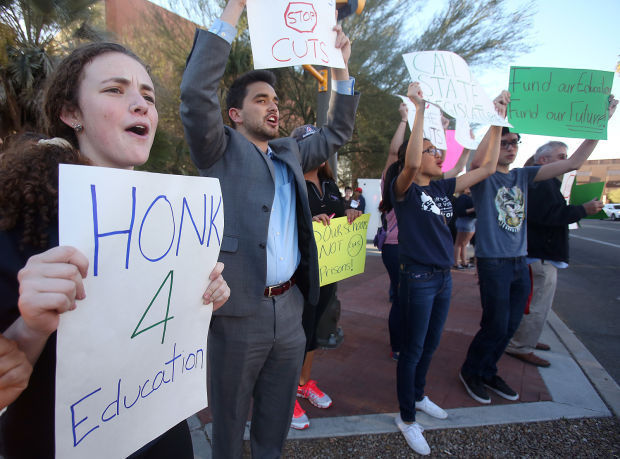
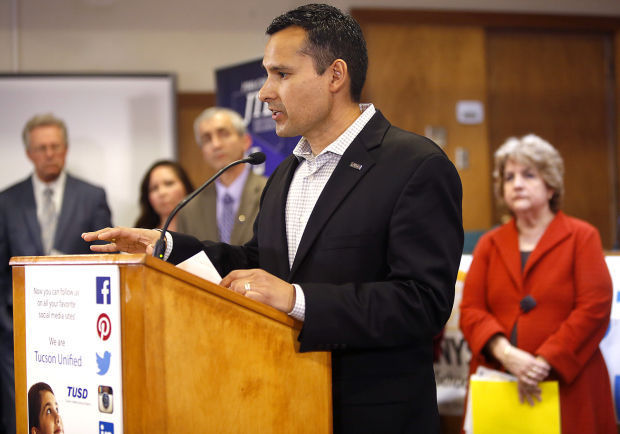
Superintendents from the Tucson Unified, Sahuarita, Sunnyside, Vail and Pima County JTED school districts issued a joint plea Thursday for public support to head off state education funding cuts.
Particularly at risk, they said, is the successful JTED career-training program, which would be all but eliminated.
Representatives of the Tucson Metropolitan Chamber of Commerce and United Way of Tucson and Southern Arizona were also at the news conference, reiterating the concern that the threat to education coming from the state Capitol will be damaging, not just to children, but to the well-being of the entire region.
The message from the news conference was reinforced by 108,000 robo-calls from TUSD Superintendent H.T. Sanchez to district parents, guardians and staff, urging them to call their legislators and offering a link to a video of the news conference on the district website.
People are also reading…
While all agree with Gov. Doug Ducey’s stance on improving economic development in Arizona, they said the lack of support for education works against that effort.
The proposed budget calls for shifting 5 percent of funding from non-classroom expenditures to classrooms, and would reduce funding for career- and technical-education programs to the point school districts would no longer be able to support students taking advantage of those offerings.
Jessica Peters, a Tucson High Magnet School senior, has taken entrepreneurship classes and a marketing course through JTED for three years. She plans to attend the University of Arizona and hopes to open a business of her own.
“This means that my generation is not going to get the education that they need to succeed in the future,” Peters said of the proposed cuts. “It means that the courses that have supported me and my education to prepare me for going to college are going to be cut.
“I think our community and our state need to value education before anything else,” the 17-year-old said.
Vail Superintendent Calvin Baker said the governor’s budget plan “damages some of our most successful efforts to develop a highly skilled workforce,” as well as “reinforces the perception that Arizona does not value education, and that perception discourages top-quality employers and top- quality employees from locating here.”
Chamber of Commerce President and CEO Michael Varney called the proposed budget “disappointing at best and devastating at worst.”
“There is a point beyond which you cannot come back,” Varney said. “You can cut to that point but not beyond it or your organization or company will fail.”
The 5 percent shift will mean cuts to social workers, counselors, school nurses, library staff, dropout prevention specialists, psychologists and transportation — functions that impact a student’s ability to learn, school officials said.
For TUSD, Tucson’s largest school district, that amounts to $5.8 million in so-called non-instructional expenditures.
For JTED, the Joint Technological Education District, the proposed budget would cost TUSD $330 for every student who would like to take part in the programming, which is not feasible with 8,000 students enrolled in the classes now.
The county-wide district offers tuition-free career and technical education programs to sophomore, junior and senior level high school students from public, private, charter and home schools.
The specialized programming touches on such industries as automotive, health care, public safety, engineering, business and bioscience.
“We are economic development,” said Pima County JTED Superintendent Alan Storm. “That’s what the state says they want to have, but they’re taking it away.”
If the JTED reductions become reality, it would not only impact the 20,000 students across the county who take advantage of the program, it would circumvent voters’ decision to create JTEDs, Storm said.
In addition to developing a skilled workforce, career and technical education classes have increased high school graduation rates more than 24 percent and improved standardized test scores by as much as 30 percent, officials said, because it gives young people a way to support themselves after high school graduation.
And for some, it serves as the driving force to stay in school at all.
“A lot of kids find their niche in these programs and that’s where they like to focus their energy, whether it’s a graphics class in their high school or a fire services program at our central campus,” Storm said.
“If parents and voters at any time in the past few months felt the urge to contact their legislators regarding the state budget, now is the time,” Sanchez said.
“I know that every one of us have a family budget, and for those of us who have children, when things get tight and we have to tighten up around the house,” he continued.
When that happens, parents make the kids’ needs a priority when deciding what to cut, a practice he said the state should emulate.
In addition to pressing elected officials about why they are cutting education, TUSD Governing Board Clerk Kristel Foster urged the community to question what the lawmakers are investing in.
“I am not OK with having 3,000 more prison beds,” she said. “I’m not OK as a citizen of Arizona in investing in that and having a goal of keeping our prisons 90 percent occupied and not having a literacy rate of 90 percent in our schools.”

Manuel Valenzuela

Calvin Baker

Alan Storm

Eugenia Favela
Contact reporter Alexis Huicochea at ahuicochea@tucson.com or 573-4175. On Twitter: @AlexisHuicochea

Alexis Huicochea
Team leader