Kelly Hartin-Nichols tried unsuccessfully for two years to teach her hearing-impaired daughter her colors.
That changed when 5-year-old Adaija started school at the Arizona State Schools for the Deaf and the Blind in August. Now she's afraid all that progress will be lost, with the news the school might have to make $8.3 million in program cuts.
In preschool, Hartin-Nichols saw the pictures her daughter colored daily and brought home because the teachers didn't know how to communicate with Adaija to help her trace letters or build language skills like the other children.
She decided something needed to change.
Two weeks after Adaija started class at ASDB, she came home able to show her mother what blue and red looked like.
"I was literally shocked at the difference, and I noticed it the first week," said the 28-year-old Kearny resident.
People are also reading…
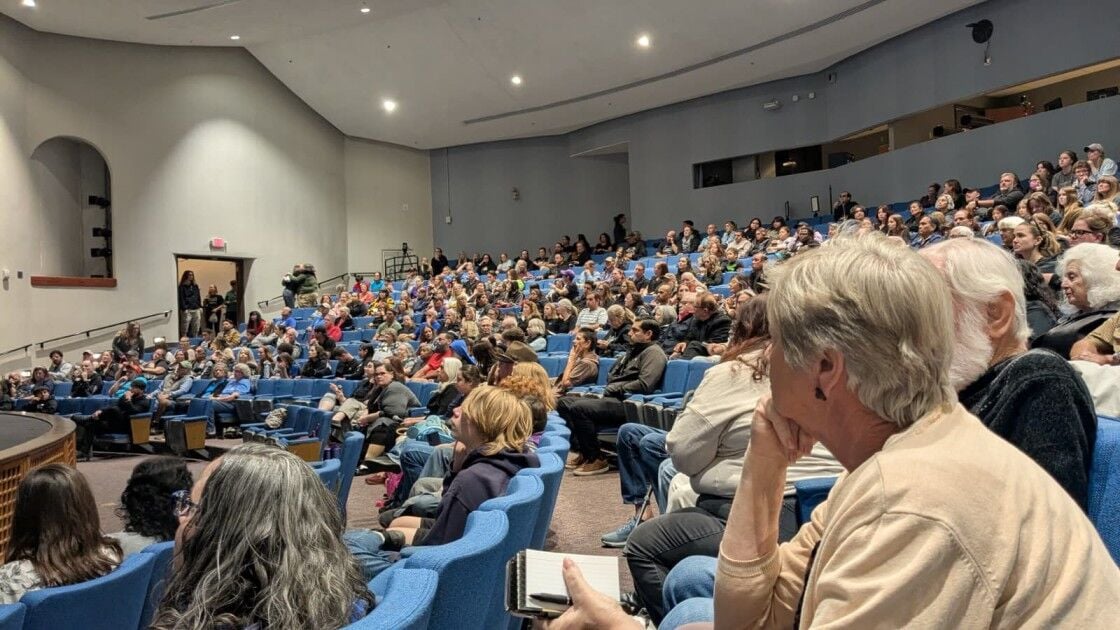
Worried about holding onto that progress, Hartin-Nichols will attend a parent meeting at the Tucson campus tonight, as the school tries to squelch rumors that it might be shuttered in the face of potentially deep cuts to its $55 million budget.
Superintendent Robert Hill said he received notice early this month from Gov. Jan Brewer's office that, on top of the $2.3 million already chopped out of this year's budget, the school is being asked to plan for another 15 percent cut.
"We're really struggling to find that 15 percent," he said. "We just don't have 15 percent to give."
Already, he said, the school has determined that if it increases class sizes to six students per teacher, halts field trips, zeroes out its cell-phone budget and suspends the athletic program for 18 months, it would be able to save up to $4 million.
Much deeper than that, though, and it could force the school to make tough choices about whether it can continue to afford some portions of its programs, Hill said. The early-intervention program from birth to age 3, or the preschool program, might have to face reductions or eliminations, he said. Or the school might have to consider reducing its residential component for the 40 percent of its students, like Adaija, who live in outlying areas of the state.
It already hurts to have to expand class sizes, currently at four students per teacher. About two-thirds of the students are deaf and the rest are blind, but there are gradations within those numbers.
Some students are deaf and blind. Some have autism; some cerebral palsy. Some are very strong academically, and others came in behind because of delayed services.
"We're going to fight very hard to keep programs intact, but what I'm worried about is a slow bleed," Hill said. "All of these steps have a domino effect."
If the preschool program goes away, it will have an impact on children, some of whom show up to school at 6 years old knowing 20 words. It also will have an impact beyond preschool, since those programs are feeders into higher grades, he said.
It's possible the school can seek legislation allowing it to shift transportation responsibility to school districts, which can get reimbursement for their special-education transportation costs. Currently, the school gets $50 per student for transportation costs for the whole school year, which translates to about $3.3 million a year. With students coming from as far away as the White Mountains, Morenci and Page, that doesn't last long.
The fact that the school is a state agency restricts its ability to raise money. Unlike districts, which can ask voters to float bonds or fund overrides to increase their budgets, the only source of funding for the school is the general fund.
The school has been given until Oct. 23 to forward its plan to the governor.
Brewer's spokesman Paul Senseman said the school's quandary is precisely what the governor had hoped to avoid.
"The governor's concern is that a cuts-only approach to solving our budget deficit will lead to severe impacts to organizations like ASDB," he said, noting that other worthwhile services across the state have already been affected.
She has asked for a full analysis from state agencies so citizens and lawmakers alike will understand the potential ramifications, he said. There is no special session scheduled to force lawmakers back to the table. "But the farther we go with cuts-only approaches, the deeper and harder it will be to get these issues resolved."
Hill said there are probably a number of reasons the false rumor got out that the school was closing. Recent news accounts suggested the school campuses might be sold, then leased back, to raise revenues for the state, which might have raised suspicions. And over the years, the number of students served in the schools has dropped. Twenty years ago, as many as 98 percent of deaf students in the state attended specialized schools. That number is now down to about a quarter, as school districts have stepped up their educational offerings.
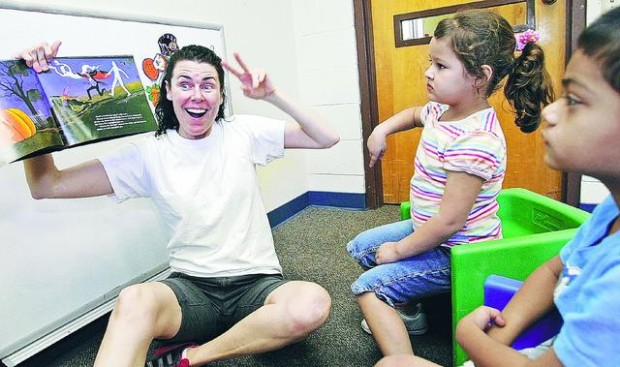
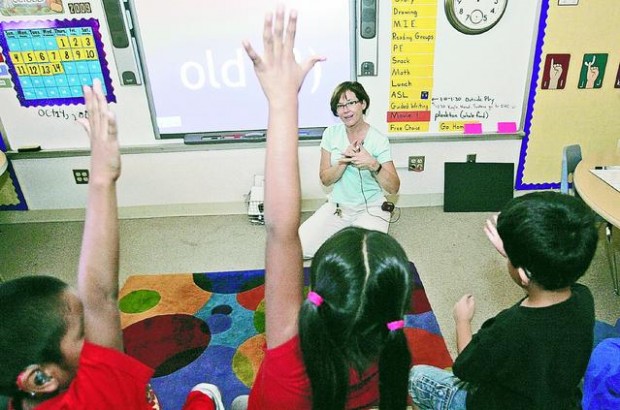
Nancy Amann, principal of the school for the deaf, said there are a number of reasons parents continue to pick her school. All of the teachers sign, which allows for more direct instruction, instead of relying on an interpreter. There's less competition in the small school for students to join sports teams.
Finally, the social interaction among peers cannot be understated, she said, since students are surrounded all day by other students they can communicate with. "If a student in a public school is deaf and relying on an interpreter all day long, what happens in between classes? An interpreter is not a peer."
Those are all reasons Alicia Schwartzmann, a former educator who lives in Queen Creek, sent her 15-year-old daughter, Snow, to the Tucson campus this year.
Resources were just too limited in the public school system, she said. She often had to wait three months from the start of class for books in Braille to be ordered, so her daughter would read Harry Potter while the rest of the class did their academic work. Schools didn't have simple things, like raised maps, for example. Snow was the only blind student in her school, and she had only two friends.
"She's lost a lot of time, so now we're playing catch-up, but I've seen such a great improvement already," Schwartzmann said.
"To cut the budget from a program that so desperately needs funds already is just wrong," she said. "It's difficult to hear that something is going to be cut out of my daughter's education."
IF YOU GO
What: Meeting for parents and the community regarding potential budget cuts at Arizona State Schools for the Deaf and the Blind
When: 6 p.m. today
Where: Arizona State Schools for the Deaf and the Blind, 1200 W. Speedway.
Why: The school, which is a state agency, has been asked to identify ways to give back 15 percent of its current fiscal-year budget. That's on top of a $2.3 million cut earlier this fiscal year.