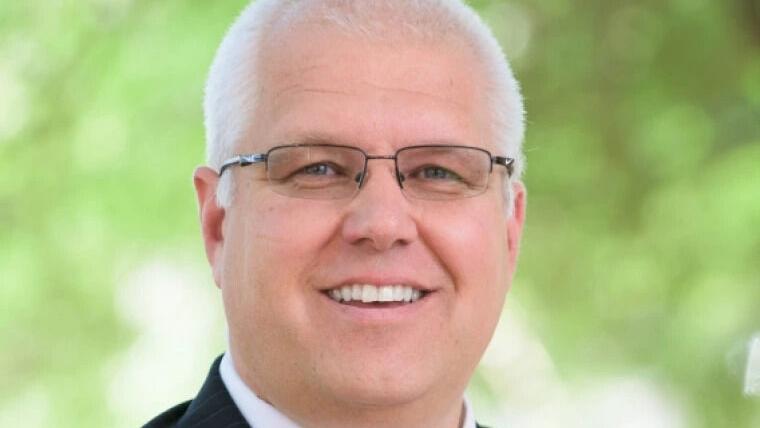
The high cost of college textbooks — about $900 a year per student — could be substantially alleviated if professors turned in book lists on time, according to a preliminary report from an Arizona Board of Regents' task force.
For the fall 2005 semester, fewer than 4 percent of professors at Arizona's three public universities submitted their book lists by the deadline, and only a quarter did so by the time college bookstores started buying back texts.
Late book orders hamstring the bookstores' planning, plunge buy-back rates for students and leave shelves empty of the more inexpensive used books for the next semester.
If 80 percent of professors met the deadline, students would save $4 million a year, said Regent Edward Hermes, an Arizona State University student who is leading the task force that started evaluating textbook costs in September. The data was collected from the universities' bookstores.
People are also reading…
"It's no fault of the faculty for not knowing about this problem, because as a student and as a regent, I wasn't aware of the ramifications of getting the book orders in on time," Hermes said. "Identifying the problem is a huge first step."
Arizona students have been part of a national campaign calling attention to textbook prices; a 2005 government report put the rising cost at four times the rate of inflation in the past decade.
Students have criticized publishers for issuing new editions more frequently — cutting the average cycle from 5-7 years to 1-3 years — and for "bundling" the books with seldom-used CD-ROMs and other instructional supplements.
But the regents' task force is the first to take a comprehensive look at the problem and flesh out the role of professors.
Erin Hertzog, the University of Arizona student body president, said students have started an awareness campaign with faculty and expect cooperation.
When professors inform the bookstore on time, used books are much more likely to be used for the next term, helping students resell books at higher rates and also making used books available for new students at less cost.
Students can get 25 percent of retail cost at most — though typically far less — for books not adopted for another term. But books that are adopted are bought back for 50 percent.
"We've found a high receptivity on the part of the faculty," said UA President Robert Shelton. "In some cases, you have to change books, you have to advance. But to the degree possible, I'm confident the faculty has bought into this."
The task force also surveyed students and professors at each university about the value and use of bundled materials and new editions, Hermes said.
About 69 percent of faculty members said updated content is the primary reason for ordering a new edition of a textbook.
But 41 percent said they had to order a new edition because the publisher no longer made the current one available.
"We need to come up with some clever ways to allow students to still purchase used books even though there are new editions out nearly every year," Hermes said.
On a 1-to-5 scale, students rated bundled items a "2" in terms of use and value. Although 26 percent of faculty ordered bundled texts, just 35 percent of that group used all the materials.
Thirty-eight percent said the materials are not useful to students, and nearly a third would have ordered just the textbook if that option were available.
"There's a disconnect between what publishing companies are including and what faculty are needing," Hermes said.
The task force, made up of students and administrators at each university, will have one more meeting before submitting a final report to the regents in June.
The regents will be asked to support a series of concise, specific actions, Hermes said.