
If you think your children are watching truly educational TV shows, you might need to tune in for a closer look.
An "E/I" icon appears during some children's TV programs, meant to indicate that the episode is educational and informational, but an analysis of these programs by a team that includes a UA researcher found that only one in eight of the shows was considered by experts as "highly educational."
The study by Children Now, a children's advocacy organization, found that one in four programs that tout an "E/I" icon are rated as "minimally educational," the lowest rating. Most "E/I" programs are classified as "moderately educational."
The Children's Television Act, passed by Congress in 1990, requires that each TV station in the United States air at least three hours of programs classified as "E/I" each week.
People are also reading…
The results of "Education-ally/Insufficient? An Analysis of the Educational Quality & Availability of Children's E/I Programming," are of concern to experts, among them Dale Kunkel, a communications professor at the University of Arizona and a lead researcher in the study.
"It's unfortunate the way the law works because the FCC (Federal Communications Commission) accepts all claims at face value. There's no evaluation or scrutinization to test the quality of programs that are claimed to be educational, and in general the average level of quality is not very high," said Kunkel, who has researched children in media issues for more than 20 years and has spoken at more than a dozen congressional hearings.
Originally, when the act was implemented by the FCC in 1991, there was no "E/I" icon to indicate what programs were considered educational. At that time, some stations claimed The Flintstones and The Jetsons were educational because they taught children about history or the future, Kunkel said.
He and other researchers analyzed 120 episodes of 40 programs, rating each show on its clarity, integration, involvement, applicability, importance and positive reinforcement.
"This evidence suggests that the nation's children are being shortchanged by broadcasters," said Christy Glaubke, director of Children Now's Children & the Media program, in a press release. "This is clearly a missed opportunity to help support the educational development of the nation's children."
The study said simular reports in the 1990s classified 20 to 33 percent of "E/I" programs as "highly educational," compared with 13 percent now. The study is the first of its kind in eight years, Kunkel said.
"Because of lack of attention, the quality of the programming has slipped," he said.
The study also found that the majority of TV stations air the minimum "E/I" programs required by the FCC — about 25 minutes per day. Only 3 percent of stations studied exceed four hours or more of "E/I"- labeled programming per week.
The FCC reports that children in the United States spend an average of three hours a day watching TV.
"It's more than a missed opportunity to benefit America's children: It's a missed responsibility. Because broadcasters are using public airways, they have a legal responsibility, required by federal law, to air programming that is educational for children," said Kunkel, who hopes the study will result in closer attention to the quality of programming classified as educational.
"Hopefully, the value of the study will be to remind broadcasters and the FCC of the concern. I'm optimistic the FCC will pay more careful attention in the future."
8 standouts
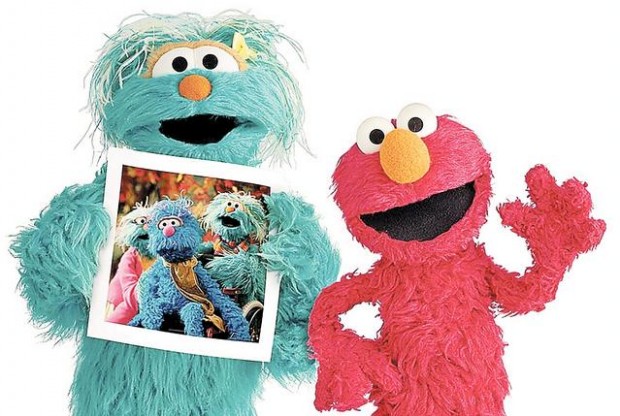
The study rated eight series as exemplary for their educational content. They are "Sesame Street," "Beakman's World," "Between the Lions," "3-2-1 Penguins," "Cyberchase," "The Suite Life of Zack & Cody," "Fetch! with Ruff Ruffman "and "Teen Kids News."
Parents: Judge for Yourselves
Be sure to watch television with your children. As you do, look for the inclusion of the six criteria of highly educational programs listed below and judge for yourself how educational the shows really are.
• Clarity — How easily can you identify the primary lesson?
• Integration — How often do you hear or see the primary lesson?
• Involvement — How engaging and interesting is the lesson for the viewer?
• Applicability — Is the primary lesson connected to the real world?
• Importance — How valuable or useful is the primary lesson to the viewer?
• Positive reinforcement — Is effort or successful learning rewarded?
Source: Children Now
to read report
To read the study, go to www.childrennow.org/eireport