Democrats see the path to taking control of the Arizona state House going through a geographically large rural legislative district.
And Republicans see it as the path to a greater majority.
But voters in Legislative District 23, which has seen divided representation in the House since 2022, must first choose two Democratic nominees from four candidates in the July 21 primary election.
The two Republican candidates will go unchallenged in the primary. Early voting begins today.
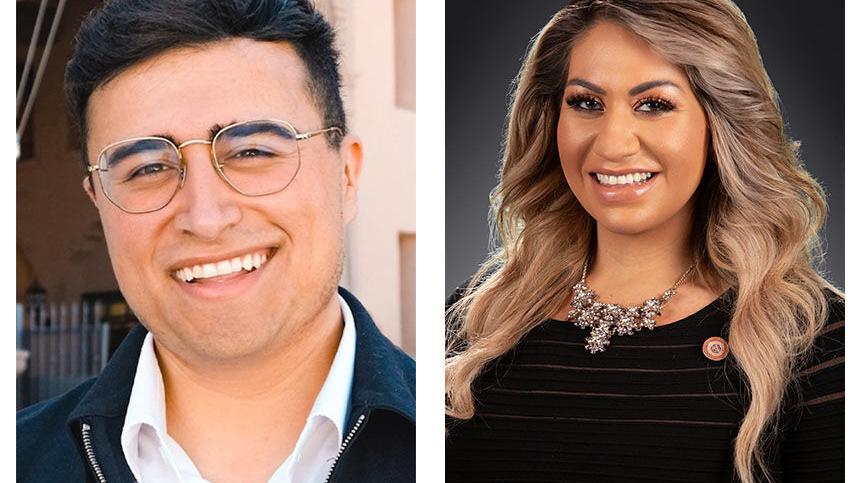
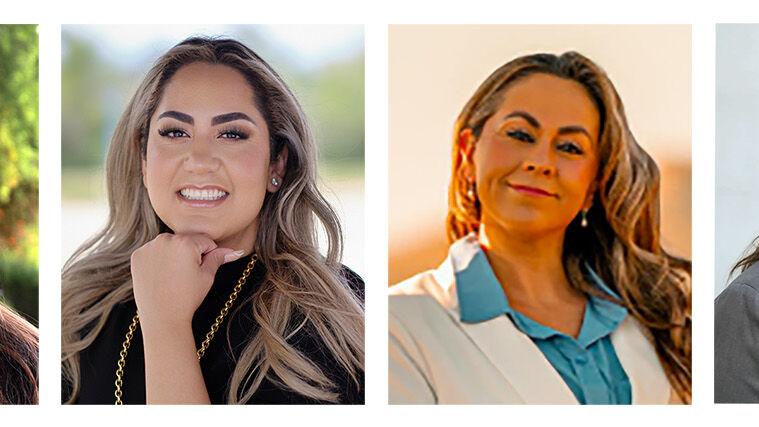
The Democratic field includes a former Yuma County recorder candidate, a judge who resigned after a drunken driving arrest, a Washington, D.C., insider and a two-term incumbent.
The Democratic candidates — Emilia Cortez, Juan Guerrero, Naomi Miguel and Rep. Mariana Sandoval — have been invited to a debate sponsored by the Citizens Clean Elections Commission on Wednesday, June 24, at 6 p.m. Tucson Agenda reporter Joe Ferguson will moderate the debate, which will be livestreamed on the commission’s YouTube channel.
People are also reading…
Democrats in the district, which stretches from Goodyear to Yuma and includes Maricopa, Yuma, Pima and Pinal counties and several tribes, have a 7 percentage point advantage over Republicans, but 40% of the district’s voters don’t belong to either party.
Sandoval and Republican Rep. Michele Peña have both served in the House since 2022.
Cortez has declined to participate in the debate.
She ran for Yuma County Recorder in 2024 against Republican David Lara, who claimed rampant voter fraud led to President Donald Trump’s 2020 election loss. Lara won convincingly.
In an October 2024 interview with the newsletter Votebeat Arizona, Cortez said she entered the race “to protect the county’s elections and election workers.” And with her professional background, she said she could develop better voting procedures.
“I want to be that bridge, that gateway, to reassure everyone that these elections in Yuma County are going to be valid and secured,” Cortez told Votebeat Arizona.
Cortez, a Yuma resident and economic development specialist with the Quechan Indian Tribe, has a résumé of community-oriented jobs and volunteering, such as a leadership position with the Girl Scouts of Southern Arizona and a fundraiser for the Arizona Children’s Association. She has also volunteered for a state literacy project and the state’s insurance program for children whose families can’t afford private insurance but make too much money to qualify for Medicaid.
Her campaign website says her work and community service “has specialized in bridging the gap between legislative policy and on-the-ground community needs.”
She said on her campaign website that she has worked on infrastructure projects “on sustainable water management, broadband expansion for rural schools, and the revitalization of local merchant corridors” in her current job.
Cortez said in her campaign profile on the Secretary of State Office’s website that she’s committed to working for stronger schools, affordable housing, accessible healthcare and economic development that benefits families and small businesses.
“I believe in collaboration over division, and in policies that respect the unique needs of each community—from our cities and towns to our tribal nations,” she said.
Guerrero served as the Yuma County Justice of the Peace for Precinct 2 from 2015 until his resignation in 2024.
Guerrero agreed to resign after he pleaded guilty to a 2023 drunken-driving arrest in which he registered a blood-alcohol content nearly double the legal limit, according to the state Supreme Court’s disciplinary order. Guerrero is not an attorney. Justices of the Peace aren’t required to be attorneys, but they still have the authority of judges and preside over small civil claims, evictions, misdemeanors and traffic offenses, including drunken-driving cases.
The drunken-driving case was only part of the disciplinary proceedings. The Superior Court judge who took over Guerrero’s court while his case was pending found Guerrero violated a rule against accepting payment for performing weddings during court hours and that he put 1,112 miles on a county car for personal travel.
Guerrero is a Navy veteran of the Gulf War, and he worked for the Yuma County Sheriff’s Office and tribal police.
He said in a Facebook post he’s running for office because he knows the struggles of everyday people who live paycheck to paycheck, struggle with affordability and healthcare and worry about rising costs.
“This campaign is about giving a voice to working families who feel forgotten,” he said in the post.
Miguel’s experience in politics began inside the Beltway.
She worked as an intern for Democratic U.S. Rep. Raúl Grijalva, who died in March 2025. The internship led to a job on the staff of the House Natural Resources Committee. Grijalva also appointed Cortez, who’s a member of the Tohono O’odham Nation, to be staff director of the House Subcommittee for Indigenous Peoples of the United States.
She held that position until 2023, when former President Joe Biden appointed her as Executive Director of the White House Initiative for Advancing Education Equity, Excellence and Economic Opportunity for Native Americans, according to an article in Daily Yonder.
Miguel, who lives in Casa Grande, told interviewers with Democrats of Greater Tucson that the militarization of ICE was one of the reasons she decided to run for office. She said she had been harassed and abused by ICE agents as a teenager.
“I could not sit by and not do anything for our communities right now,” Miguel said.
She said the problems she encountered trying to get a Real ID at the Arizona MVD also figured into her run for office.
The state repeatedly rejected her rural tribal address, even with documentation from the U.S. Department of the Interior, and she had to return several times before she got the ID, she said.
She found that from talking with others in the district, they had a similar experience.
“That showed me on a state level that state agencies do not know how to interact with tribal governments, and that’s a huge red flag for me given that there are 22 different tribes in various parts of this state,” Miguel said. “It shouldn’t be harder for me to live in this state because I’m from a rural tribal area.”
Miguel said one of her objectives is to address school vouchers because the majority in the Legislature, including Peña, who sits on the House Education Committee, has done nothing about the “extreme violation of our tax dollars being used so egregiously.”
Sandoval, like most Democrats in the Republican-controlled Legislature, has never had legislation she sponsored passed into law. Instead, Democrats tend to use procedural maneuvers and amendments to at least get their proposals some attention.
That happened this year with her bill to forbid police officers in the state from wearing masks on duty. Republican leaders assigned the bill to three committees, a tactic that lessens a bill’s chance of making it to the governor’s desk.
To get around that, Sandoval added language from her bill as an amendment to a Republican proposal to impose a stiffer penalty for people who commit certain crimes while masked.
“Peace officers are entrusted with significant authority, including the power to detain, arrest and use force,” Sandoval said. “With that authority comes responsibility: To remain identifiable to the public when they serve.”
Republicans used another procedural maneuver to keep her proposal from being debated.
Sandoval is also known as a skilled debater who fights against Republican proposals and defends Democratic principles.
The two winners of the Democratic primary will face Peña and Gary Garcia Snyder in the general election.
Neither Democratic Sen. Brian Fernandez nor Republican challenger Michelle Altherr has a primary opponent, and the two will face off in the November election.