The following is the opinion and analysis of the writers:

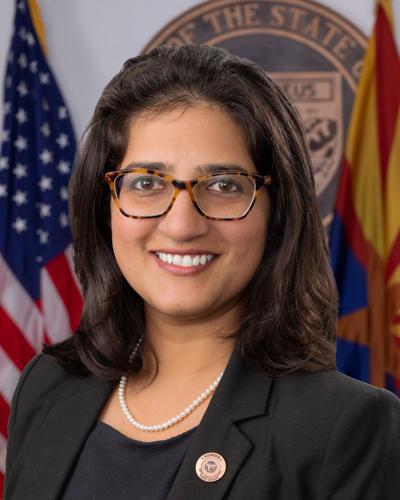
Sundareshan

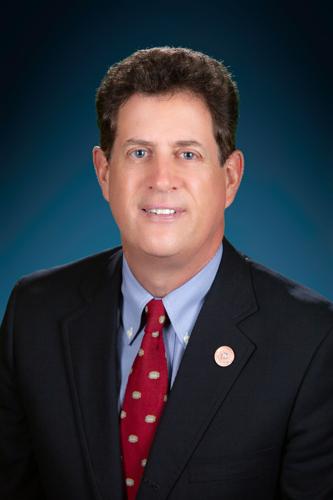
Mathis
This year, for the first time in decades, Democrats in the Legislature were hopeful that the Republican majority was willing to take Arizona’s water security seriously and strengthen our urban water supplies while addressing the free-for-all that is rural groundwater pumping. The state of our groundwater needs attention — desperately — as climate change is no longer a future fear but a reality we now live with daily.
Yet, in the last few hours before we officially ended the 2024 legislative session, the Republican majority pushed through a number of measures that have raised significant alarms. If signed into law by Governor Hobbs, these bills would have led to even more unsustainable groundwater pumping and also put our urban water supplies in real jeopardy.
With these bills, Republicans are pretending to have easy solutions on water, but what they’ve pushed through will only weaken our existing groundwater laws and fail to provide lasting protections for either rural or urban Arizonans.
People are also reading…
On Saturday, the Legislature narrowly passed SB1172, which contained Republicans’ latest “ag-to-urban” proposal (which had also been discussed in prior weeks in HB2201). Thankfully, on Wednesday, Governor Hobbs delivered her veto. In theory, converting agricultural lands to more water-efficient homes could provide overall water savings within Active Management Areas (AMAs) like Phoenix, where homebuilding on groundwater alone has stopped because the data shows the groundwater supply will not be able to meet demand over the next 100 years. But SB1172 allowed lands that aren’t actually using water to receive credits to pump water and build homes, which could lead to increased groundwater pumping and worsen our sustainability.
Based on the initial Arizona Department of Water Resources (ADWR) analysis, the ag-to-urban proposal should be limited to the Phoenix AMA to ensure that water savings occur. But what Republicans pushed through Saturday wouldn’t save water but would lead to increased groundwater pumping, including in Tucson, which doesn’t even have unmet demand and doesn’t need this measure for homebuilding to continue.
Even worse, the negotiations over this proposal have been held behind closed doors and haven’t benefited from public comment. Worse still, the Governor’s Water Policy Council hadn’t had the opportunity to review or provide input before bill passage. This is another reason conservation groups and Arizona’s Native American tribes are united in opposition to SB1172. Republicans also tried forcing through their version of a rural groundwater management bill, SB1221, well before we’ve reached agreement on many critical issues. Thankfully, that bill failed to pass before the legislative session ended and is now dead.
This defiant, unilateral effort to pass SB1221 was all the more disappointing given that, since February, we’ve participated in good faith in bipartisan negotiations on a rural groundwater management reform package — and we’ve been making significant progress. Where we’ve differed in these meetings is that Democrats are trying to protect rural residents from losing their wells and small, longtime farmers’ ability to keep their family operations going, while the Republican proposals would privilege the large corporate pumpers that have arrived within the last decade.
Under the landmark Groundwater Management Act of 1980, the state of Arizona currently has two tools available that could be exercised in the several basins which qualify under statutory criteria: designating Irrigation Non-Expansion Areas (INAs) or Active Management Areas (AMAs).
In Representative Mathis’ HB 2857, we proposed a framework based on the Governor’s Water Policy Council’s recommendations that would provide a third, more flexible, locally driven alternative to INAs or AMAs. Democrats believe the process and criteria for initiating the regulation of a groundwater basin under this new framework should be based purely on science and no more stringent than the process for initiating an AMA. At present, out-of-state corporations and special interests are profiteering off of our finite water supplies, while communities are left badly hurting. Unlike our Republican colleagues, we believe in giving local decision-makers the authority to manage their groundwater supplies as they see fit, to benefit our agricultural communities and also allow for new, sustainable economic growth.
The more urban parts of Arizona have greatly benefited from stable water supplies ensured by decades of groundwater management. But rural Arizona communities still lack basic water supply protections. This hurts families and undermines local economic development. Democrats aren’t willing to continue to allow sound water management policy in this state to simply leave out rural Arizonans.
At long last, the Legislature must step up to empower rural communities with the tools they need to manage their precious water supplies. Both of us are committed to staying at the table to continue negotiating real solutions to our rural groundwater crisis that include input from impacted residents and small family farms, even if the Governor must call a special session this year to finalize a comprehensive legislative package.
Let’s not pretend the half-baked bills that were voted through in these final days are true solutions to our looming water needs — but let’s also not call it quits on the hard work of reaching a consensus, bipartisan agreement.
Follow these steps to easily submit a letter to the editor or guest opinion to the Arizona Daily Star.
Senator Priya Sundareshan (LD18) and Representative Christopher Mathis (LD18) are the ranking Democrat on their respective chamber’s Natural Resources, Energy, and Water Committee and are lead negotiators at the table on water policy for the Joint Democratic Caucus.