The following is the opinion and analysis of the writer:

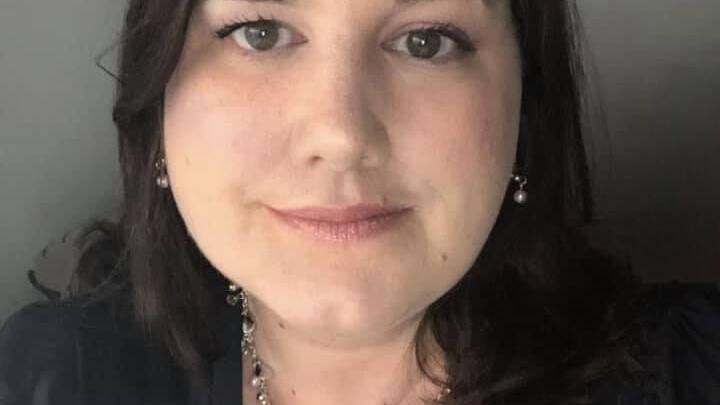
Shraddha Hilda Oropeza
My brown skin and dark hair caught the attention of a U.S. Border Patrol officer and his service dog patrolling the waiting area at the Boise, Idaho, Airport.
Racial profiling, pure and simple. What else could it have been? The officer came up and questioned me, but not a white man seated nearby.
This is why voters in November must defeat the Secure the Border Act. Its passage will lead to more of what I and many of the 2.3 million other Latinos living in Arizona experience regularly — racial profiling — because it happens here, too, not just in Boise.
Democratic Gov. Katie Hobbs vetoed the proposal last spring, so Republicans resurrected it as a voter resolution that bypasses the governor. It’s akin to a Texas law now on hold in federal court and to Arizona Republicans’ passage years earlier of Senate Bill 1070, the law that was largely nullified in a U.S. Supreme Court ruling.
People are also reading…
At the time of that ruling, the American Civil Liberties Union said in a statement: “Discriminatory laws like SB 1070 invite racial profiling of Latinos and others who may look or sound ‘foreign,’ including many U.S. citizens who have lived in America their entire lives.”
The Secure the Border Act would allow local officers to enforce federal immigration laws, leading to even more racial profiling.
That is what happened to me that evening in Boise more than a decade ago. I was dressed professionally, in a pantsuit, and I carried a briefcase as I awaited a flight home after daylong meetings at a nonprofit agency for which I was a consultant.
The officer asked for my identification and wanted to know what I was doing in Boise and where I was going. The man seated near me, bless him, came to my defense, assertively asking the officer why he had not been approached in the same manner.
Indeed, why? Appearance. The man was white, and I stood out to the officer in a city that does not even have many people with brown eyes, euphemistically speaking. The city of Boise’s website says the population is 89.1% white.
Location may have mattered, but Boise was not my first experience being profiled and questioned for reasons that had everything to do with my skin color, and it most likely won’t be my last. I’ve had many such instances in Arizona.
One was driving home to Tucson from Nogales. Border Patrol officers stopped me at their checkpoint on Interstate 19 for questioning. This is the infamous checkpoint where officers made the elderly Raúl Castro, ex-governor of Arizona, wait for hours in the hot sun for no obvious reason. No, wait, the reason was obvious: Raúl Castro had dark skin.
I have dark skin – thus the attention of Border Patrol officers. Like many people, I am polite and professional. I own a business, have a master’s degree and was in the for-profit and nonprofit corporate worlds for years. I even worked for a U.S. senator. None of it matters because law enforcement officers and others see only my skin color.
It’s the same for millions of others, and it calls for the defeat of that petty piece of business called the Secure the Border Act.
Vote it down in November.
Follow these steps to easily submit a letter to the editor or guest opinion to the Arizona Daily Star.
Shraddha Hilda Oropeza is an integrative health and wellness coach and a yoga therapist. She lives in Tucson.