On the night Tommy Troy almost died, he happened to fall asleep in bed with his dad while watching a movie. This was unusual. He usually slept in his own bed. Suddenly, Tommy, who was 9, began having a seizure. His teeth clenched. He stopped breathing. His dad and sister scrambled to save him.
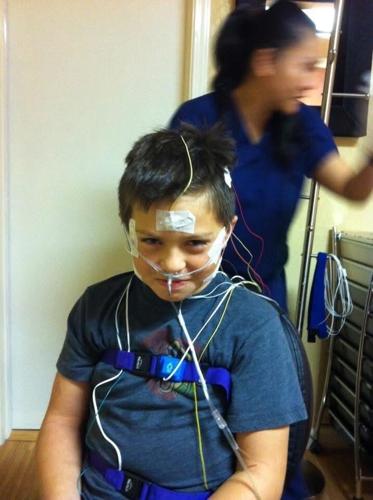
A photo of Tommy Troy as a child.
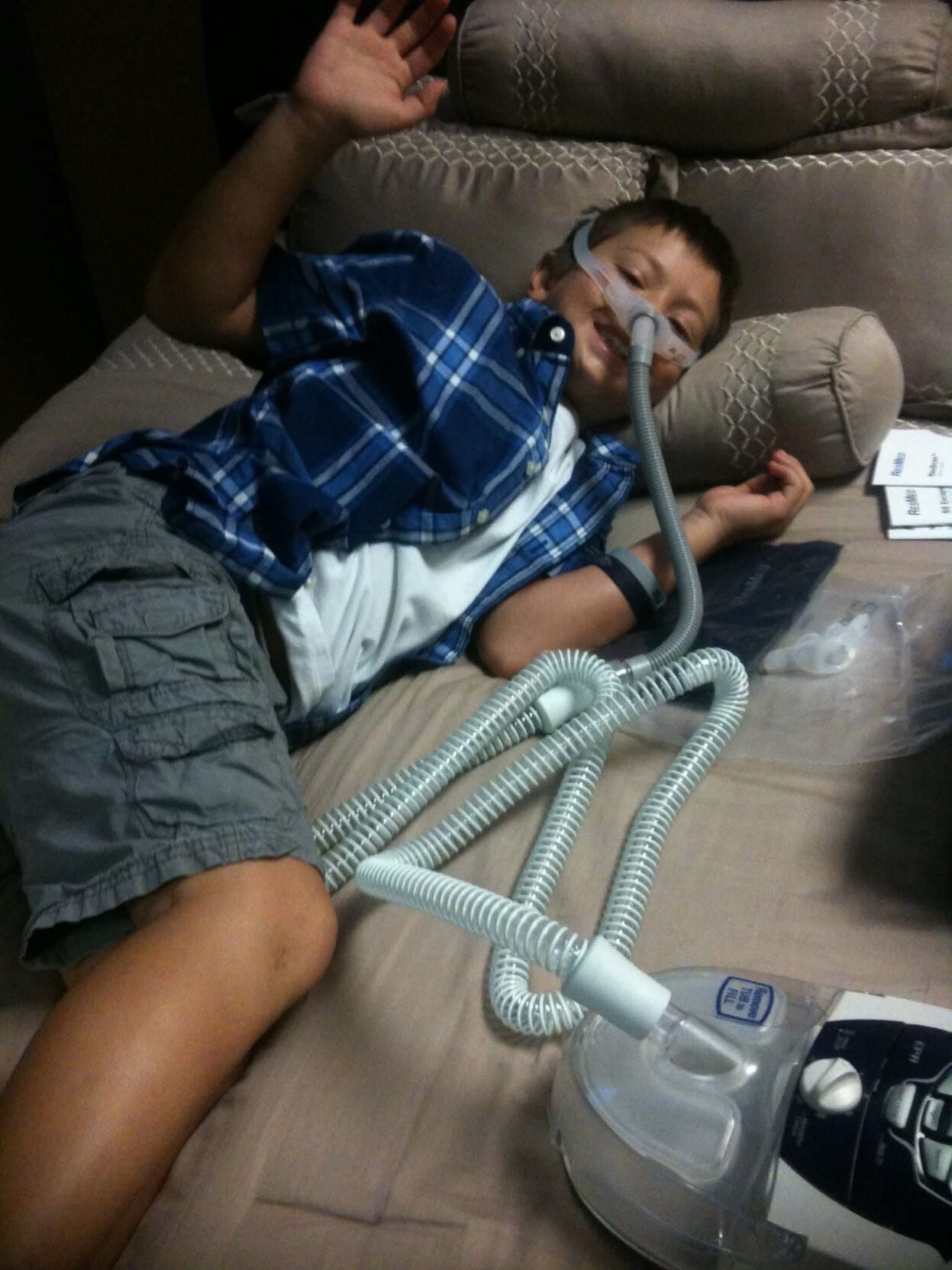
When he was younger, Troy had rolandic epilepsy, a childhood condition that can lead to seizures when falling asleep or waking up. He also had severe pediatric sleep apnea; his enlarged tonsils and adenoids would restrict breathing during sleep. The combination of the two conditions can be deadly. Troy had multiple tonic-clonic seizures — formerly known as grand mal seizures — before doctors could connect the dots.
Thinking back on his childhood while sitting in the Diamondbacks’ clubhouse on a recent afternoon, Troy, a rookie outfielder, reclined in his chair and glanced around the room. Those years were scary and difficult, and his perseverance probably says something about him. But his biggest takeaway was more fundamental.
People are also reading…
“It’s definitely made me more thankful for even being here,” Troy said. “A couple of those nights could have went a different direction.”
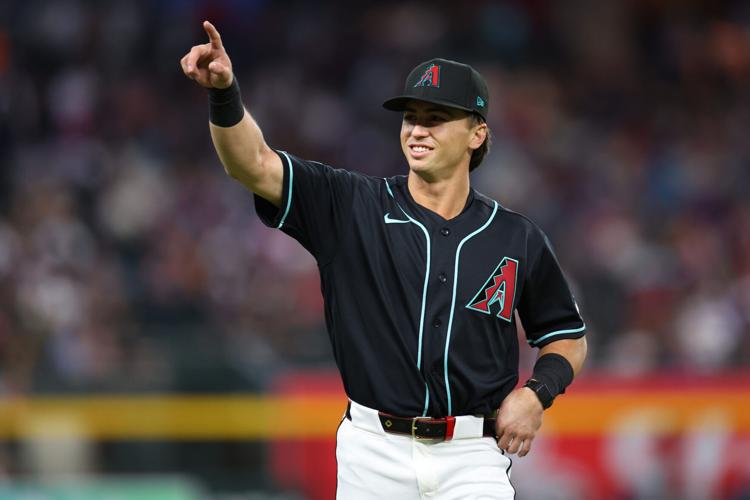
Troy, 24, recently completed his first month in the majors with the Diamondbacks. He has flashed power and hitting ability while putting together competitive at-bats, and over the past week, he has begun to get chances in center field.

Arizona Diamondbacks right fielder Tommy Troy (9) smiles to the crowd before the game against the Colorado Rockies at Chase Field in Phoenix on May 24.
For about a year and a half, Troy’s parents, Tommy and Temple, knew something was wrong with their son. He was always tired. He was having trouble focusing in school. And his physical appearance had begun to change.
“He was very skinny and he had these big hollows under his eyes,” Temple Troy said. “He looked like a kid who wasn’t thriving.”
Prior to that, Troy, who grew up in northern California, already had exhibited signs of outlier athleticism. When he was 8, his dad coaxed him into the batting cage to hit off a high-speed pitching machine. Video exists of Tommy, wearing a striped shirt and a batting helmet, timing up the velocity — perhaps around 80 mph — and lining a ball up the middle.
The family pediatrician allayed their concerns, saying young Tommy might be dealing with allergies or a cold and perhaps a mild case of ADHD.
The night he nearly died
Then came the night they found out it was much more serious.
“My mom was on her night shift as a dispatcher and my dad had the night off,” Troy said. “We were just lying down, watching a movie together with my sister in my dad’s bed. We rarely do this, but I just happened to fall asleep in my dad’s bed. Same with my sister. Usually, I would go to my own bed. Luckily, I did sleep there that night because I had probably the worst seizure I’ve had.”
Troy’s dad rushed into action. He used a toothbrush to pry open his son’s mouth and administer CPR. He remembers his son's face starting to turn blue. Troy’s sister, Amaya, called 911, then went outside to help the ambulance driver find the house.
Troy’s dad called it a “traumatic experience.” But in the end, he was glad it happened.

A photo of Tommy Troy as a child.
“I’d say it was a blessing he had actually had a seizure in front of me,” he said. “Who knows what would have happened if he kept having those seizures and we didn’t catch onto it?”
In retrospect, it likely was not young Tommy’s first seizure.
“His dad and I both recognized seeing his pillow damp with sweat and saliva,” Temple said. “We thought he just drooled in his sleep, but, looking back, it was too much to be that.”
At the time, the Troys were living in Morgan Hill, a town 30 minutes south of San Jose. It was at least 20 minutes from the nearest hospital. They soon found a new place two blocks from a hospital in Los Gatos.
“We moved out of our house and moved into an apartment,” the elder Tommy Troy recalled. “It was an easy decision. It wasn’t even a second thought. You know the old saying, ‘You have 100 problems until you’re sick, then you have just one.’ You can have a lot of problems until you have a health issue with a child or yourself.”
It was a difficult time; each night was filled with dread.
“His dad and I were so stressed out,” Temple Troy said. “Either he or I would always be lying with him when he went to sleep. We didn’t trust anyone other than ourselves. We kind of joke about it that we still have some PTSD to this day from that whole thing.”
“I don’t think I slept for a year and a half,” Troy’s dad said.
Said Temple Troy: "It was very scary. The scariest thing is knowing there’s this problem and not knowing what it is or what can be done about it.”
The decision to move helped the Troys figure out what was happening. On a night when another especially severe seizure forced them to call an ambulance, one of the paramedics arrived on the scene quickly enough to witness the end of the seizure.
“He asked, ‘Does your son have apnea?’” Temple Troy said. “Come to find out, he had a super severe case.”
Diagnosis, determination
Soon after, Troy underwent a procedure to address the apnea that included clearing out his tonsils and adenoids. The surgery did not keep him from having seizures, but it did make them less dangerous, allowing him to breathe more easily during them.
His parents noticed an immediate difference. He started getting better sleep — and he started growing again.
“I gained like 20 pounds in a few months,” Troy said. “I was really not doing well before that.”

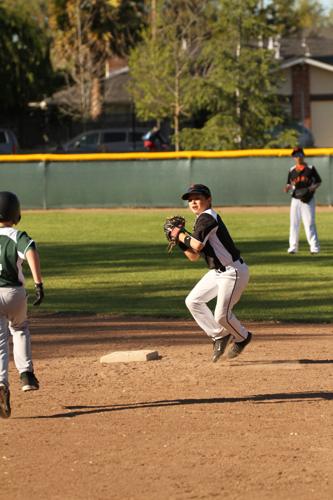
A photo of Tommy Troy playing baseball as a child.
Eventually, Troy grew out of the seizures, like most kids with rolandic epilepsy do. He had his last one — a small one — when he was 13, he said.
Through it all, Troy was passionate about baseball. His mom remembers a day when he awoke with a seizure that left him in bed for the entire morning. He had a baseball game that day at 9 a.m.
“He finally came out, woke up around noon, gets out of bed and he goes to run to put on his baseball pants and says, ‘I’ve got to make the game!’” Temple Troy said. “He’s kind of stumbling around, I’m like, 'You can’t go. The game is over.'
"It just kind of lends to his determination. He wasn’t going to let anything stop him from what he wanted to do.”
The week he had his surgery, Troy had a tournament scheduled for the following weekend. He asked his doctor if he could play in it.
“The doctor was like, ‘Well, I wouldn’t play, but it’s not going to hurt you,’” his dad recalled. “Tommy was on the field that weekend, and every time he swallowed, you could see the pain on his face. But he played that weekend.”
That part of his life had some lasting effects. Troy wonders if those years somewhat explain his undersized physique. He is listed at 5 feet, 9 inches, a little shorter than his dad, who is about 6 feet. It didn’t keep him from being an explosive athlete; despite his height, he has been able to dunk a basketball since his freshman year of high school.
Nighttime remains challenging for him. When he was a kid, he would be afraid to go to sleep — and would wake up thinking he was about to have a seizure even when he wasn’t. Troy said he still deals with sleep anxiety, and though he is no longer worried about seizures, he traces his sleeping issues back to his childhood.
He sleeps better now.
“Especially these past six months, I’ve really done everything I can,” Troy said. “Whether it’s like mindfulness stuff, breathing techniques. I had never bought into it until now, and it’s been helping a lot more with the sleep anxiety. For the longest time — even in college — it was (bad). … But every year it gets better and better.”

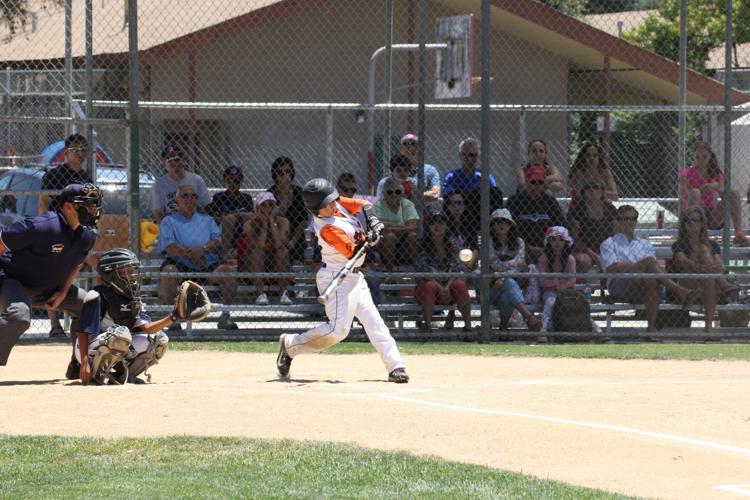
A photo of Tommy Troy playing baseball as a child.
His parents believe his health struggles helped him become the person he is today: determined and resilient.
"He went through a lot," his dad said, "to get to where he is at."
Troy is just thankful for the way things turned out.
“I think it’s just a weird part of my childhood that I’m glad I was able to get through and overcome,” Troy said. “Every time I think about it or talk about it with my dad, I thank him for when he saved my life. My sister did, too, because she was the one calling the cops for me when she was 10 years old.”


 The World Cup is bringing Tucsonans together like nothing else can | Michael Lev