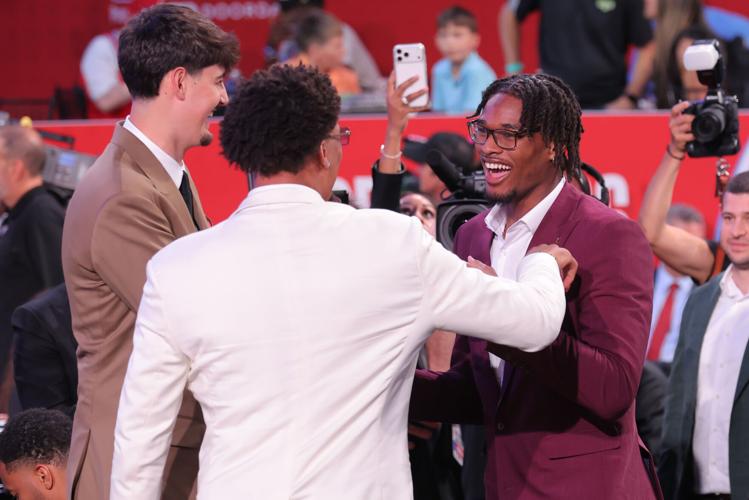
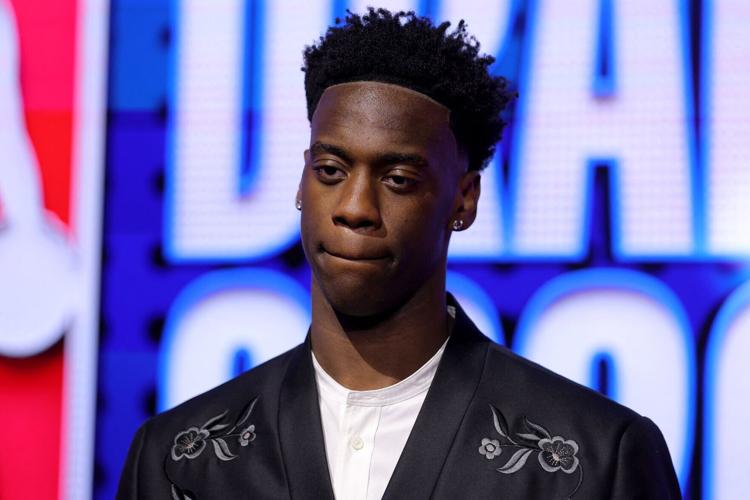
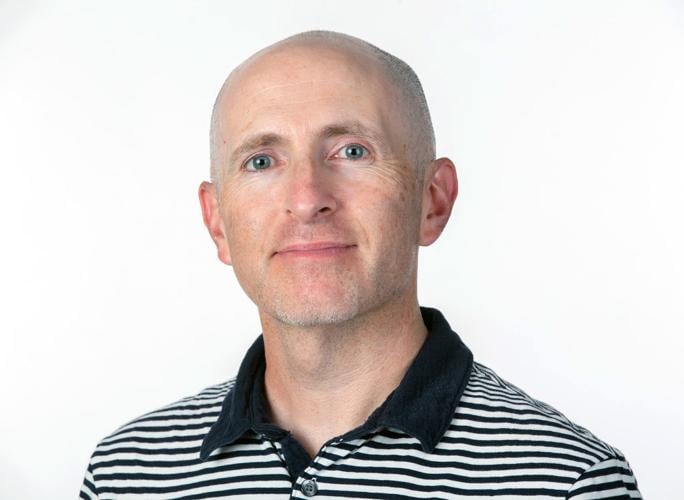
The 2026 NBA Draft is in the books, and no college program fared better than Arizona.
Several matched the Wildcats by having three players picked. None had more.

Michael Lev is a senior writer/columnist for the Arizona Daily Star, Tucson.com and The Wildcaster.
The two-day draft featured both the mundane and the dramatic for UA draftees and supporters.
Below are my top five takeaways on the ’26 draft through an Arizona lens:
1. Native Sun
All’s well that ends well, right?
Koa Peat came this close to a worst-case scenario.
It’s one thing to be a fourth-year junior and slip into the second round, as happened to former Wildcat Henri Veesaar. It’s another to enter the draft after just one year in college and have that happen.
Going in Round 2 is hardly a career killer. As you might have heard, the King of New York, Jalen Brunson, was the 33rd overall pick in 2018. Three-time NBA MVP Nikola Jokic was also a second-rounder.
People are also reading…

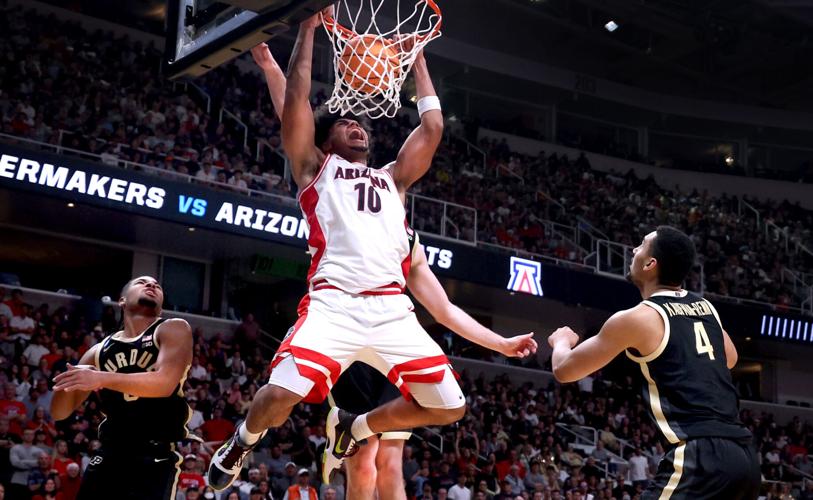
Arizona forward Koa Peat makes the big slam amid the Purdue defense as the Wildcats put their stamp on a 79-64 win in their Elite Eight game in San Jose, Calif., March 28, 2026.
But that clearly was not Peat’s plan when he elected to remain in the draft. Most mocks had him going in the mid-20s, mainly because his shooting needs a lot of work. He ended up going 30th — the very last pick in the first round — to the hometown Phoenix Suns, who traded into that spot to get him. One might call that a best-case scenario.
It doesn’t vindicate his decision.
Peat could have made just as much money — about $3 million — by returning to Arizona for another season. He could have improved his stock and gone higher in a less-loaded draft next year.
He didn’t want to pursue that path, which is his prerogative. It’s possible he and his representatives knew the Suns wanted him. But with Phoenix not owning a first-round pick entering Draft Day, that was an awfully big risk.
Peat will bring toughness, a high basketball IQ and a winning résumé to the Suns organization. “Mr. Arizona” will get to play in front of friends and family for the foreseeable future. That’s all good.
You just wonder how much better it could have been if Peat had chosen a different path.

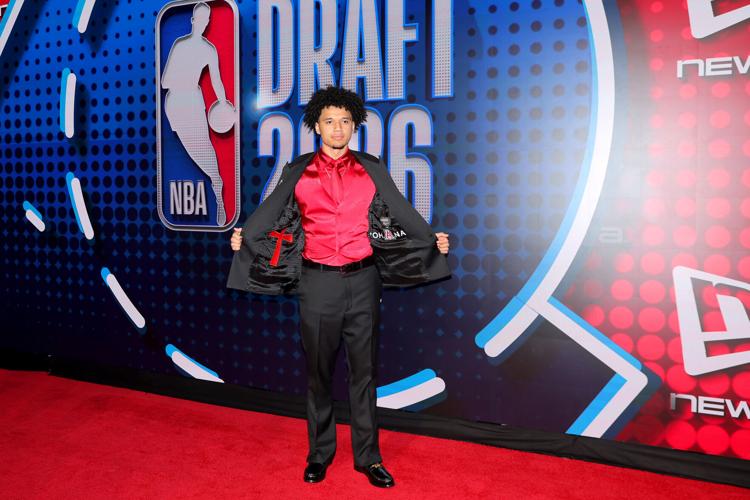
Draft prospect Brayden Burries of Arizona poses for photos on the red carpet before the 2026 NBA Draft at Barclays Center in Brooklyn, New York, on June 23, 2026.
2. Guarded optimism
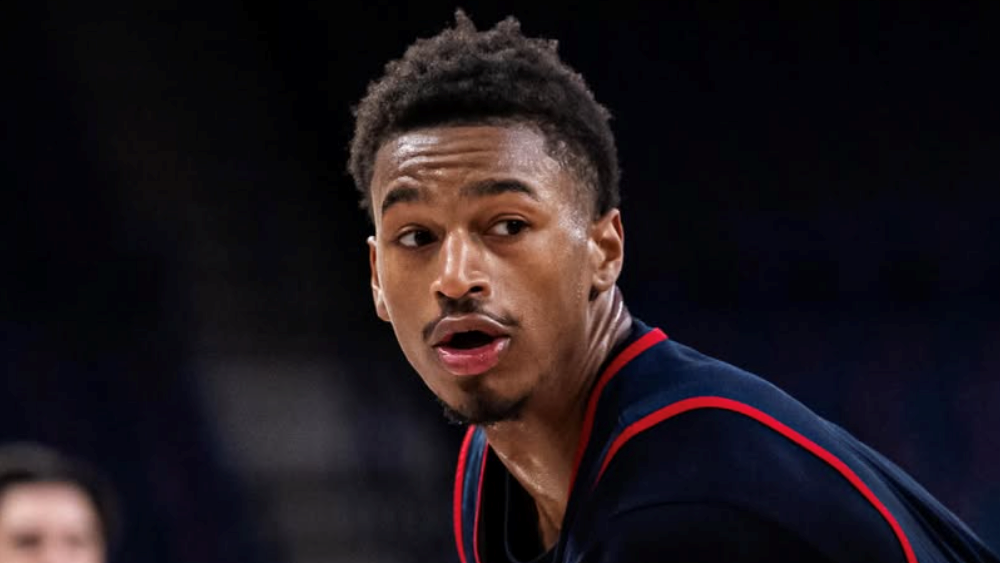
Peat’s buddy, Brayden Burries, had no such stress. He was projected to go somewhere around No. 10 ... and was selected 10th by the rebuilding Milwaukee Bucks.
Burries ended up being the last of five guards taken between the fifth and 10th picks.
The big question moving forward is which one will break out of that logjam and prove to be the best long-term investment. Assuming the top four players all hit, it’ll be one of the lingering debates about this draft.
The competition is considerable. Keaton Wagler (Illinois), Mikel Brown Jr. (Louisville), Darius Acuff Jr. (Arkansas) and Kingston Flemings (Houston) all have exceptional skill sets.
Roles and fits often dictate these outcomes, and Burries is entering into an ideal situation to produce big numbers. Milwaukee’s trade of Giannis Antetokounmpo signals a new direction for the organization. The Bucks won’t hesitate to give young players meaningful minutes.
We also learned during Burries’ time here that it’s a mistake to doubt him. I was guilty of that when Burries got off to a slow start, scoring in single figures in four of his first five games as a Wildcat.
Once he got comfortable, he thrived. Burries became arguably the best player on one of the best teams in the country. He proved to be a multi-level scorer, an excellent rebounder for a guard and a player who was unafraid in the tensest moments.
In the Great Guard Debate, I wouldn’t bet against him.

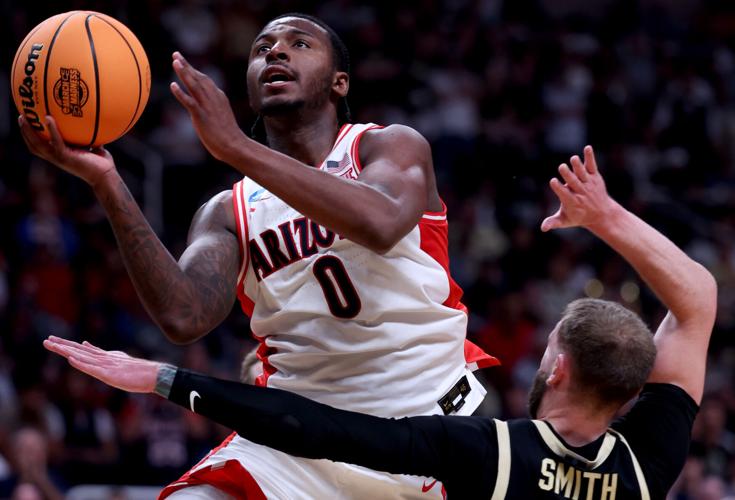
Arizona guard Jaden Bradley gets by Purdue guard Braden Smith in the second half of their Elite Eight game in San Jose, Calif., March 28.
3. Three-peat
We knew Peat and Burries would get drafted. We didn’t know for sure how many total Wildcats would be picked.
The over/under was 3.5 (not including ex-Wildcats such as Veesaar). Jaden Bradley was a virtual lock to be picked in the second round, and, sure enough, the Toronto Raptors took him at No. 50.
Fun fact about that, Part 1: The 50th pick was the only second-rounder that wasn’t traded at some point in time.
Fun fact about that, Part 2: Toronto is the closest NBA city to Bradley’s hometown of Rochester, New York — approximately 165 miles, or 266 kilometers.
The swing player was Tobe Awaka, who didn’t end up being selected. Awaka agreed to a two-way deal with the Chicago Bulls late Wednesday night. We all know how well Caleb Love has fared as a UDFA. Like Love, Awaka has a particular skill set that is always needed — rebounding. He’s also a high-character guy who will be an asset in the Bulls' locker room (and possibly a bodyguard for North Carolina rookie Caleb Wilson, as Charles Oakley was once for Michael Jordan).
Although Awaka’s outcome was disappointing, it was still a banner draft for Arizona. Three Wildcats were picked for the eighth time in school history and the first time since 2022 (Bennedict Mathurin, Dalen Terry, Christian Koloko).
Since the draft was reduced to two rounds in 1989, Arizona has had three picks five times (1996, 1998, 2020, 2022, 2026) and four picks once (2001).
The first time it happened, in 1971, the draft consisted of 19 rounds and 237 picks — an unimaginable slog. The three Wildcats picked that year — Tom Lee, Eddie Myers and Bill Warner — went in the ninth, 10th and 11th rounds, respectively. None played a minute in the NBA.

The ninth pick in the 2026 NBA Draft, Michigan forward Morez Johnson Jr., right, celebrates with his Wolverines teammates after he was selected by the Dallas Mavericks at Barclays Center in Brooklyn, New York, on June 23, 2026.
4. Good on good
How hard was it to beat Arizona the past two seasons?
The answer can be found in the NBA Draft — specifically, the lottery portion of the draft.
The program that knocked off Arizona in the national semifinals, Michigan, had three players picked in the top 12: Morez Johnson Jr. (No. 9), Yaxel Lendeborg (11) and Aday Mara (12). Those three were also the only non-freshmen taken in the first 14 picks.
Not to be outdone, the team that defeated Arizona in the regional semifinals last year, Duke, had three top-10 picks: Cooper Flagg (No. 1), Kon Knueppel (4) and Khaman Maluach (10). Flagg and Knueppel finished 1-2 in NBA Rookie of the Year voting.
The takeaway here is that, most nights, it takes truly elite talent to defeat the Arizona Wildcats.
The other two teams that beat Arizona last year, Kansas and Texas Tech, produced the No. 2 and 18 picks in the draft. Of course, the Jayhawks’ Darryn Peterson didn’t play that night in Lawrence. And the Red Raiders might have had two first-rounders — JT Toppin in addition to Christian Anderson — if Toppin hadn’t torn his ACL in February.
Whether the Wildcats will have to deal with Toppin again in 2026-27 remains to be seen. He could end up redshirting — if that’s even a thing anymore.

AJ Dybantsa poses for photos on the red carpet before the 2026 NBA draft at Barclays Center on Tuesday in New York.
5. League of its own
Big 12 commissioner Brett Yormark is fond of saying that his conference is the second-best basketball league in America.
The 2026 NBA Draft provided plenty of proof.
The Big 12 had the most first-round picks of any college conference — nine. It had the most overall picks — 13. That’s a record for the league, per ESPN. (Bradley, the Big 12 Player of the Year, was the last of those selections.)
It also had the first two picks (AJ Dybantsa, Peterson) and two more in the top 10 (Flemings, Burries).
Remember when some of us thought Arizona would struggle (relatively speaking) in the second-best basketball league in America? About that ...
The Wildcats have gone 30-8 in Big 12 regular-season games over the past two years while reaching the conference championship game both seasons and winning it in 2026.
Tommy Lloyd — who attended the first night of the draft and wore a sport coat! — is worth every penny the UA is paying him.
Contact sports reporter/columnist Michael Lev at mlev@tucson.com. On X (Twitter): @michaeljlev. On Bluesky: @michaeljlev.bsky.social
Michael Lev
Sports Reporter/Columnist


 On Becky Burke’s defiance, Tommy Lloyd’s frustration, UA softball’s strategy | Michael Lev