A 26-year-old Venezuelan asylum seeker continues to be detained at Arizona's Eloy Detention Center, two months after a government attorney admitted in a sworn District Court filing that the woman has protected status in the U.S. and cannot be detained based on her immigration status.
Erianny Rodriguez Balza fled Venezuela in 2019, after she was assaulted and threatened by armed paramilitary agents for her participation in anti-government protests, according to her asylum petition.
Speaking to the Arizona Daily Star from Eloy, where she's been held nearly nine months, Rodriguez Balza said her family was threatened, too, and she fled to protect them.
"I felt terrified," she told the Star, speaking in Spanish. "I left my country, abandoning my loved ones, because I didn't want to continue putting myself or my family members at risk."
People are also reading…
But despite having valid Temporary Protected Status in the U.S., Rodriguez Balza was detained in September 2025 during a routine check-in with U.S. Immigration and Customs Enforcement in Dallas, Texas. She was transferred to Eloy in October.
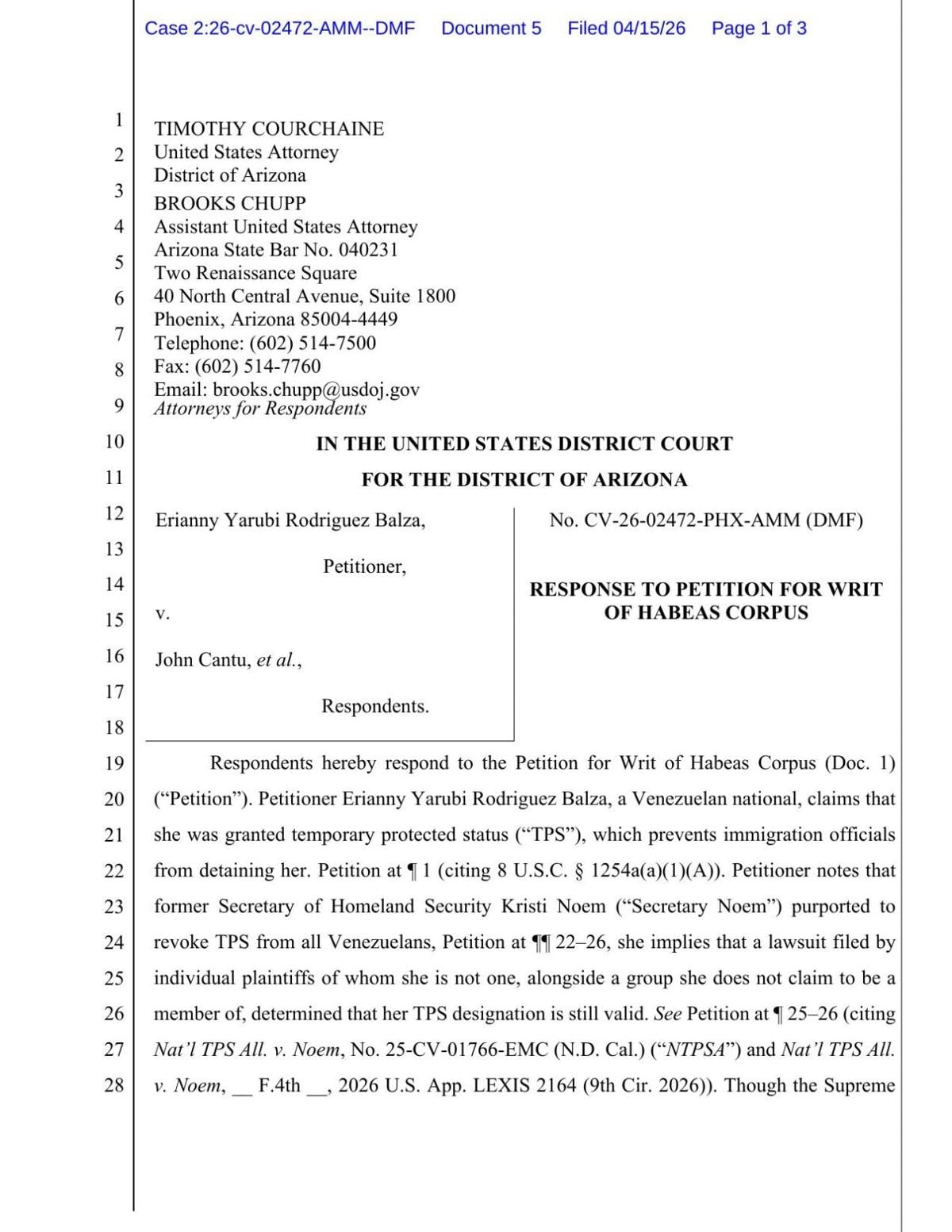
Rodriguez Balza filed a habeas corpus petition in Arizona's U.S. District Court in April, challenging the legality of her detention. Soon after, the U.S. Department of Homeland Security's attorney in the case affirmed in a court filing that her TPS is still active and she can be released.
But due to the enormous backlog of habeas petitions, the federal judge in the habeas case has still not issued the ruling ordering Rodriguez Balza's release, said Santiago Reich, the Dallas-based attorney representing Rodriguez Balza in both her habeas case and immigration case.
ICE also refuses to use its discretion to release her, which the agency could do at any time, attorney Reich said.
Despite the judge's delayed ruling, "There's no dispute anymore. They could just let her go. They don't have to wait for the judge to order them to let her go," Reich said. "I don't know why they think it's a good use of taxpayer dollars to keep her detained when we all know how this is going to end, but that's where we are."

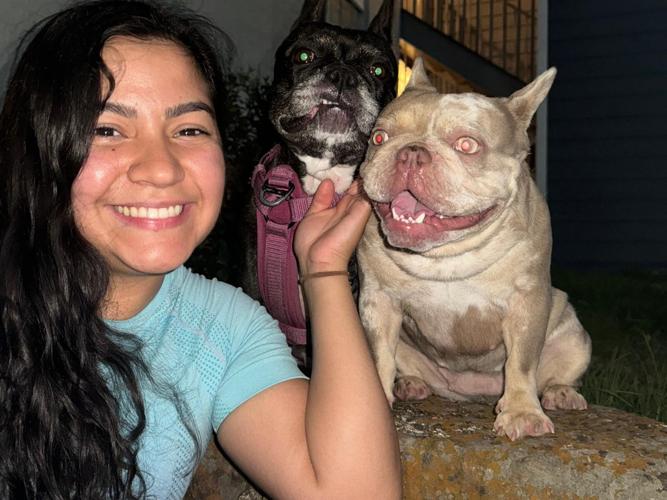
Venezuelan asylum seeker Erianny Rodriguez Balza, 26, pictured here in Texas in May 2025, said she was working at an electrical company and studying English when she was detained at an ICE check-in in September 2025.
In the meantime, Rodriguez Balza said she's lost nine months of her life and still doesn't know when she'll be freed.
"I don't want to be here. I can't bear it anymore," she said in a Monday video call from Eloy Detention Center. "I feel like they're violating my rights. The government responded that they don't oppose my release. I've already been waiting two months for the judge's final ruling, but they won't let me go."
ICE and DHS response
In Rodriguez Balza's habeas corpus case in Arizona's U.S. District Court, the attorney representing DHS affirmed that her TPS is still valid, in an April 15 court filing.
U.S. Attorney Tim Courchaine agreed Rodriguez Balza "falls into a small class of Venezuelans" who still have active TPS status, despite former DHS Secretary Kristi Noem's effort to terminate the protected status. (Ongoing litigation has allowed some Venezuelans to maintain their protected status, even as most have lost their TPS, Reich said.)
"Thus, she continues to have valid TPS, and she cannot be detained on the basis of her immigration status while she has valid TPS," Courchaine wrote in the court filing. "The Respondents (DHS) do not oppose her release."
Responding to the Star's June 3 questions on Rodriguez Balza's continued detention, neither DHS nor ICE officials would explain why Rodriguez Balza was detained in the first place.
An unnamed DHS spokesperson appeared to acknowledge in an email that Rodriguez Balza at least had valid TPS at the time of her arrest in September 2025, claiming her TPS was terminated in November 2025. "She will remain in ICE custody pending removal proceedings," the statement said.
The emailed response ignored the Star's query about why ICE detained the woman two months before the agency now claims her TPS expired.
ICE's Fernando X. Burgos and DHS also ignored the Star's requests for comment on the April court filing, in which DHS's attorney said Rodriguez Balza's TPS status is still active.

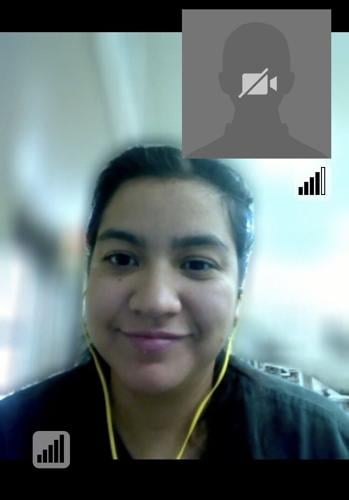
Venezuelan asylum seeker Erianny Rodriguez Balza, pictured on a video call from Eloy Detention Center, said she's struggling with her mental health after nine months in ICE detention. "I don't want to be here. I can't bear it anymore," she said in the June 15 video call. "I feel like they're violating my rights."
The Star provided an additional week for DHS and ICE to review the April court filing, but the agency appeared not to do so: In a follow-up email, the unnamed DHS spokesperson wrongly called the document an "immigration judge ruling," rather than a U.S. District Court filing made by the agency's own representative under penalty of perjury.
"There has been no court order for her release," the DHS spokesperson wrote June 17. "This administration will not ignore the rule of law."
Reich said DHS is the one ignoring the rule of law, in wrongly detaining Rodriguez Balza in the first place.
"She is being detained where the law has unambiguously held that she has TPS and it can’t be yanked from her," Reich said. "They (DHS) are able to read legal opinions just as well as you or I. There’s only one party that’s breaking the law here, and it’s not Erianny."
Conditions at Eloy
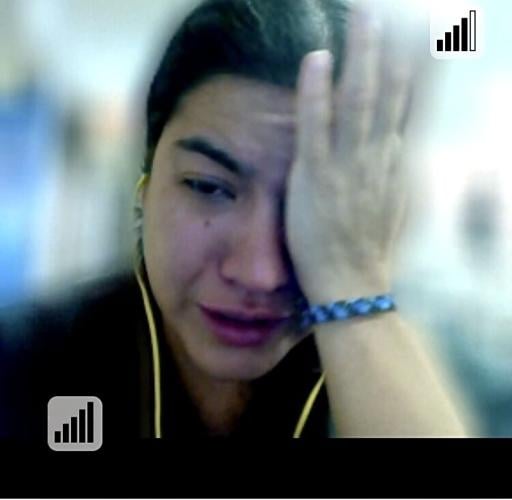
In a video call from Eloy with the Star, Rodriguez Balza broke into tears when asked about conditions at Eloy. Wiping her eyes, she described the food as "horrible."
"I thank God I have food, but it's inedible. Not even a dog would eat it," she said.
She believes Eloy Detention Center — which is owned and operated by for-profit prison company CoreCivic — intentionally provides bad food so detainees have to buy costly food from the commissary.
"It's not in their best interest to give us good food, because it's in their best interest for us to spend money," she said.

In a June 15 video call from Eloy Detention Center, Erianny Rodriguez Balza broke into tears when asked about conditions at Eloy. "I thank God I have food, but it's inedible. Not even a dog would eat it," she said.
CoreCivic spokesman Brian Todd has told the Star in emailed statements that the company provides "three nutritious meals a day to those in our care" and that commissary prices are "reasonable."
"Menus are reviewed and approved on a regular basis by a registered dietitian to ensure appropriate nutrition and food portions size. Many of our employees eat the same meals at the facility," the statement said.
'We were starving'
Rodriguez Balza said despite the Trump administration's capture of former President Nicolás Maduro and his wife in January, the same authoritarian government remains in place in Venezuela — with Maduro's vice president now at the helm — and her life would still be at risk if she returned.
She said her family knew hunger and medical neglect in Venezuela, under Maduro's authoritarian government.
"I went out to march because we were starving at home," she said. "We didn't have enough to eat, and many times we didn't even have water. My grandparents are elderly and needed medical attention, but there was no medical care available."
As a college student studying business administration, Rodriguez Balza got involved in a student-led protest movement.

Venezuelan asylum seeker Erianny Rodriguez Balza, 26 — pictured here in Texas in 2024 — has been detained at Eloy Detention Center for almost nine months, despite a government attorney affirming in April that she has active Temporary Protected Status.
During an initially peaceful April 2019 protest, state-affiliated paramilitary groups, known as colectivos, attacked the young protesters, Rodriguez Balza said. She was hit on the head with the butt of a firearm, she said.
Bleeding from the head, Rodriguez Balza said she momentarily lost consciousness. That same day, her friend was kidnapped by the colectivos; he was later found dead, having been beaten and shot, she said.
The colectivos emerged under the government of Maduro's predecessor, Hugo Chávez, and continue to "act as an unofficial armed force for the government," according to a January report from InsightCrime, which researches organized crime in the Americas. "During the wave of protests against Maduro throughout the 2010s, they were the regime’s chief enforcers, using excessive violence against the opposition."
Rodriguez Balza said after that protest, she was targeted and harassed by the colectivos, who recognized her in her neighborhood and repeatedly drove by on motorcycles, wielding high-caliber weapons and shouting threats at her and her family. Rodriguez Balza said she feared for the life of her little brother, parents and grandmother.
"These threats were due to my expressing my political opinion," she wrote in a message from Eloy. "I have never agreed with the dictatorship that exists in my country. After that march, which was the last one I attended, I had to flee Venezuela by land, hiding from any police force, since I was a target for them."
Rodriguez Balza first spent two years in Ecuador, before she was kidnapped and robbed there, she said. Then she fled to the U.S. by land, making her way through the treacherous Darien Gap jungle, and arriving at the U.S.-Mexico border in August 2022, when she was 22 years old.
Immigration Judge Nicolas Orechwa denied Rodriguez Balza's asylum claim last December, which her attorney said exemplifies the Trump administration's pressure on immigration judges — technically executive branch employees — to act as prosecutors, rather than impartial judges.
They're appealing the asylum denial, attorney Reich said.
After her arrival in Texas in 2022, Rodriguez Balza secured Temporary Protected Status and a work permit, as she pursued her asylum claim. She soon got a job at a Texas electrical supply company, Wesco, where she was trained to operate heavy machinery, like forklifts, she said. She worked out at the gym every day, and adopted a small dog she named Martina.
Rodriguez Balza was taking online English classes and awaiting the outcome of her asylum claim at the time she was detained, she said. She still hopes to pursue a college degree in the U.S., and explore a career in government or the military, she wrote in a message from Eloy.
"If I have dreams and expectations for my future in this country, it's always been to fix my immigration status and to study, because education was one of the opportunities my country's government stole from me," Rodriguez Balza wrote. She hoped "to have stability, to be able to get my own home and a decent job."
Now she's just praying for freedom, and trying to survive what she called another traumatic experience: being wrongly detained in the U.S.
"I never thought I would go through this, much less being in this country legally," she said. "There is nothing more horrible than being deprived of your freedom without having committed any crime."
Get your morning recap of today's local news and read the full stories here: tucne.ws/morning
Contact reporter Emily Bregel at ebregel@tucson.com. On X, formerly Twitter: @EmilyBregel

Emily Bregel
Border reporter



 Short-term ICE detention facilities under scrutiny