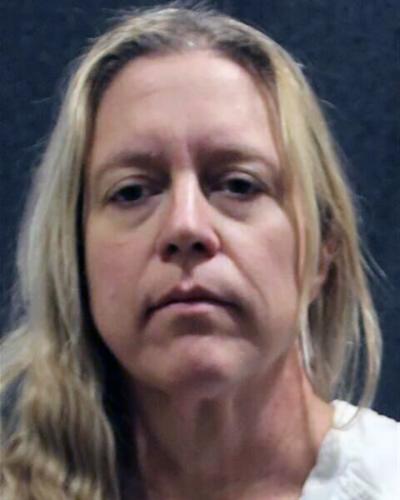
A former Tucson resident was sentenced Friday to three years' probation for defrauding the state when she moved to Texas and continued to draw thousands of dollars from Arizona's universal school voucher program.
Amanda Elizabeth Maestas' sentence, along with a check reimbursing the state $28,433, showed some measure of accountability in the controversial Empowerment Scholarship Account program, which is the subject of current and potential measures for the Nov. 5 ballot.
"Those who defraud the ESA program and steal from taxpayers will be held accountable," Attorney General Kris Mayes said in a statement after the sentencing.
Maestas' case only came to light when a family member tipped off the state Department of Education in April 2024. The agency referred the matter to the Mayes' office to investigate, as the education department did not have a system to verify if ESA recipients are Arizona residents or if a recipient moved out of state. State law requires ESA holders to be Arizona residents.
People are also reading…
But late last year, the agency finally sought to close that gap.
John Ward, who administers the ESA program for the education department, sent a letter to parents in early November stating the agency had hired "an identity verification and identity fraud prevention partner'' to screen all new applicants. The verification will also extend to existing ESA holders who renew for the 2026-27 school year.
Horne said the policy change had nothing to do with Maestas' case.
"It was not a reaction to the Texas case,'' he said. "It was going to happen anyway,'' he said, adding it was part of "normal prudence.''
However, the policy shift didn't happen until after the attorney general's investigation verified the fraud. Mayes secured a grand jury indictment against Maestas in August 2025.
State records show the education department spent $178,000 to hire a technology firm called SOCUR ahead of the November 2025 launch of residency verification. Horne said the firm has "a vast database" and uses AI to screen ESA applications.
According to the attorney general's investigation, Maestas never gave a clear explanation for why she continued to use ESA dollars for a year after moving to New Braunfels, Texas, in May 2023. She didn't deny her actions, only saying "there were a lot of moving parts'' in her situation.
Maestas had continued to use an Arizona online school for her daughter's special education needs. Payments were sent directly to the Flagstaff-based school, Virtually ConnectED, so there was nothing to alert ESA staffers to an out-of-state move.

Maestas
Maestas' sentencing June 26 in Pima County Superior Court included a mandatory 100 hours of community service in addition to the three years of probation. Texas officials will oversee the probation.
Horne said he was disappointed that Maestas got what he considered a light sentence.
"With outright fraud, there ought to be prison time,'' he said. Horne, a Republican, is a former state attorney general and has tangled repeatedly with Democrat Mayes on ESA issues.
Mayes declined to respond to Horne's critique.
The use of ESA dollars out of state has been one of many complaints about the program. Critics also have condemned the program for its lightweight guardrails, from no required academic testing to expenditures such as diamond rings, lingerie and Rolex watches -- purchases made in the name of educational materials.
Since she took office, Gov. Katie Hobbs, a Democrat, has proposed various moves to put controls on the program. But legislative Republicans have staunchly defended it as a pillar of the school choice movement and rejected bills that sought to rein in the program.
The sentencing comes against the backdrop of questions of what Arizona will do to add statutory restrictions and provide additional dollars for better oversight.
An initiative launched by the Arizona Education Association and Save Our Schools Arizona sought major changes to address all that. Legislative Republicans, acknowledging some of the issues with vouchers, have countered with less comprehensive changes.

Mary Jo Pitzl is a freelance reporter. Reach her at ''maryjpitzl@cox.net'', at 602-228-7566, or follow her on social media @maryjpitzl.