Every ballpark has a story.
Hi Corbett Field has nearly 100 years' worth of stories filled with memories from both fans and players.
In the last 98 years, the iconic field has been home to professional baseball teams during spring training, minor league teams in its early years and even the University of Arizona baseball team.
Here’s a history lesson on how Hi-C became the landmark Tucson sports venue we’ve come to know today.
A diamond in the rough
Before we can talk about the teams, stadium and a high-tech pitching lab, we have to go back in time to the 1920s, when what would become Hi Corbett Field was more of a diamond in the rough.
In mid-1927, plans were officially set for Tucson’s new baseball field in Randolph Municipal Park, which was founded two years earlier.
People are also reading…
The Tucson City Council and the local baseball committee approved the plans on June 3, 1927, at the future site of the “baseball plant,” the Tucson Citizen reported.
The baseball field would cost an estimated $35,000 (about $641,000 today) and was designed by the famous local architect Roy Place.
Plans for the stadium covered every last detail, including which direction home plate would face to help reduce sun glare for players.
While local baseball players and enthusiasts were excited for a new baseball establishment, it wasn’t a home run for everyone.
Some residents, and even local media, argued that the facility should be moved elsewhere.

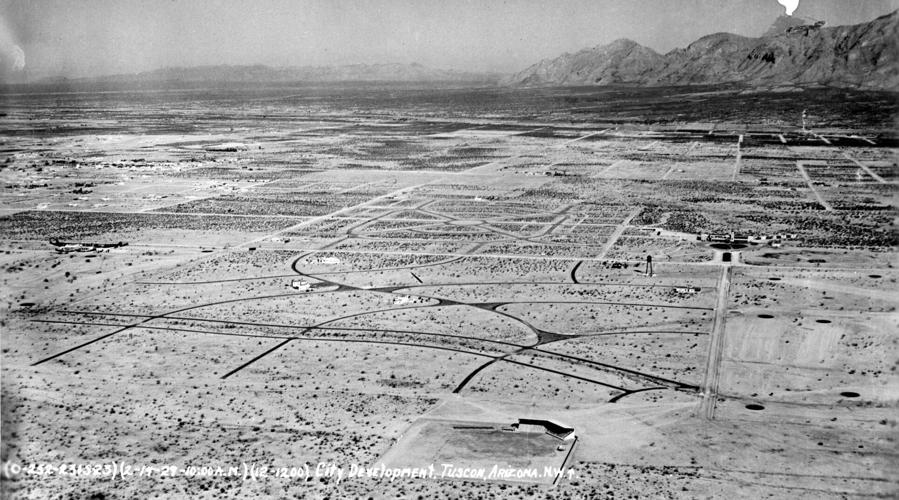
From this view, Randolph Municipal Baseball Park, also known as Hi Corbett Field, can be seen at the bottom, with the newly developed Colonia Solana and El Encanto Estates to the north. To the east of El Encanto is the El Conquistador Hotel and its water tower across the street. To the west on the edge of the photo is the Tucson Golf and Country Club, photographed on Feb. 14, 1929.
“The Citizen believes that the selection of Randolph Park as the location for the new municipal baseball park was a ‘strategical’ mistake and that the action of the council committee in giving its approval to that site should be rescinded,” the Tucson Citizen reported on July 3, 1927.
The Tucson Citizen argued that Randolph Park was “so remote, relatively speaking,” that it would limit “patronage of the sport.” The city, they wrote, should consider building the field at Parker Park, a park named after former Tucson Mayor Olva Clayton Parker and was “walking distance” from Stone Avenue and Congress Street.
Despite some opposition, the city decided to move forward with the project at Randolph Municipal Park.
Less than six months later, Randolph Municipal Baseball Park was completed.
The baseball field had a seating capacity of around 2,000, with adobe walls where curious onlookers often perched themselves, bleachers and the crown jewel of the site — a grandstand with an overhead awning, protecting fans from the harsh Arizona sun.
By January 1928, Tucsonans were anxiously awaiting the field's spring opening.
On Jan. 7, 1928, the Tucson Citizen, which was once opposed to the location, reported that it hoped the new field would bring better patronage to the sport than the city had seen previously.
“Baseball competition is like any other competition,” they wrote. “It feeds upon public interest. With the stands filled, there will be better baseball; with good baseball, the stands will be filled. It is a community job to bring baseball back to its former prestige in Tucson.”
Randolph Municipal Baseball Park held its grand opening and opening day at 3 p.m. on April 20, 1928.
The event was a big deal for Tucson.
A high school band was set to play at the opening ceremony, and local business owners proposed that stores close early that day so they could attend. (The Tucson Merchants Association downvoted that proposition pretty quickly.)
The opening day match was a battle between the Tucson Cowboys and the Miami Miners of the Arizona State League. Admission was 50¢ per person. Attendees could sit in the grandstand for an additional 25¢.
“While 75¢ is slightly higher than Tucson fans have been generally required to pay in the past, it is less than the admission charged to a university football game and fans will be getting a brand of baseball considerably better than anything heretofore shown here,” the Arizona Daily Star wrote on April 19, 1928.
Over the next couple of decades, Tucson and Randolph Municipal Baseball Park became the home of several minor league baseball teams.
In the 1920s and 30s, the Tucson Old Pueblos, Waddies, Cowboys, Missions and Lizards all played at Randolph Municipal Baseball Park. The Cowboys consisted of multiple teams and were the longest-tenured minor league team at the park during that time.
The Cowboys played at Randolph Municipal Baseball Park from the late ’20s to 1958.
But the Cowboys wouldn’t be the last team to play at the baseball park.

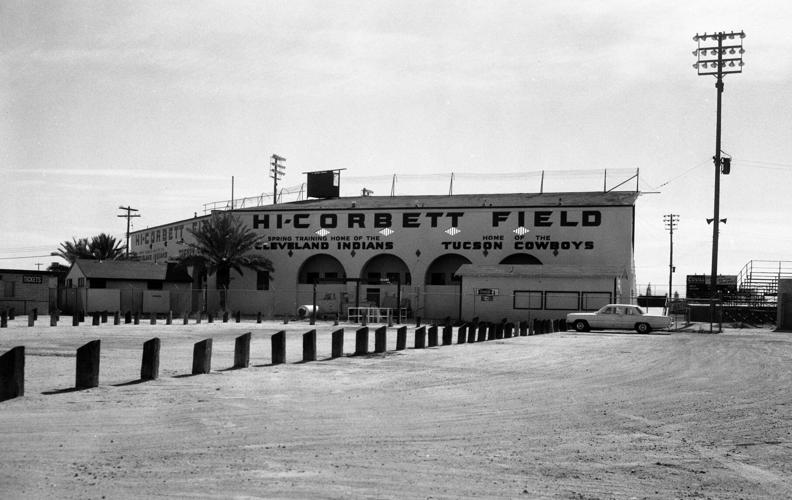
Hi Corbett Field at Randolph Municipal Park in 1963.
Spring training destination
While it’s easy to associate the Arizona Wildcats with Hi Corbett Field nowadays, that wasn’t always the case several decades ago.

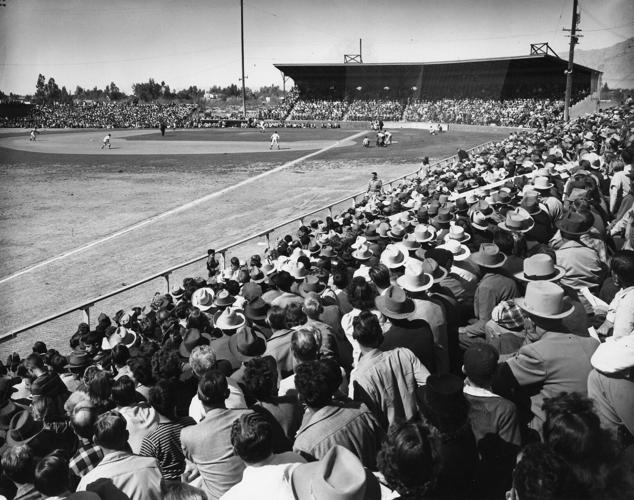
Cleveland Indians at Hi Corbett during spring training in March 1952.
The Wildcats, who typically played on campus, participated in a handful of games at the field over the years, including their first on April 26, 1940.
Arizona faced the New Mexico Lobos for the first night game played by a collegiate team at the stadium.
Wildcats pitcher Ken Heist struck out 21 batters, and Arizona recorded an 8-0 win.
It may have been Arizona’s first game there, but the Wildcats would be back for more at a (much) later time. More on that in a bit.
Aside from Arizona making its debut in the stadium, the 1940s were a significant decade filled with growth for what was still called Randolph Municipal Baseball Park at the time.
In the early 1940s, the Tucson baseball commission and its president, Hiram “Hi” Stevens Corbett, worked to bring the first major league team here for spring training. By 1946, their venture paid off, and Tucson was the next spring training base of the Cleveland Indians (now the Guardians).
With a professional team headed to the Old Pueblo, the city agreed to upgrade the facility with additional dressing rooms to bring it up to major league standards.
Cleveland Indians manager Lou Boudreau was reportedly happy with the “playing field and Tucson’s winter climate,” the Tucson Citizen reported in early 1947.
On March 8, 1947, Randolph Municipal Baseball Park hosted the Cleveland Indians for their first spring training game in Tucson. A record crowd gathered at the stadium to watch the Indians and New York Giants duke it out. Cleveland took home the win, 3-1.
“Yesterday’s crowd, by twice the greatest to ever see a baseball game in Tucson, overflowed Randolph Park’s seating facilities,” the Star reported on March 9, 1947. “An unofficial estimate, that included the little and big fans who sat atop the adobe walls in the outfield and lined up against the left field backstop, put the attendance close to the 5,500 mark.”
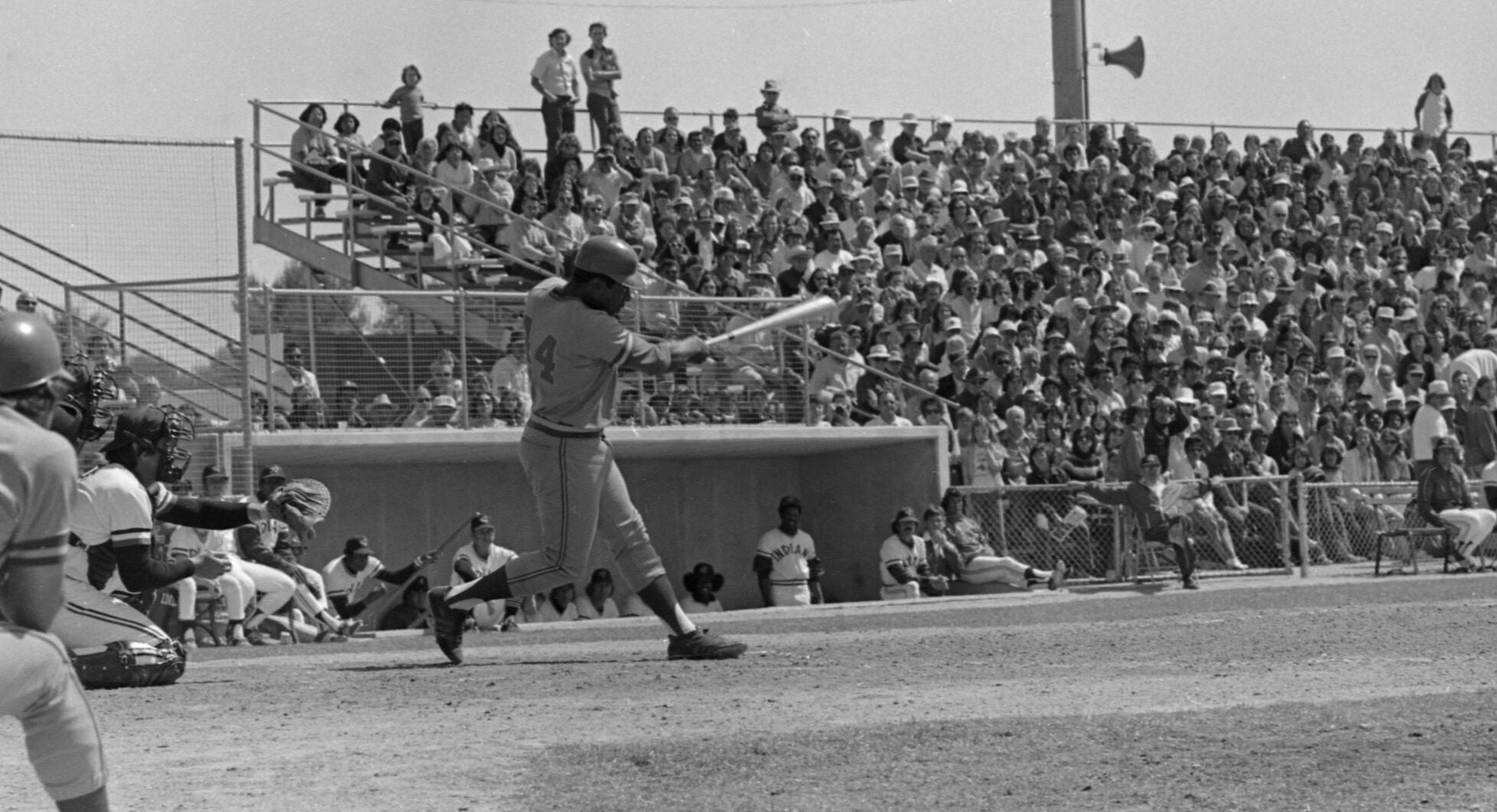
Hank Aaron of the Milwaukee Brewers gets a base hit during a spring training game against the Cleveland Indians at Hi Corbett Field in Tucson on March 23, 1975, a year after he broke Babe Ruth's home run record.
The team kept Tucson as its spring training destination until 1992.
By the time 1950 rolled around, baseball in Tucson was on an upward trajectory.
During a city council meeting in the summer of 1951, the council unanimously agreed to change Randolph Municipal Baseball Park’s name to Hi Corbett Field.
The name honored Corbett, who was considered “Tucson’s father of baseball,” according to the Tucson Citizen. The council granted the name change because of “his efforts toward furthering baseball in the Old Pueblo.”
With growing interest in baseball and Tucson, Hi Corbett needed some upgrades by the early 1950s.
As requested by the Tucson Cowboys baseball club, some of the renovations needed to make the field more appealing to other clubs, like the Cleveland Indians, for example, were: “moving home plate (38 feet out from its original spot), changing the foul lines, planting grass and mowing sod, crowning the infield, building a new pitcher’s mound, constructing new box seats in front of the grandstand and erecting new toilet facilities behind the main stand,” the Tucson Citizen reported.
They also moved centerfield inward, bringing the distance from home plate from 498 feet to 410 feet.
It was one of the first bigger renovations at the ballpark, but a necessary one to keep players and fans coming back year after year. (Hi Corbett would go through several more renovations over the next 60 years.)
Swing for the fences
Baseball at Hi Corbett continued to thrive well into the 1960s, especially in the later years when Tucson debuted its new hometown team — the Tucson Toros.

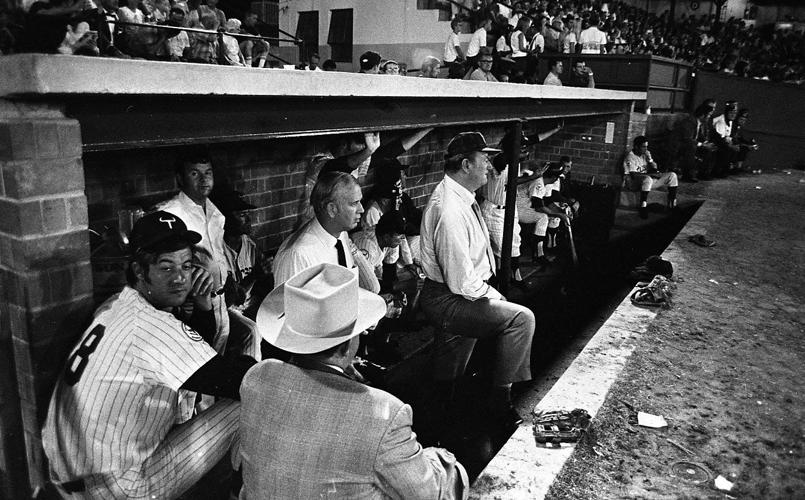
Oscar winner John Wayne looks right in character for a role as a baseball manager in this scene from a Pacific Coast League game between the Tucson Toros and Portland Beavers at Hi Corbett Field on June 20, 1970.
The occasion marked the first time in over a decade that Tucson had its own team.
“When the Tucson Toros go into Hi Corbett Field, the ball park of a thousand memories, they renew pro ball that started here more than three decades ago back in the depression days with the Arizona State League,” the Star reported on April 10, 1969.
At the time, the Toros, who were a part of the Pacific Coast League, were the Triple-A affiliate for the Chicago White Sox.
Tucson’s professional team would play three decades as the Toros and another decade as the Sidewinders after rebranding in 1998. (The Toros won the league championship twice, first in 1991 and again in 1993.)
The ’90s brought significant change to the baseball (and softball) scene in Tucson.
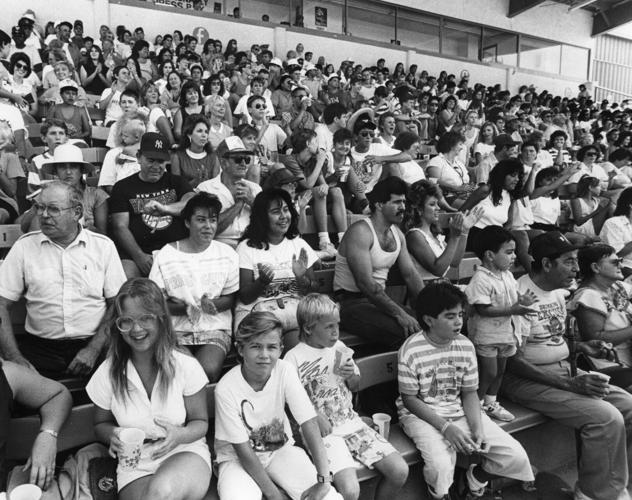
The shift was just on the heels of Hi Corbett gaining national attention after it was featured in the film “Major League,” where thousands of Tucsonans packed the stadium as extras in 1988.

Fans during the filming of the movie "Major League" in the stands at Hi Corbett Field in July 1988.
From the Toros getting a makeover, to the Cleveland Indians deciding to leave Tucson spring training behind, to the Colorado Rockies coming down for spring training — it was a whirlwind of change.
Not to mention, just a few miles away on the Arizona campus, work on the new Wildcats softball stadium, Rita Hillenbrand Memorial Stadium, had just been completed in 1993.
The stadium would later be named Mike Candrea Field at Rita Hillenbrand Memorial Stadium in honor of the beloved coach who retired after 35 years with the Wildcats.
Back at Hi Corbett, the Rockies would make the ballpark their preseason home each spring from 1993 to 2010.

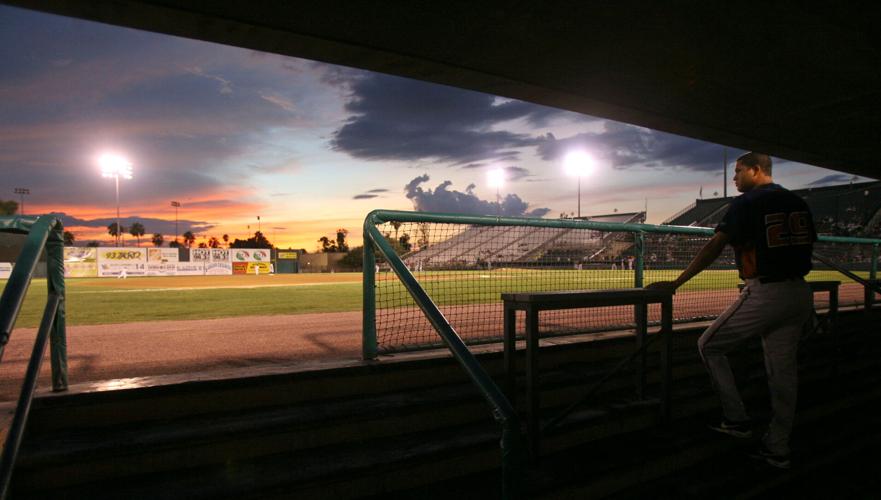
St. George RoadRunners pitcher Raymar Diaz takes in the sunset before the start of Game 4 in the best-of-5 South Division Playoff Series against the Tucson Toros at Hi Corbett Field on Sept. 6, 2009.
By the 2000s, Hi Corbett housed the USA Baseball headquarters until 2003 and Arizona Heat, a professional softball team, until 2007.
It wasn’t until 2011 that Hi Corbett Field would find its permanent tenant.
In the summer of 2011, the city and university announced that Arizona baseball would move from Jerry Kindall Field at Frank Sancet Stadium to Hi Corbett. The move came after the city sent an eviction notice to the Tucson Toros after defaulting on their lease.
Arizona would spend an estimated $250,000 to $300,000 on rebranding the stadium.
“Hi Corbett is a baseball field — not a soccer field, not a place for concerts, it’s a place for baseball,” Former Tucson Mayor Bob Walkup told media at the introductory press conference. “There’s no greater team that we’d like to have playing at our historic Hi Corbett than our University of Arizona.”
On Feb. 17, 2012, the Wildcats appeared before nearly 4,000 fans at Hi Corbett for their first game at the stadium since 1975. Arizona would go on to win its fourth College World Series that year.
Since then, the university has poured tons of resources into the facility, such as opening the Terry Francona Hitting Center and, more recently, the Arizona Baseball Pitching Wing.
Hi Corbett will be the Wildcats’ home for the foreseeable future as the university signed a 25-year lease with the city in 2017.
In the last 98 years, the teams, uniforms and even the fans have changed at Hi Corbett, but the stadium itself remains a constant in Tucson.
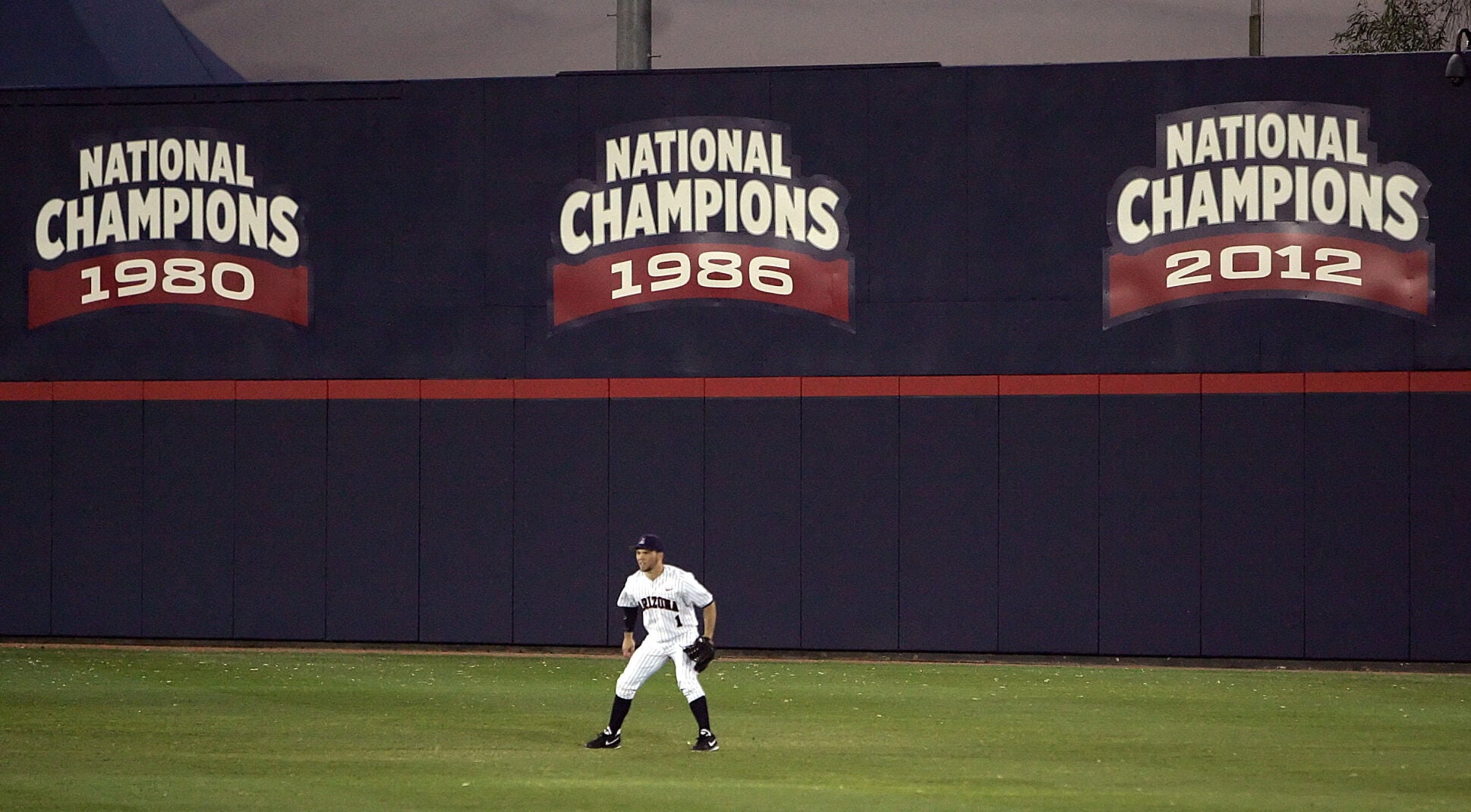
Johnny Field roams the outfield where the 2012 national championship banner was revealed before the college baseball game between the defending national champion No. 24 Arizona Wildcats and the Coppin State Eagles on Feb. 15, 2013, at Hi Corbett Field.
And when it comes time to say goodbye to the baseball season every summer, we know that it will return in the spring.
And when it does, Hi Corbett will be there.
Contact Elvia Verdugo, the Star's community sports editor, at everdugo@tucson.com. A journalism and history graduate from the University of Arizona, she shares stories highlighting what makes Tucson and its community special.

Elvia Verdugo
Sports Editor


 The Mount Rushmore of Arizona Wildcats football players