Amy Skieresz turned 50 a few weeks ago, which doesn't seem possible.
She is married, living in Palm Desert, California, with her three teenage children. Her husband is former Arkansas All-American distance runner Ryan Wilson, a financial advisor.
It seems like yesterday that Arizona track coach Dave Murray told me that he had successfully recruited the top female distance runner in high school sports, two-time California state cross country champion Amy Skieresz.
How good is she, I asked?
"She went on a recruiting trip to Villanova, which has won six straight NCAA cross country championships,'' Murray said. "The day she got back from Villanova, she phoned to tell me she wanted to be a Wildcat. She even turned down Oregon,'' the ranking Pac-10 power in distance running.
People are also reading…
There was no exaggeration required for Amy Skieresz, the top distance runner in Arizona history, men or women. She was the NCAA track and field athlete of the year in 1997 and 1998. She won NCAA championships in the 5,000 and 10,000 meters in back -to-back years — four for four! — and was the NCAA cross country champion in 1996 and 1997.

University of Arizona's Amy Skieresz crosses the finish line in the NCAA championship of the women's cross country race in 1996 in Tucson,. She finished first in the 3.16-mile race with a time of 17 minutes, 4 seconds.
I used to live next to the running trail adjacent to the Rillito wash. Over the years, I would stand on the upstairs patio overlooking the trail, and some days I'd see Olympians like Bernard Lagat and Abdi Abdirahman, or All-Americans like Martin Keino and Robert Cheseret doing their daily workouts 30 yards from my backyard. But the runner who most turned my head was Skieresz, the top female college distance runner from 1995-1998.
She was in a class of her own.
As part of the Daily Star's eight-part summer series of the Mount Rushmore athletes and coaches in school history, one of my easiest picks was Skieresz. I first saw her win the NCAA cross country championship at Dell Urich Golf Course, a few blocks from the UA campus. She won the women's title by almost 50 seconds. The last time I saw her run was at the 1998 NCAA cross country championships in the farmlands near Lawrence, Kansas. Skieresz was favored, but because she had been unable to run for two weeks, fearing she had a cancerous growth in her femur, she "only'' finished second.
Her father, Bill, was there that day, so was Bill's running partner, Tucson auto dealer Jim Click. They both jogged adjacent to the course, keeping Amy in sight when possible. When Amy all but limped across the finish line, it seemed to be a sad moment, spoiling a near-perfect career. Instead, Amy sat in a press interview area and smiled, answering every question politely.
"I was just so happy I could run again,'' she said. "It made me appreciate my years at Arizona.''
Unexpectedly, Skieresz retired from competitive running before the 2000 Olympic Trials. She got a job as a stockbroker in SoCal, ultimately got married and raised a family. (She also spent two years as an assistant coach at Arizona in the mid 2000s.) She was inducted into the NCAA Track and Field Hall of Fame in 2024 and named to the Pac-12 All-Century track team. Her legacy goes far beyond being part of my Mount Rushmore of UA female athletes in Olympic (non-revenue) sports.
My other selections: golfers Annika Sörenstam (1991-92) and Lorena Ochoa (2001-02) and gymnast Heidi Hornbeek (1996-2000). It is a rare group.
Sörenstam went on to win 72 LPGA Tour championships (and won the 1991 NCAA championship at Arizona) and is universally seen as the top female golfer in history. Ochoa, the 2001 and 2002 NCAA women's golfer of the year, was ranked the No. 1 female golfer in the world for almost four years (she was four times the LPGA Tour player of the year). Hornbeek, who famously scored a perfect 10.0 in floor exercise and vault at Arizona, was a six-time All-American.
Sometimes a so-called Mount Rushmore candidate has a modest background. Sörenstam is Exhibit A.
When Arizona women's golf coach Kim Haddow was in Japan for a summer golf competition in 1989, following Wildcat golfer Martina Koch, Sörenstam was randomly placed in Koch's foursome. Haddow had never heard of Sörenstam.
After the round, Haddow asked Koch if she thought Sörenstam was good enough to play for Arizona. Koch said yes, so Haddow offered a scholarship. Sörenstam accepted. Just like that.
"She really wasn't recruited by anyone else,'' Haddow told me as Sörenstam won the NCAA championship in 1991. Amazing.
There are so many other worthy contenders for this Mount Rushmore class that it was difficult to whittle down. All-American swimmers Crissy Perham, Amanda Beard and Lacey Nymeyer are worthy of historic mention. Two-time volleyball All-American Dana Burkholder led Arizona to the 2001 Final Four, and 2008 volleyball Olympic silver medalist Kim Glass, a 2005 All-American, were long ago inducted into the UA Sports Hall of Fame, as were high jumpers Tanya Hughes and Brigetta Barrett.
But I'll stick with Sörenstam, Ochoa — who won an NCAA record seven consecutive tournaments — Hornbeek and Skieresz. They illustrated the glory days of UA sports from 1990 into the late 2000s.


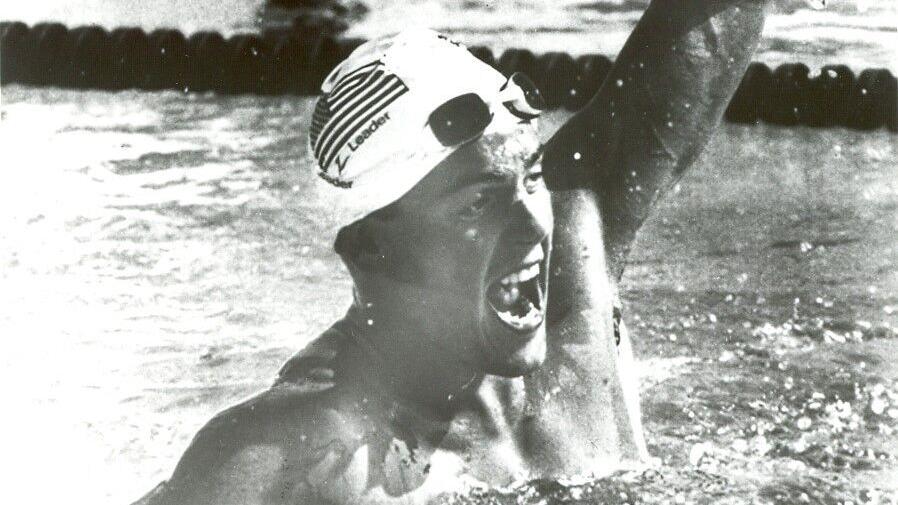
 Greg Hansen's picks for Mount Rushmore of Arizona men’s Olympic sports