Budgets and how much teams are spending on rosters annually are some of the biggest secrets in college football. Not anymore.
The Athletic and its robust team of college football reporters recently released a breakdown of 68 Power 4 teams’ budgets and how they stack up against each other.
The range of data used includes the dollars players receive from revenue sharing — a $21.6 million allotment for each university — via the House settlement, in addition to NIL budgets.
The top 10 annual budgets are teams who are considered the who’s who of college football: Ohio State ($49-54 million), Oregon ($48-54 million), Texas ($45-55 million), LSU ($47-50 million), Texas A&M ($45-50 million), Miami ($44-50 million), Notre Dame ($41-48 million), Ole Miss ($39-45 million), Tennessee ($41-43 million) and Alabama ($38-42 million).
People are also reading…
Arizona ranks near the bottom in the Big 12 and nationally with an estimated budget of $13-18 million.
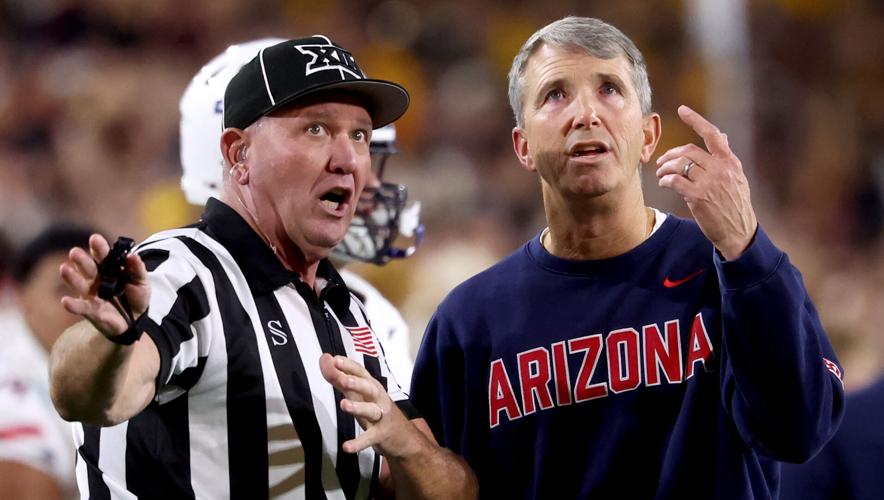
When asked about The Athletic’s report leading up to Arizona’s nonconference game against Northern Illinois, UA head coach Brent Brennan said, “I don’t have a lot of time to read articles right now.”
“My focus is on our football team and our consistent development and our process,” Brennan said. “That being said, our administration has been great about investing in our program. Across the country, you’re seeing people make massive investments in college football. It’s the world that we’re living in right now.
“For us to continue to build the championship football program that we want to build at the University of Arizona, we have to continue to be in alignment and invest at scale, so that we can be competitive and we can play for conference championships and do the things we want to do here at Arizona.”
Teams with smaller budgets than Arizona include Iowa State, Cincinnati, Duke and Boston College, although the UA, Iowa State and Duke are prominent basketball brands. Seven of the bottom-10 teams in The Athletic’s report are Big 12 schools: UCF ($15-20 million), Houston ($15-19 million), Oklahoma State ($15-19 million), Kansas ($15-17 million), Arizona ($13-18 million), Iowa State ($13-17 million) and Cincinnati ($14-16 million).
Arizona State’s budget, which ranks fifth in the Big 12, is at $19-23 million, roughly $6 million more than the UA.
Texas Tech, thanks to its corporate partnerships and billionaire oil baron Cody Campbell, has the top budget in the Big 12, which ranks 11th nationally, at $38-42 million — more than double the amount of Arizona’s budget. The second-best budget in the Big 12 belongs to TCU, which is the 35th-best budget nationally at $22-25 million. BYU ($20-25 million) and Baylor ($20-23 million) are next on the pecking order in the Big 12.
Twelve of the 16 schools in the Big 12 have annual budgets that start below $20 million. The Big Ten and ACC have a combined 10 teams with ranges starting below $20 million. Arkansas has the lowest budget in the SEC at $22-25 million.
The Big 12’s average budget is $18-22 million, compared to the SEC’s $33-38 million, the Big Ten’s $27-31 million and the ACC’s $21-25 million average. The SEC, Big Ten and ACC have all won national championships in football within the last 20 years. The last Big 12 team to win a national championship was Texas in 2005 — and the Longhorns are now in the SEC. The last current Big 12 team to win a national championship was BYU in 1984.
So, how does Arizona win nine games and assemble a roster that could double down on a nine-win season or improve this season? Earlier this month, Arizona football general manager Aaron Knotts told Star columnist Michael Lev that the Wildcats “like to say we have to win on relationships.”

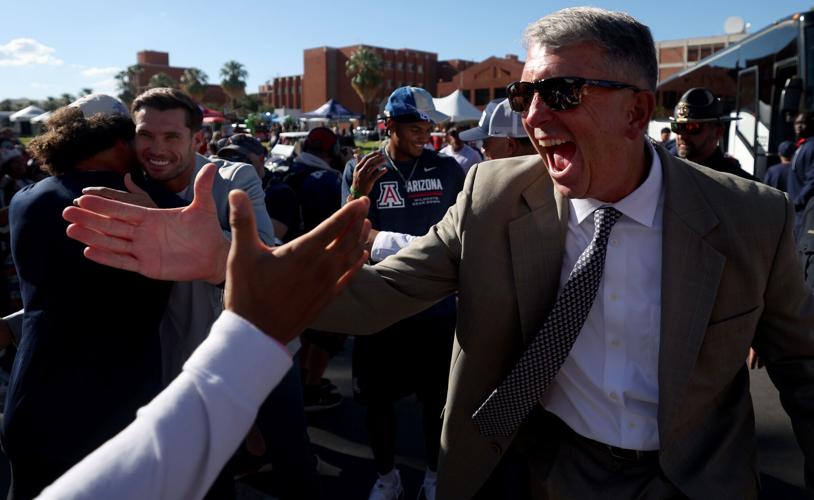
Arizona head coach Brent Brennan greets former Wildcat and current Raider Treydan Stukes at the head of the Wildcat Walk before the season opener against Northern Arizona, Sept. 5, 2026, in Tucson.
“We want kids that want to be developed and are good culture pieces for this program,” Knotts said. “People that are gonna connect to their teammates, gonna connect with the coaches, gonna connect with the staff. The connection piece is huge for us. That's going to help us elevate the level of play when we have a really connected, unified team.”
Added Knotts: “We're always going to sell relationships. Now, do I think for us to continue to be competitive we have to continue to invest and find more third parties that are willing to do NIL deals with our players? Absolutely.
“We need to increase our budget, just like every other team in the country is trying to do. We need to explore all the different avenues of revenue that are out there. Because if our budget doesn't increase, our success will not be sustainable. The relationship thing is always something we're going to hit on, and it's going to help us win. But it's only going to take you so far.”
Under Brennan, Arizona is prioritizing recruiting high-level high school players and developing them. In the transfer portal, more often than not, players coming to Arizona are experienced players from Group of Six or FCS schools — or Power 4 players looking for more playing time. Player and coach retention is a sign of a stable culture. It’s something the Wildcats take pride in. Eighteen of the Wildcats’ offensive and defensive starters on the depth chart were a part of Arizona’s 9-4 Holiday Bowl team last season.
“We’ve said that at the beginning: we’re going to be a developmental program,” Brennan said last month. “As much as we can, we want to bring in high school players, younger players in here and help them grow and develop. When you do that, you have a much more invested team, because they’ve been together longer. I think the fact that our kids are having a good experience playing at the U of A and being a part of our program, it speaks to the retention.”
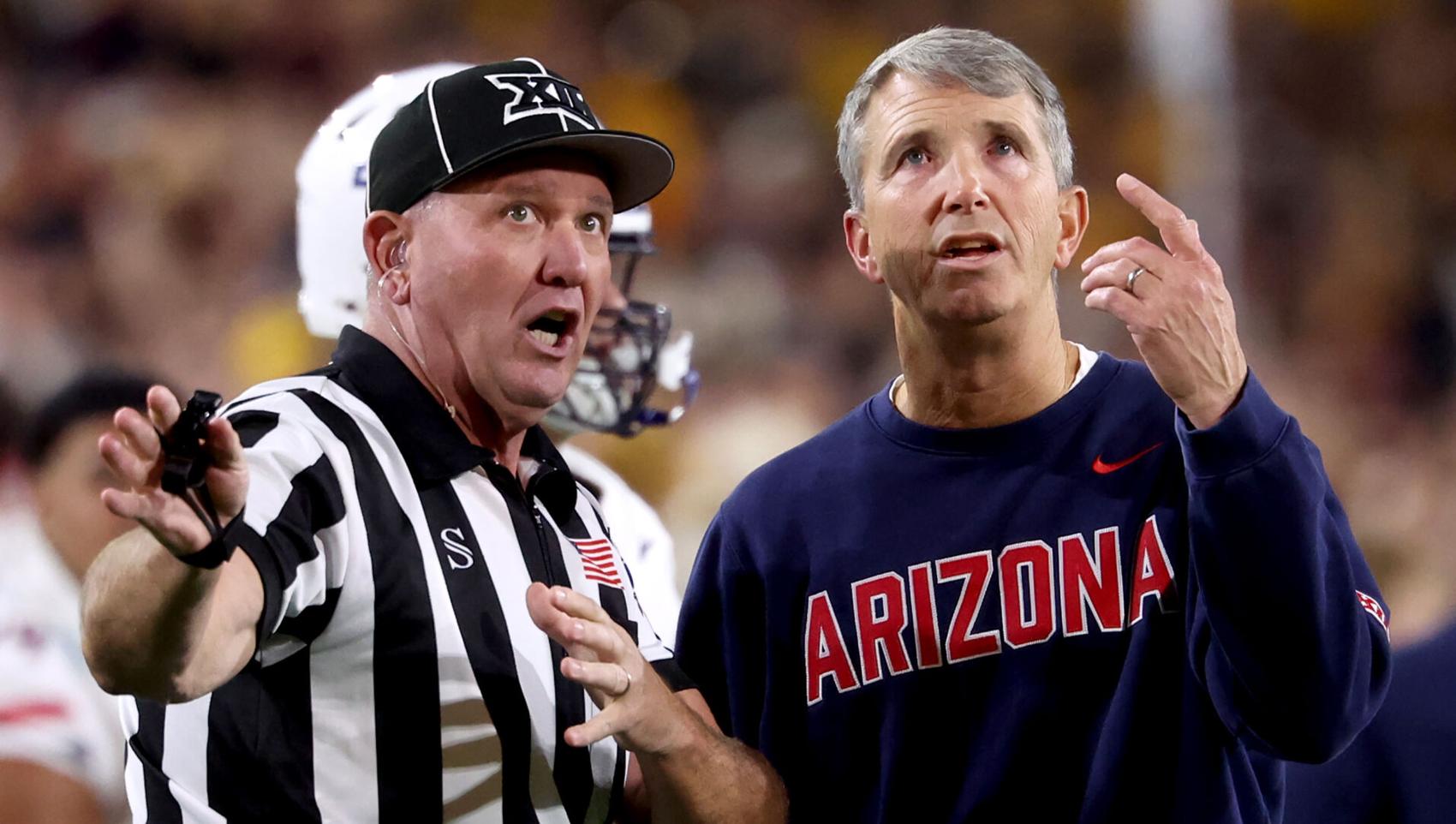
Arizona head coach Brent Brennan and one of the game officials discuss the call on a Wildcat fumble during the first quarter against Arizona State in their Territorial Cup game, Nov. 28, 2025, in Tempe.
Arizona has recent proof of what turning down dollars to play for other programs can do for the long-term plan, which is to play in the NFL. The Wildcats produced five NFL defensive backs — four of them were drafted — last season. There might be more green (money) elsewhere, but the grass isn’t always greener on the other side.
“Just because you take more money somewhere else right now doesn't mean that's going to put you in the best position to be showcased for the NFL Draft,” Knotts said. “What happens if you go to that other school and you're put in some tough situations where maybe you're going up against really good competition? Maybe the development or the coaching isn't as good? Now all of a sudden you've traded short-term dollars for long-term success.”
In the last year, Arizona has invested in contract extensions for Brennan, offensive coordinator Seth Doege and defensive coordinator Danny Gonzales. Arizona also made upgrades to Casino Del Sol Stadium, like new lights and an updated sound system.
As for its roster, Arizona is ballin’ on a budget, but that could change in the future if Congress passes the Protect College Sports Act, a major bipartisan Senate bill. If passed, teams would have a salary cap of $22.5 million, with $5 million reserved for women’s sports and Olympic sports.
Brennan said the Protect College Sports Act is “a step in the right direction.”
“I do think it’s important that we have some sort of structure that re-levels the playing field in college football and I think that’s important,” Brennan said on Thursday. “Parts of the act and what that means and what it could mean for college football, I think some of those things are still in process and have a long way to go.
“As we try to build it here, as we continue to build it here, having structure that makes it competitive across the board and levels the playing the field, I think is valuable for the game of college football. How do we keep the game of college football at the highest level of interest, viewership and excitement in America?”
Contact Justin Spears, the Star's Arizona football beat reporter, at jspears@tucson.com. On X(Twitter): @JustinESports

Justin Spears
Sports Reporter


 On Arizona bringing the juice vs. NIU and other Week 3 thoughts | Michael Lev