Two Arizona football players are fighting for their eligibility this season and they're using lawyers and courtrooms to do it.
For now, Arizona running back Ismail Mahdi — who was the Wildcats' leading rusher last season — and linebacker Max Harris — one of the UA's most productive defensive players last season — are eligible to play.
Less than a week after filing a temporary restraining order and preliminary injunction against the NCAA in the Pima County Superior Court via Ryan Downton and the Texas Trial Group and the Tucson-based Farhang and Medcoff, LLC, the order was granted. Ali Farhang hosts a radio show with the Star's Justin Spears on ESPN Tucson.
Mahdi and Harris, among other plaintiffs listed in court documents obtained by the Star, must post a bond or other security in the amount of $1,000 no later than Sept. 14. The bond was posted Thursday morning.
People are also reading…
A one-hour Order to Show Cause hearing has been scheduled for Sept. 21 at the Pima County Superior Court. The NCAA “shall appear and show cause why a preliminary injunction should not issue granting the temporary relief requested by plaintiffs pending final resolution of this action.”
The UA is aware of the ruling “and will continue to work with our student-athletes to help address their eligibility for competition,” the school said in a statement.
Last month, the United States Court of Appeals for the Tenth Circuit granted a stay request in the Wisne v. NCAA class-action lawsuit in Colorado, pausing the preliminary injunction that allows high school athletes from the 2022 recruiting class — like Mahdi and Harris — the ability to participate as five-for-five players.
The stay temporarily paused Harris and Mahdi’s eligibility to play in games this upcoming season, along with other athletes nationwide.

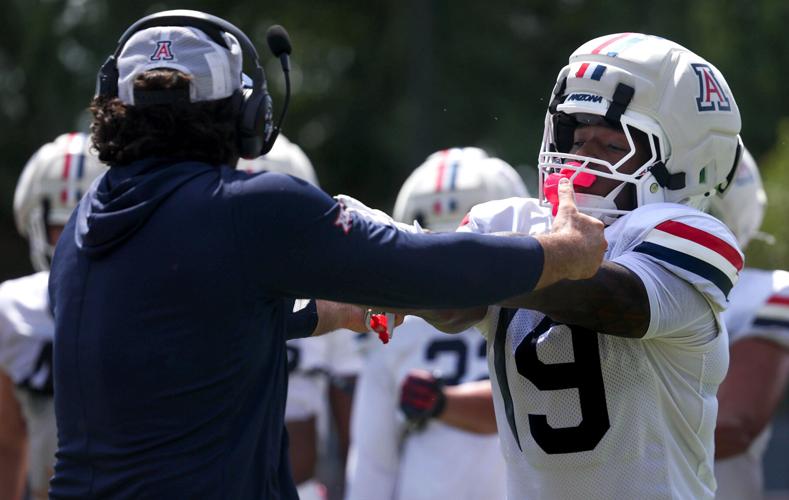
Arizona linebacker Max Harris (19) demonstrates a hitting drill with linebacker coach Josh Bringuel during fall football practice at Tomey Field, Aug. 14.
U.S. District Court Judge Charlotte Sweeney’s federal ruling in Colorado last month allowed class of 2022 student-athletes, who weren’t grandfathered in the NCAA’s new five-for-five rule, to compete in the upcoming 2026-27 sports season.
The five-for-five rule allows student-athletes to use up their eligibility in five years — with their eligibility clock starting upon their freshman year in college or after their 19th birthday. Several 2022 athletes competed in four years, but weren’t granted an additional year of eligibility until the federal ruling in Colorado last month allowed them to return.
Mahdi and Harris, even though they've practiced with the Wildcats, did not participate in Arizona's season-opening win over NAU. They’ve been cleared to compete in Arizona's Big 12 opener at No. 15 BYU.
The TRO filed last week said language regarding the 2022 class being excluded from the “five-for-five” rule doesn’t exist in the 2026-27 NCAA Division I manual, meaning the NCAA can't prohibit the plaintiffs from competing this season.
NCAA Rule 12.6, which was printed in the new NCAA Division I manual last month, states: “The regular academic term (semester or quarter) of an academic year in which the individual enrolls in a collegiate institution (domestic or foreign; see Bylaw 14.02.4) in a minimum full-time program of studies and attends a class in that term while enrolled full time; or the beginning of the regular academic year immediately after the individual’s 19th birthday.”
Downton joined "Spears & Ali" on ESPN Tucson this week to highlight Harris and Mahdi's fight for eligibility and why the NCAA is fighting against its own rulebook. Here's part of that conversation:

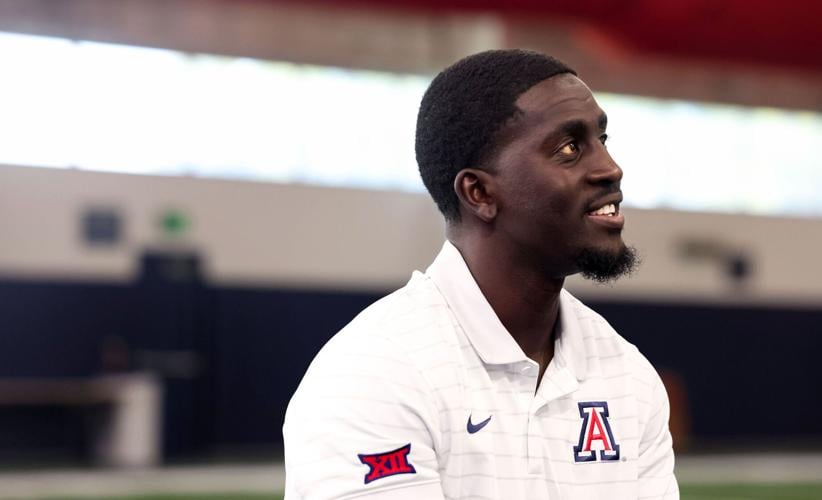
Arizona running back Ismail Mahdi speaks to reporters on media day at Davis Sports Center, July 29, 2025.
What's next for Mahdi and Harris as they prepare to play for Arizona this season?
A: “The process in all of these lawsuits are pretty similar. You start with a temporary restraining order that gets you immediate relief. The NCAA gets time to respond to write a brief and then we come in the courtroom and have a hearing that may be as short as two hours.
“The longest one we've had was 12 hours and it ended at 10:30 at night. It could be anywhere in that range, where the players come and tell their stories. We hope some coaches will come.
“A lot of the coaches are scared of the NCAA and will not come because they're afraid of being punished. We hope coaches will come and we'd love for fans to come, too, to come observe the process. You don't have a role in the courtroom and you don't get to speak, but you get to watch what's going on and get a better understanding.”
Players across the country, courtroom after courtroom, state after state, have succeeded in finding injunctive relief against the NCAA. What is the basis for why courts have found over and over that they're likely to succeed on the merits? Two, if injunctive relief is not granted, they'll suffer irreparable harm?
A: “I'll start with irreparable harm. These players are not looking for money from the NCAA. They're just seeking an opportunity to play a fifth season. Courts have held around this country — long before this year — that the chance to play college sports is a unique, special, once-in-a-lifetime opportunity.
“If it's taken away, it can't be replaced. There's no amount of money that could compensate someone for being on the field with your teammates for that last time, making a playoff game, making March Madness, and some courts have concluded that's irreparable. We can't fix that with money. We have to let them play. ... We're bringing claims for breach of contract and the contract we're focusing on is the NCAA manual.

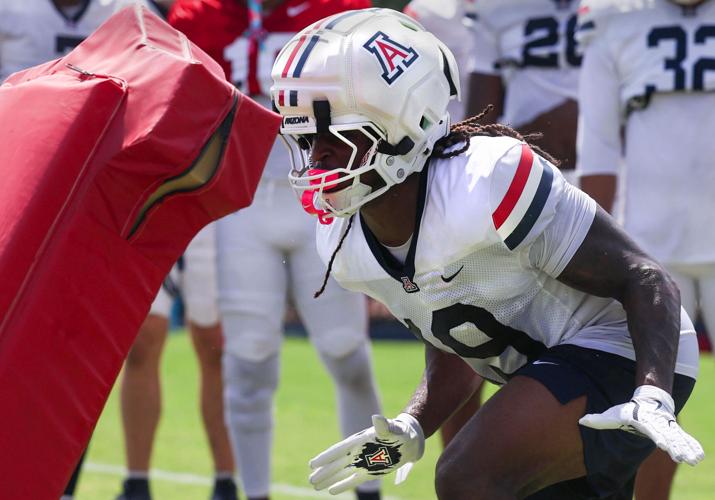
Arizona linebacker Max Harris prepares to hit his target during fall football practice at the Dick Tomey Practice Fields, Aug.14, 2026.
“It's got the bylaws that the NCAA operates by — its member schools operate by, like the University of Arizona — and the players have to sign off that they understand the rules and will live by them. Those rules in the past had a framework where the athletes were given five years of eligibility, but you can only play four.
“That fifth year, if you want it, you're going to have to redshirt along the way. ... We're able to point out ways that we think the NCAA has acted arbitrarily and unreasonably in the past, from redshirting, to — in this past year — former professional basketball players back into college. ... Why is the '22 class singled out? Why don't they get their fifth year?
“That's been our main argument, but then we found out more that the NCAA finally published the 2026-27 bylaws, which contains the new five-year rule. They told us for the last two months that the five-year rule excludes the class of 2022. Well, now we have the text. And it doesn't. It explicitly says they can play.
“They're still within five years of graduating high school and going to college. They're still within five years of their 19th birthday. Under the rule, they can play.
“It's easy for the judge to look at the plain text and say, ‘There's no exclusion here so, NCAA, you are breaching your contract if you don't let them play.’ ... All of these guys should be eligible now.
“The NCAA should drop these lawsuits and stop spending tens of millions of dollars to fight against their own bylaws that they passed."
Why is the NCAA arguing so arduously for keeping these players from participating? Is there any light at the end of the tunnel and will 2022 players be allowed to play in the upcoming 2026-27 season?

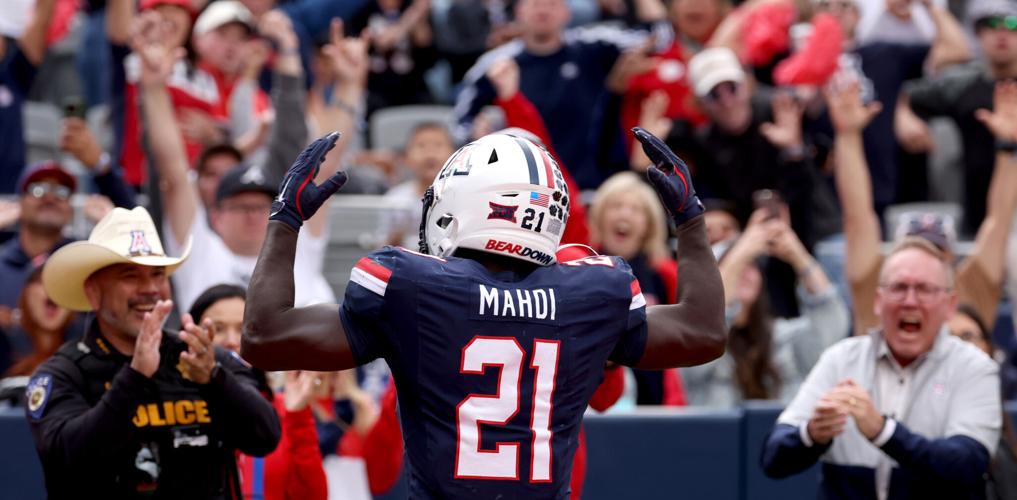
Arizona running back Ismail Mahdi (21) celebrates with the excited fans after scampering to the barn untouched against Baylor during the fourth quarter of their Big 12 game, Nov. 22, 2025, in Tucson.
A: “It's going to take the schools and the conferences. The NCAA has dug in. They don't care about the players. They give waivers to players all the time. Whether these players play or don't play, it doesn't matter to the NCAA at all.
“What matters to the NCAA is if they can be held accountable in court — They're vehemently opposed to it. The NCAA acts like it's above the law. The NCAA will follow court orders, but the NCAA does not think court should have the ability to tell it what to do.
“From the NCAA's perspective, that is what this fight is about: it's whether a court can look at the NCAA bylaws and say, ‘What you've done here is wrong.’ The NCAA thinks no one should be able to do that but themselves.
“Of course, that's what created the mess we were in with college sports, where schools made billions of dollars and athletes got paid nothing.”
Contact Justin Spears, the Star's Arizona football beat reporter, at jspears@tucson.com. On X(Twitter): @JustinESports

Justin Spears
Sports Reporter


 On Arizona’s massive opportunity at BYU and other Week 2 thoughts | Michael Lev