PHOENIX — Republican lawmakers approved a plan of how measures on Arizona's November ballot would be explained to voters, rejecting claims by Democrats that their verbiage is misleading or even designed to deliberately hide relevant information.
In a series of party-line votes Wednesday, the GOP majority on the Legislative Council defeated efforts by Democratic lawmakers to add what they said was language that would help voters understand each ballot issue.
And all that, according to Senate Minority Leader Priya Sundareshan, runs contrary to state law that requires the council, made up of state lawmakers but with the Republicans in control, to adopt an "impartial analysis'' of each measure set for the ballot. Those summaries then go into pamphlets mailed to the home of all of Arizona's 4.3 million registered voters.
That makes what goes in these pamphlets significant.
People are also reading…
Not only do they potentially reach more people than high-dollar TV advertising campaigns, but the explanatory brochures also remain available for weeks ahead of people having to go to the polls.
What happened, the Tucson Democrat said, is that the verbiage the Republicans approved is little more than naked advocacy to convince people to support what they want.

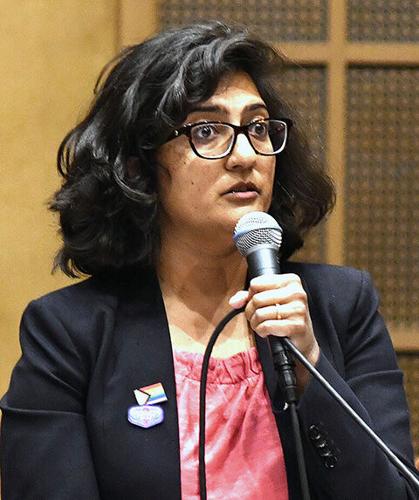
Sundareshan
For example, Sen. Lauren Kuby said one measure crafted by Republicans would make various changes to election laws, including requiring voters to provide government-issued proof of identity before casting a ballot.
But what the summary pushed by Republicans didn't explain is that it is already the law in Arizona to provide ID when casting a ballot in person.
She wanted language to explain that, and explicitly tell people that approval would extend that mandate to those who vote by mail, something they are not now required to do. And the Tempe Democrat said voters also need to know that the measure never spelled out how forcing those who vote by mail would be required to comply.
Kuby's proposal was defeated on a party-line vote.
Democrats had no better luck with a measure crafted by House Speaker Steve Montenegro seeking to enact new constitutional provisions expanding existing sections outlawing differential treatment by state and local governments, schools, and colleges based on race, sex, color, ethnicity or national origin.
Sundareshan sought to add language to tell voters what's already in law.
Montenegro refused, saying it was unnecessary.
And then there's a ballot measure prohibiting those identified as male on their birth certificates from participating in sports designated for females.
Democrats said voters need to know that the legislature already adopted a law in 2022 that requires schools to designate their sports as for males, females, or coed, with a specific prohibition against boys playing on girls' teams. Republicans refused to add that language.
Republicans, however, showed no hesitancy in altering the draft explanations, prepared by legislative staffers, when the time came to tell voters about the one measure they never wanted on the ballot: the Protect Education Act. The initiative seeks to make major changes to the system that provides vouchers of taxpayer dollars so parents can send their children to private and parochial schools and can homeschool them.

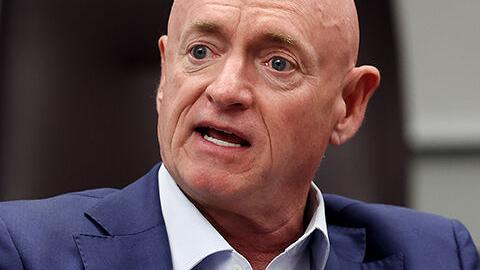
Montenegro
For example, the initiative would say that students cannot save their Empowerment Scholarship Accounts from year to year, banking it for college. And the language of the actual initiative requires the Department of Education to "recoup'' unspent funds.
That's the same word that was in a draft summary.
But Montenegro and Republicans pushed through a change to say that the funds will be "taken'' from students — a word not in the initiative.
"There's a clear reason why you're offering it,'' Sundareshan told Montenegro, calling the verbiage "clear advocacy.''
Ditto, she said, of language Montenegro pushed through about the proposed $150,000 cap on family income to qualify.
The initiative says it would "limit'' eligibility. Montenegro insisted on changing that to saying that such families "no longer qualify,'' a move he acknowledged is designed to inform parents of recipients of Empowerment Scholarship Accounts who have incomes higher than the $150,000 cap that their children would lose their vouchers.
But Republicans balked when Democrats said voters need another piece of information: The income caps would not affect a variety of groups who already were eligible before lawmakers approved universal vouchers in 2022. That includes students in school districts rated D or F, tribal members, the children of soldiers killed in action and those in families serving in the military.
"Voters should know that,'' Sundareshan said. And she said that Montenegro, in rejecting Democratic changes while accepting those sought by Republicans, was using a double standard.
"In every other instance that we have discussed today where we wanted to add context to other ballot analysis drafts, or other measures where we wanted to highlight the impact, you rejected those amendments,'' Sundareshan said. "It is just mind-boggling.''
Another change pushed by Montenegro into the explanation of the voter-crafted initiative deals with the fact that it seeks to divert $1.75 million from the medical marijuana fund to finance the new work that the Department of Education would have to do to oversee the new voucher rules on everything from qualifications of tutors used by homeschoolers to policing the purchases made by parents.
He tacked on language to tell voters that these are dollars that now fund things like marijuana clinical trials, mental health research, and even some money for public safety and to fund the Arizona Teachers Academy.
Montenegro made no secret about the fact that he believes adding that information could affect whether people support the initiative.
"Identifying these existing statutory uses provides the voters with material information about the fiscal trade-offs,'' Montenegro said, telling them what happens if they divert those funds to the voucher reform initiative.
But the House speaker was not interested in explaining all funds referred to in ballot measures to voters.
One GOP proposal would take money away from school districts that could not show that 60% of their funds were going toward instruction. It also would require schools below that figure to make progress and increase their percentage by half a point a year.
The ballot explanation says those dollars would be taken out of each district's "classroom site funds.''
Rep. Nancy Gutierrez, D-Tucson, said voters need to know those are the dollars specifically allocated to school districts for teacher compensation, reducing class size and student support services. Republicans rejected adding that explanation, calling it "advocacy.''
Republicans also were not interested in adding some explanation to another provision of that ballot measure.
As approved by the GOP-dominated committee, it tells voters that the state schools chief has the power to issue waivers to districts that don't meet that goal of increasing their classroom spending by half a point a year.
What voters also need to know, Gutierrez said, is that the ballot measure allows only two such waivers in any decade before a district starts losing money. Without that, she said, voters could be lulled into thinking it's no big deal if a district misses the goal.
"That is putting the hand on the scale to pass this and not giving all the information to voters,'' she said.
Montenegro dismissed her concerns, pointing out that the actual text of each of the ballot measures will also be in the brochure. He said if voters are interested in learning about the waiver process, they are free to read the three-page bill itself.
Gutierrez sniffed at that explanation, saying if the only thing needed was the legalistic text of a ballot measure, there would be no need for a state law requiring a separate analysis to help voters understand.
There was one other significant dispute over the wording of ballot explanations, this one over a measure about vouchers added to the ballot at the last minute after it became clear there would be no deal to convince the Arizona Education Association and Save Our Schools to drop the Protect Education Act.
It focuses on that one section of the initiative that repeals existing rules that currently allow all voucher recipients to bank their unused funds and set the cash aside for college.
As crafted by Republicans, the measure would put a provision into the state constitution saying that any ballot measure that prevents a child of a military family from such banking is invalid. More to the point, what's voided is not just that provision, but the entire initiative.
Republicans have made no secret that the intent of their measure is to undermine the voucher initiative.
Gutierrez said the effect of that provision should be made clear in the ballot pamphlet. So she proposed adding language to tell voters that approval of this Republican measure would specifically override the Protect Education Act, "which would enact common sense reforms to rein in the fraud, waste and abuse in the current ESA voucher program.''
"People should know that, by voting for this, they are also voting to negate a citizens' initiative,'' she said. "And I think that needs to be extremely clear.''
Senate President Warren Petersen, who voted for all the changes that Republicans wanted on their own ballot measures, said what Gutierrez wanted was "clearly advocacy'' which should not be in the ballot brochure.
Her proposal was defeated on a party-line vote.
Howard Fischer is a veteran journalist who has been reporting since 1970 and covering state politics and the Legislature since 1982. Follow him on X, formerly known as Twitter, Bluesky, and Threads at @azcapmedia or email azcapmedia@gmail.com.